
...

By Gabe Whisnant
News Editor
0
Share
Newsweek is a Trust Project member
See more of our trusted coverage when you search.Prefer Newsweek on Googleto see more of our trusted coverage when you search.
Alaska Gov. Mike Dunleavy on Monday issued a 30-day disaster declaration to address food insecurity caused by the ongoing federal government shutdown.
The Republican's order directs state agencies to work with the federal contractor responsible for loading Electronic Benefit Transfer cards to ensure Supplemental Nutrition Assistance Program (SNAP) benefits are distributed weekly, his office said. The Alaska Department of Health will also coordinate with food banks and other community partners to make sure resources are available for residents who need help.
The declaration remains in effect for up to 30 days or until the federal government reopens, whichever comes first. Dunleavy said the move aims to prevent disruptions for the roughly 66,000 Alaskans who rely on SNAP benefits.
Read More on News
“We are taking proactive steps to ensure Alaskans have continued access to food and nutrition support,” Dunleavy said in a statement.
...
Will There Be SNAP Benefits in November 2025?
Yes, but the payments will be smaller and slower to arrive. After court orders required the Trump administration to keep SNAP operating during the federal shutdown, the government agreed Monday to partially fund November benefits using a $4.65 billion emergency reserve — enough to cover roughly half the normal monthly amount. That stopgap measure prevents a complete lapse in food aid but could create similar funding challenges in December if the shutdown continues and no new spending deal is reached.
When Will SNAP Benefits Be Available?
The U.S. Department of Agriculture (USDA) has said it will provide states with details on calculating partial November benefits, but the timeline for distribution remains uncertain. The process of loading funds onto Electronic Benefit Transfer (EBT) cards can take up to two weeks in some states, while others may need longer to reprogram systems for reduced payments. Officials in California estimate it will take about a week once the federal money becomes available. Advocates say even short delays will leave families struggling to buy groceries, as millions of recipients have already gone weeks without aid.
Are SNAP Benefits Going Away?
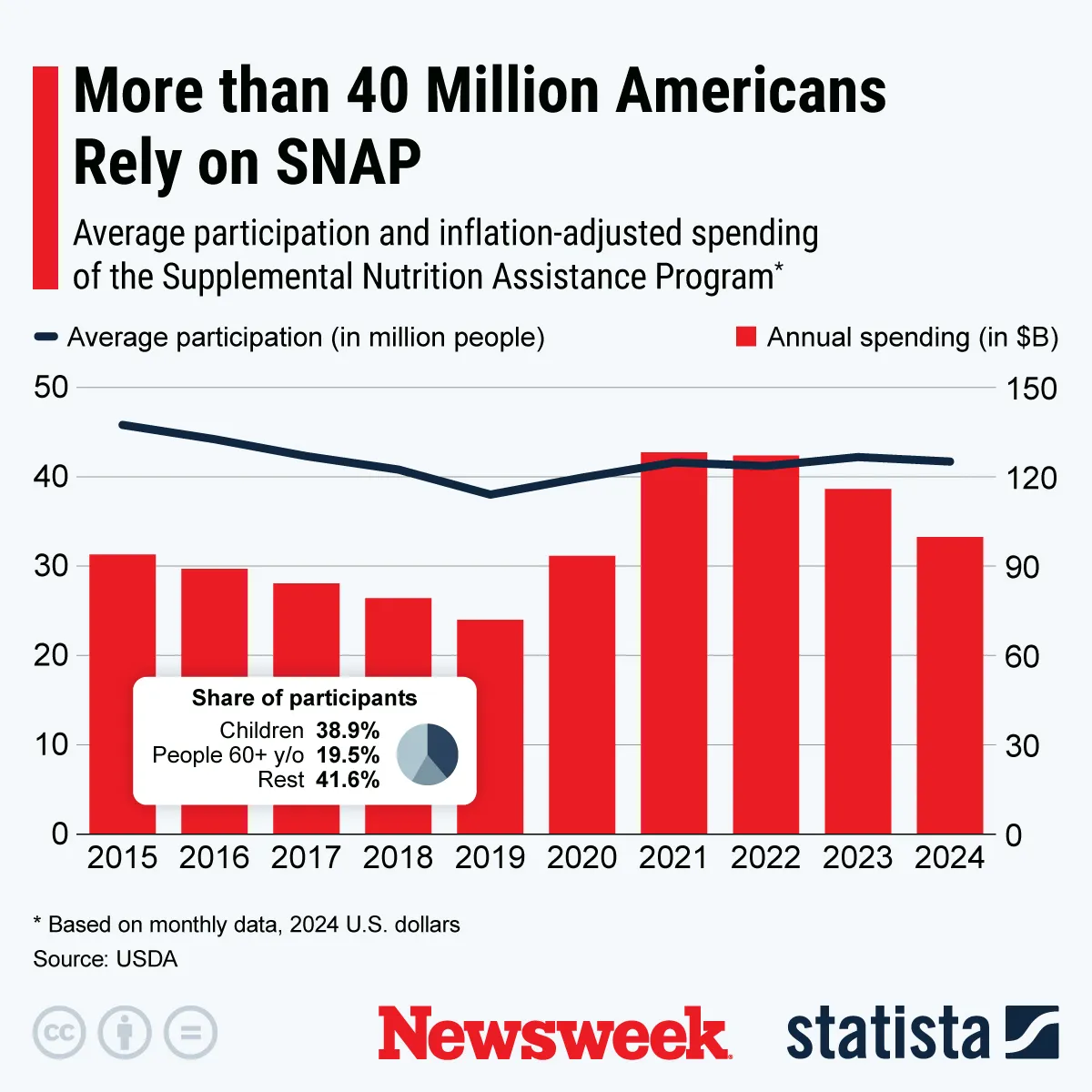
SNAP benefits are not being eliminated, but millions of low-income Americans will receive reduced assistance until full funding is restored. The program serves about one in eight people nationwide and costs more than $8 billion a month. State governments and food banks are stepping in with supplemental help to fill gaps, and advocates are urging the administration to use additional emergency funds to restore full benefits. Legal groups representing Democratic state officials and nonprofits say they are weighing new lawsuits to compel the government to fund the program in full.
How Many Americans Receive SNAP Benefits?
Nearly 42 million Americans rely on SNAP, according to federal data. The program provides an average of about $190 per person per month and is a major part of the nation’s social safety net, helping families, seniors and people with disabilities afford groceries. States with high participation rates include Texas, California, Florida and New York, but recipients live in every county in the country. Eligibility is limited to households whose net income after allowable expenses does not exceed the federal poverty line — about $32,000 a year for a family of four.
...
Updates: 11/3/25, 6:12 p.m. ET: This article was updated with new information and remarks.
View 0 Comments
Submit Correction
View Editorial & AI Guidelines