...

By Soo Kim
Reporter
0
Share
Newsweek is a Trust Project member
See more of our trusted coverage when you search.Prefer Newsweek on Googleto see more of our trusted coverage when you search.
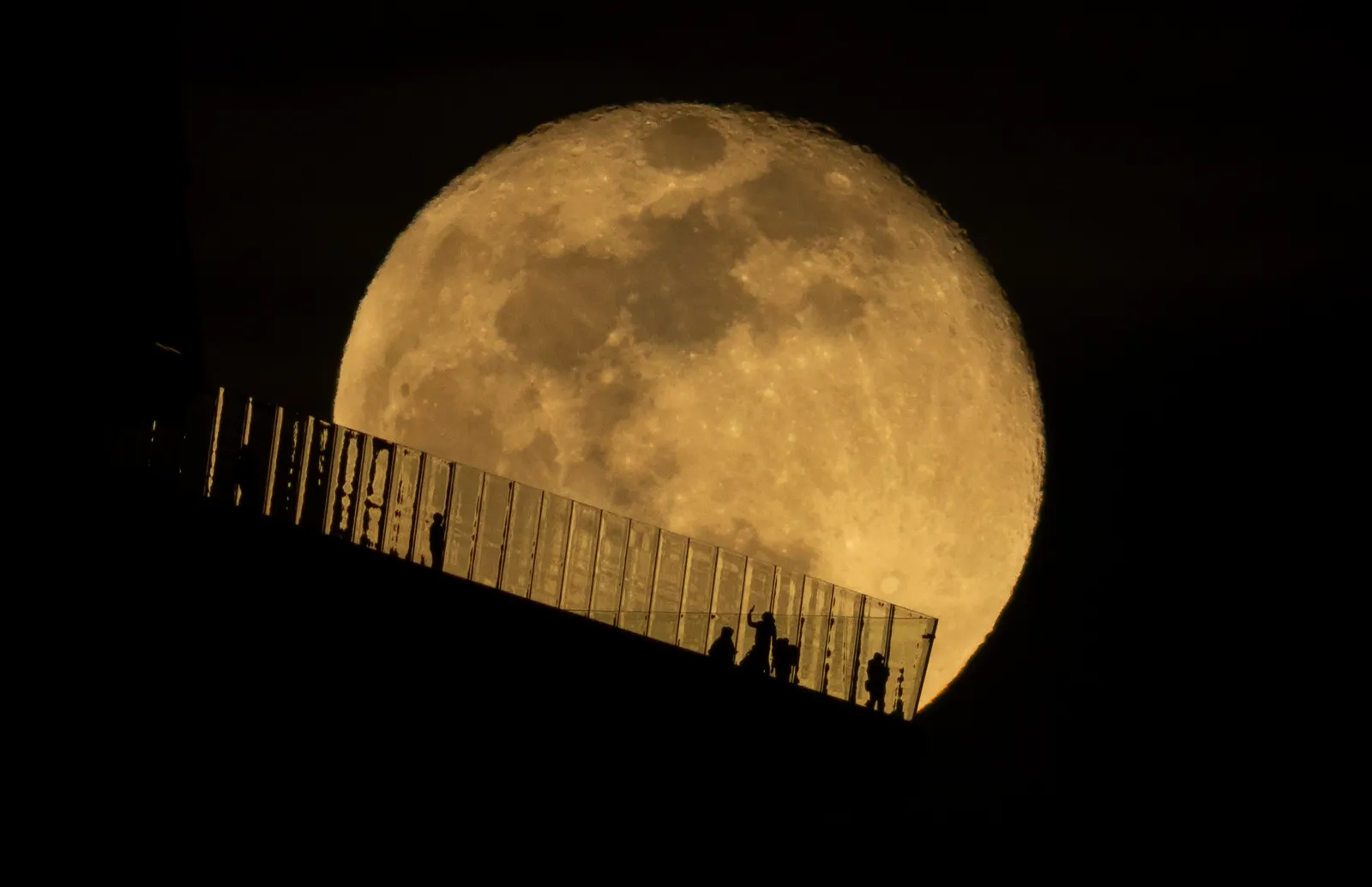
February’s full moon—also known as the “Snow Moon”, for how the month is typically the snowiest in the U.S.—is set to grace the skies on February 1.
In the 1760s, Captain Jonathan Carver, who visited with the Naudowessie (Dakota) tribe, wrote that the name used for this period was the Snow Moon, “because more snow commonly falls during this month than any other in the winter,” according to the almanac.
A full moon occurs when the moon is positioned opposite the sun in its orbit around Earth, and the side of the moon facing the Earth is fully lit by the sun.
Read More on Science
“This is as close as we come to seeing the Sun’s illumination of the entire day side of the Moon,” NASA explains, “so, technically, this would be the real half moon.”
...
The Snow Moon next month is expected to reach peak illumination at around 5:09 p.m. ET on February 1, according to The Old Farmer’s Almanac.
Stargazers should look eastward at sunset on February 1 to see the full moon move over the horizon, near the stars of the constellation of Cancer.
The full moon will appear especially large while it’s close to the skyline due to a phenomenon known as the "moon illusion", which is an optical illusion whereby the moon looks much larger than usual when viewed closer to the horizon.
The edge of the moon, known as the “limb,” may also appear to be wobbling, which is a distortion effect caused by moonlight rippling through the Earth's atmosphere. A full moon also often has a glowing ring or halo around it, which is caused by bright moonlight streaming through the clouds.
As it is with most celestial phenomena, the best way to observe the moon is someplace away from sources of light pollution, such as cities, to catch a better view.
Viewers only ever see one side of the moon from Earth because the moon rotates at the same speed it orbits the Earth, which keeps the same side always turned toward our planet.
The moon doesn’t glow on its own, but instead shines from the light of the sun. During its crescent phase at twilight or dawn, viewers can sometimes “see the dark portion of the moon glowing faintly in the sunlight that reflects off Earth, an effect called earthshine,” NASA says.
“You can look at the Moon during any of its illuminated phases, but for better viewing of craters and mountains, try phases other than the full Moon,” NASA advises, noting, “the shadows on the surface will be more pronounced, and help distinguish features you might otherwise miss.”
Do you have a tip on a science story that Newsweek should be covering? Do you have a question about the moon? Let us know via science@newsweek.com.
View 0 Comments
Submit Correction
View Editorial & AI Guidelines