...

By Tom Howarth
Science Reporter (Nature)
0
Share
Newsweek is a Trust Project member
See more of our trusted coverage when you search.Prefer Newsweek on Googleto see more of our trusted coverage when you search.
What's New
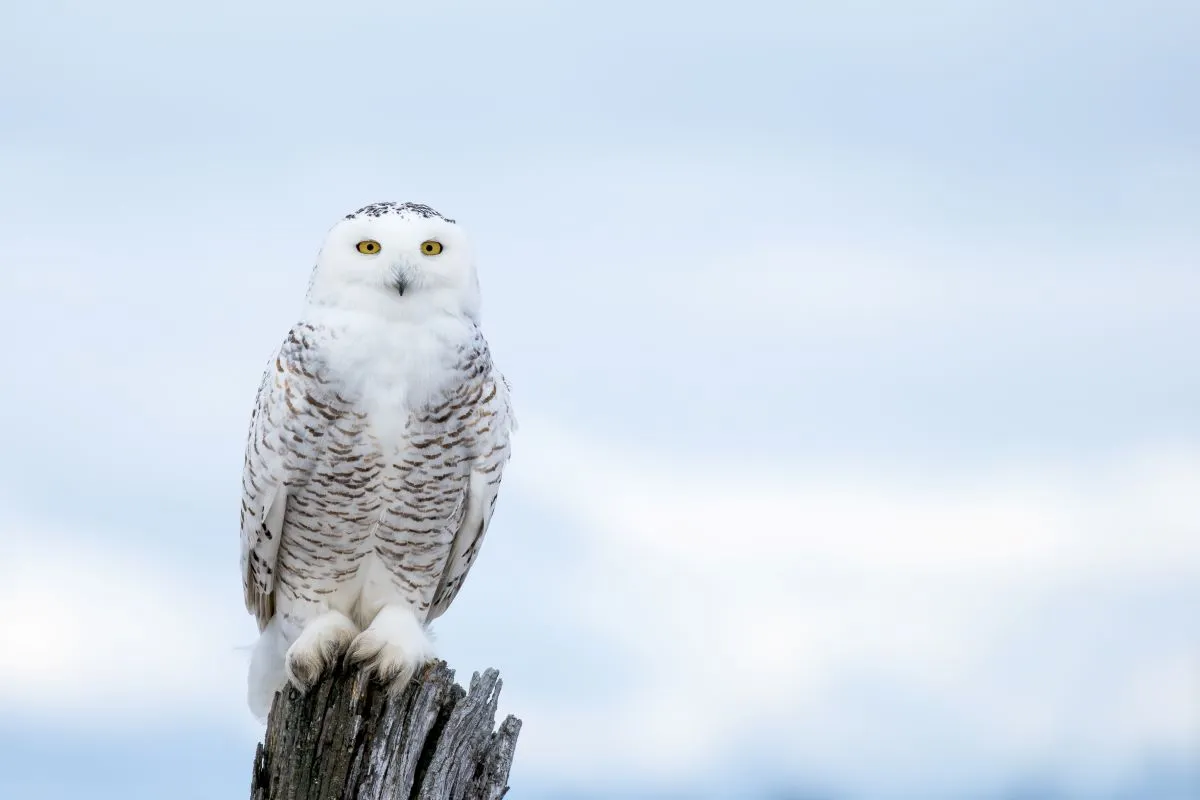
Snowy owls are arriving earlier than usual this winter, marking what experts describe as an "early-season push." This contrasts with a much slower migration in 2023, according to Project SNOWstorm, a crowdfunded snowy owl research initiative.
As of December 12, a snowy owl named Newton was last tracked on the Bruce Peninsula, located between Lake Huron and Georgian Bay, shedding light on their current movements.
Read More on Better Planet
Why It Matters
Snowy owl migrations are highly unpredictable, making it crucial to track their patterns. Despite their iconic status, much about their yearly behavior remains elusive.
Snowy owls are listed as a Bird of Conservation Concern by the U.S. Fish and Wildlife Service.
...
This designation makes it illegal to disturb them without a permit. The list highlights migratory and nonmigratory bird species that are conservation priorities, even if they're not yet federally threatened or endangered.
On a global scale, the International Union for Conservation of Nature (IUCN) categorizes snowy owls as 'Vulnerable' with a population trend labeled 'Decreasing.'
Threats to their survival include habitat disturbance, climate change, and human-caused factors such as shooting, trapping and poisoning.
What To Know
Snowy owls exhibit unique and variable migration patterns. While some migrate every winter to southeastern Canada, the upper Great Lakes, and New England, others stay in place or even move further north during the cold months.
Occasionally, their numbers spike significantly during winter in what is known as an "irruption." In these events, snowy owls can be seen much farther south than usual, throughout the lower 48 states.
Smaller irruptions occur roughly every four or five years, but sometimes "mega-irruptions" bring unprecedented numbers far beyond their normal range.
For instance, the winter of 2013—14 saw snowy owls in record-breaking numbers, with sightings reported as far south as Bermuda—possibly the largest such event in the Northeast and Great Lakes in over a century.
Contrary to the assumption that these migrations are driven by hunger, researchers believe that an abundance of prey, such as lemmings and voles, during the summer breeding season leads to a population boom. This results in more juveniles venturing south in the winter.
What People Are Saying
Scott Weidensaul of Project SNOWstorm told Newsweek: "So far this winter we're seeing what I would call a fairly normal, moderate irruption of snowy owls into southern Canada and the northern U.S.
"What was a bit unusual was the timing of the first movement, with a lot of the owls showing up in mid-November, including some that moved unusually far south so quickly, into places like Virginia, southern Illinois and southern Indiana.
"Some of the adult owls that we track using GSM transmitters have only just started coming south into cell range to their normal winter territories and reconnecting within the past week or so."
What Happens Next
Bird watchers and experts, especially in northern regions, should remain vigilant this winter. If you're fortunate, you might catch a glimpse of a snowy owl—an unforgettable sighting for any wildlife enthusiast.
If you want to catch a glimpse of a snowy owl, Weidensaul cautioned against getting too close, saying: "In the 11 years since Project SNOWstorm started, we've seen an exponential rise in issues with birders and photographers swarming these owls, in some cases almost literally loving them to death."
Weidensaul added: "If people want to observe a snowy owl, the best way is from inside a vehicle, which serves as a great blind. If you're on foot, if the owl is watching you and paying attention to you, please back off rather than continuing to approach and flushing it."
Do you have a tip on a science story that Newsweek should be covering? Do you have a question about snowy owls? Let us know via science@newsweek.com.
Update 12/20/24 4:07 a.m. ET: The article was updated with comments from Scott Weidensaul.
View 0 Comments
Submit Correction
View Editorial & AI Guidelines