...

By Aliss Higham
Reporter
0
Share
Newsweek is a Trust Project member
See more of our trusted coverage when you search.Prefer Newsweek on Googleto see more of our trusted coverage when you search.
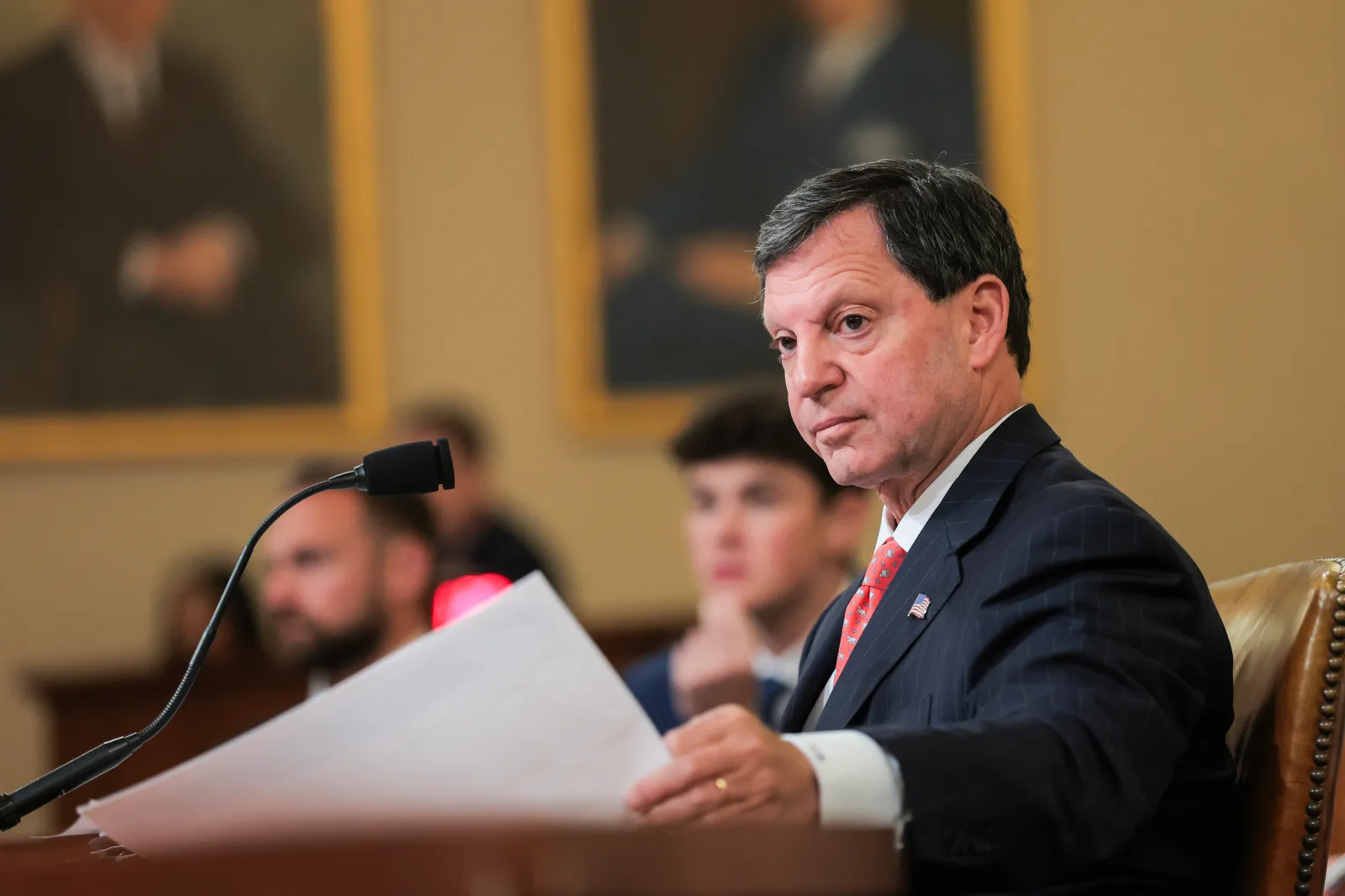
Social Security Commissioner Frank Bisignano told lawmakers on Wednesday that customer service at the agency has improved dramatically under his leadership, pointing to shorter wait times, reduced disability backlogs and expanded online access. But Democratic lawmakers, advocacy groups and researchers say many Americans are still struggling to get help, raising questions about whether the agency's reported gains reflect the reality experienced by beneficiaries.
Bisignano appeared before the House Ways and Means Committee's Social Security and Work and Welfare subcommittees for a two-hour hearing to examine the performance of the Social Security Administration (SSA), which provides retirement, survivor and disability benefits to more than 70 million Americans.
The hearing follows a turbulent period for the agency. After the second Trump administration began in January 2025, the SSA underwent major administrative changes, including staffing reductions, regional office consolidation, an expansion of online and automated services, and changes to customer service policies.
Read More on News
Democratic lawmakers and advocacy groups have argued those changes have made it harder for some Americans to access benefits, while agency leadership says they help to modernize the system.
"I always thought my job was to make it perform as well as possible so you all have a set of options and choices to decide on how this great American program—which is, you know, fundamentally called by some the largest insurance program out there. Others could call it the largest retirement program out there. Anyway, the idea is to make it perform well so you all can make the decisions," Bisignano told lawmakers.
...
Bisignano Cites Improved Customer Service
Ahead of the hearing, Bisignano outlined what he described as significant improvements across the agency.
According to his written testimony, the SSA now provides around-the-clock access to personal "my Social Security" accounts after resolving website reliability issues that had previously caused weekly downtimes. He also said the agency had reduced average wait times on its 800-number to less than five minutes in May 2026, down from a monthly high of 42 minutes in fiscal year 2024.
Bisignano told lawmakers that field office wait times had also fallen by roughly 30 percent, while the number of people served by the agency had increased.
"More than 99 percent of our field offices are open and serving the public, with average wait times reduced to 20 minutes, a 30 percent improvement. No field offices closed due to staffing," he testified. "We now answer 90 percent of calls to our 800-number and have reduced average wait time to five minutes, a 75 percent improvement."
The commissioner also said online transactions had increased by 37 percent and that account creations had risen by 21 percent.
Republicans on the panel welcomed those figures, pointing to them as evidence that the agency was delivering better service despite years of growing workloads and budget pressures.
Disability Backlogs Progress
Bisignano's testimony also cited the agency's efforts to reduce delays in disability claims processing.
According to his written statement, the SSA has reduced its initial disability claims backlog by 32 percent since June 2024, when more than 1.26 million claims were pending. Bisignano said the backlog now stood at roughly 862,000 claims.
He also reported that average processing times for initial disability claims had fallen from 233 days in May 2024 to 184 days in May 2026. Disability hearing wait times, he said, had fallen by almost 80 days compared with the end of fiscal year 2024.
The commissioner also highlighted improvements in the agency's processing centers, which handle benefit adjustments, payment corrections and other post-entitlement actions. According to his testimony, pending workloads in those centers fell from 5.9 million cases in December 2024 to 4.8 million by the end of May 2026.
Bisignano said automation and process changes were helping the agency improve payment accuracy and reduce burdens on claimants, particularly within the Supplemental Security Income program, which serves older Americans and people with disabilities who have limited income and resources.
Democrats Challenge Bisignano's Claims
Democratic lawmakers on the committee questioned whether the agency's statistics reflected the experiences of Americans seeking assistance.
Representative Danny Davis of Illinois, the ranking Democrat on the Work and Welfare Subcommittee, said the administration's public claims appeared inconsistent with what constituents were reporting.
"Press releases claiming dramatic improvements in SSA customer service, particularly on the 800-number, conflict with reports from AARP and our constituents," Davis said, referencing the nonprofit organization that advocates for Americans over 50.
He described complaints from people who reported long waits at field offices, difficulties obtaining appointments and problems resolving issues through the agency's phone system.
"People across the country report waiting in long lines at Social Security offices or being turned away and told to make appointments, only to discover no appointments are available," Davis said.
The congressman also questioned how the agency measures phone performance: "Similarly, it seems misleading to claim a zero call wait time for seniors that waited hours or days for a call back, or to praise short call wait times for people whose problems are not resolved."
Representative Judy Chu of California raised similar concerns, arguing that some of the statistics presented by the agency were "extremely misleading." Chu pointed specifically to the agency's practice of classifying callers who request a callback instead of remaining on hold as having experienced a zero-minute wait time.
"The American people deserve accurate information on how long they can expect to wait when trying to get help for their benefits," she said.
SSA's 'Customer Service Failure'
Questions have previously been raised about the agency's customer service claims. In June 2025, Democratic Senator Elizabeth Warren of Massachusetts published a Social Security War Room report that accused SSA officials, including Bisignano, of presenting misleading information about wait times on the agency's national helpline.
The report followed an investigation Warren's office conducted, in which it reached sharply different conclusions from the agency's own performance metrics. According to the report, more than half of the calls to the SSA were never answered by a human representative. Investigators found that many calls ended after callers were placed on hold and then disconnected without receiving assistance.
For calls that were answered, Warren's office reported an average wait time of 102 minutes, substantially higher than the figures cited by the agency. The report also found that almost one-third of answered calls involved waits of more than two hours, while roughly one in 10 callers waited longer than three hours.
"Donald Trump and DOGE took a chainsaw to Social Security, leaving Americans waiting hours just to get help—and that's if their call is answered at all. Instead of owning that failure, Commissioner Bisignano and his team are trying to cover it up," Warren said at the time. "Bisignano should stop lying and focus on fixing Social Security's customer service failure that's making it harder for people to get their monthly checks."
Concerns About Disability Access
While Bisignano highlighted progress on disability claims, a March 2026 study by social work researchers from several U.S. universities painted a less optimistic picture of how recent changes had affected disability applicants.
The study, which examined Social Security Disability Insurance and Supplemental Security Income programs, concluded that policy and administrative changes implemented during the second Trump administration had created "significant barriers" for people seeking to apply for or maintain disability benefits. Newsweek has contacted the SSA via email for comment on the report.
Researchers found that respondents frequently linked worsening access to changes in the phone system, field office appointment policies, staffing reductions, longer processing times and increasing difficulties navigating the agency's procedures.
Participants also described serious consequences resulting from delays in obtaining benefits. Researchers reported accounts of worsening health conditions, homelessness and even deaths among individuals awaiting assistance.
The study further found that barriers were often greatest for people with limited internet access; those with psychiatric, cognitive or communication disabilities; individuals experiencing housing instability; and members of mixed-status immigrant families.
Researchers also reported concerns that the consolidation of regional offices had weakened accountability within the agency, making it harder for advocates to resolve errors when routine channels failed.
View 0 Comments
Submit Correction
View Editorial & AI Guidelines