
By Suzanne Blake
Reporter
0
Share
Newsweek is a Trust Project member
See more of our trusted coverage when you search.Prefer Newsweek on Googleto see more of our trusted coverage when you search.
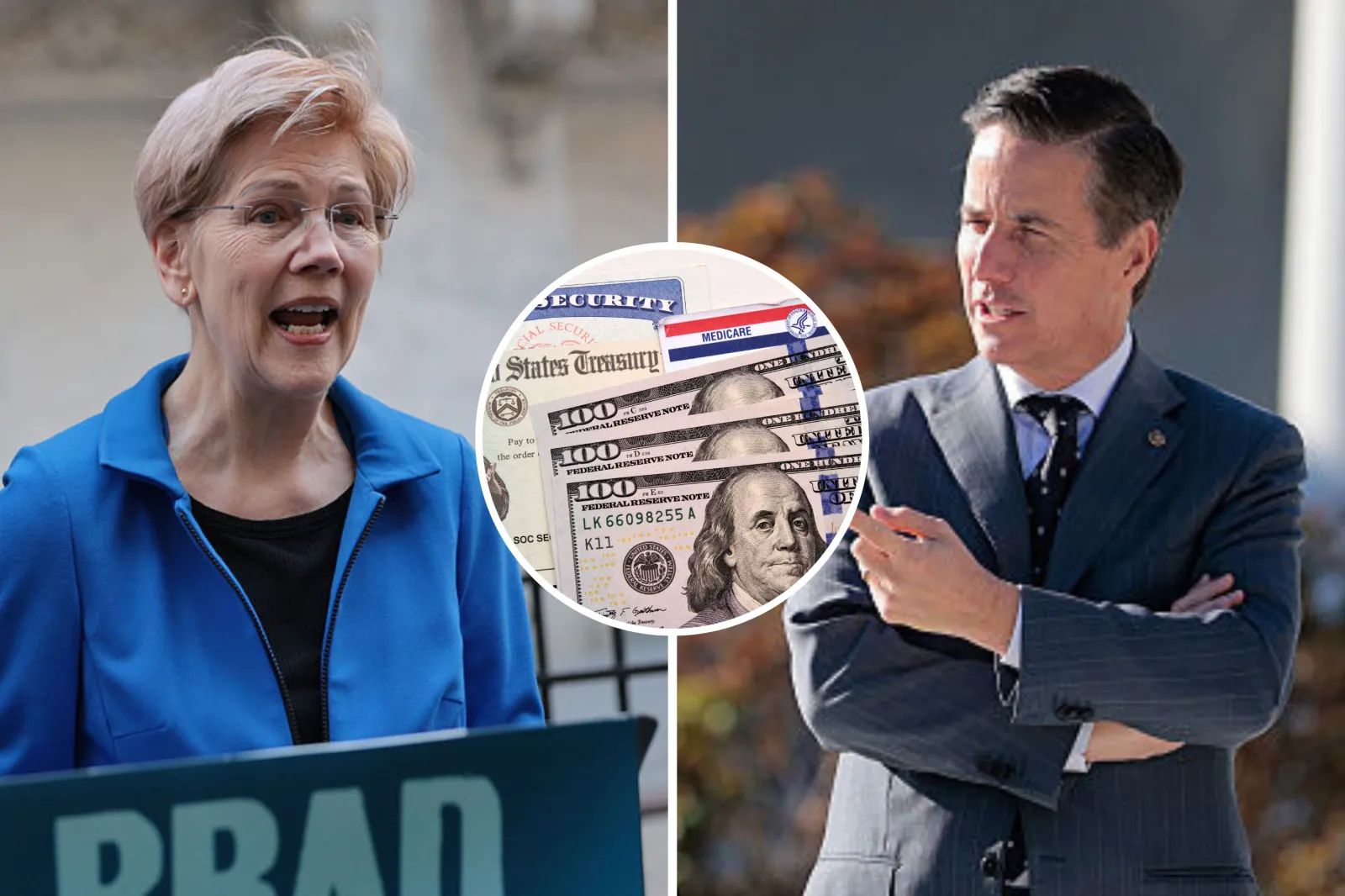
Senators Elizabeth Warren, a Massachusetts Democrat, and Bernie Moreno, an Ohio Republican, urged Congress in a new op-ed for The New York Times to take immediate action to stabilize Social Security.
In a joint opinion piece published Tuesday, the pair outlined a bipartisan plan they say would “save Social Security for generations of Americans.”
Specifically, the senators are looking to remove the cap on income subject to Social Security payroll taxes.
Read More on Politics
“Instead of cutting benefits for the retirees who count on Social Security, we need to take bipartisan action to protect those benefits, reward work and restore fairness,” Warren and Moreno wrote.
“That starts with a common-sense solution: lifting the Social Security payroll tax cap.”
Newsweek reached out to Warren and Moreno via email.
Why It Matters
Social Security provides benefits to tens of millions of Americans and has historically been a cornerstone of retirement security. But its financial outlook has worsened in recent years.
According to the most recent Social Security trustees report, the main trust fund could be significantly depleted by late 2032, at which point benefits could be cut by more than 20 percent.
What To Know
Warren and Moreno’s plan would dramatically shift how Social Security taxes are applied.
In 2026, Social Security taxes apply only to wages up to $184,500. Workers and employers each pay 6.2 percent on earnings up to that cap.
Under the current system, income above that threshold is not taxed for Social Security, meaning higher earners pay a smaller share of their total income into the program.
The senators proposed lifting or eliminating this cap, which would subject all earnings to the payroll tax.
“Why should a middle-class nurse pay a larger share of her paycheck — than a wealthy corporate lawyer?” Warren and Moreno wrote. “This is doubly unfair in an economy in which top earners’ wages, over time, have pulled far ahead of those of the average worker.”
...
In the op-ed, they argued the change would increase revenue flowing into Social Security and extend the program’s solvency.
The senators also framed their proposal as a fairness issue, arguing that most Americans already pay the tax on all of their income, while higher earners do not:
“Most Americans pay Social Security taxes on 100 percent of their earnings, while the highest earners are paying on only part of theirs,” they wrote.
Debate Around the Plan
The proposal is likely to spark debate in Congress, where lawmakers have long been divided over how to address Social Security’s long-term shortfall.
Some see raising the payroll tax cap as a relatively straightforward way to increase revenue without cutting benefits.
However, critics caution that the change would increase taxes on higher earners and may not fully resolve long-term funding gaps on its own.
“Warren and Moreno’s proposal is centered on removing or substantially raising the Social Security tax ceiling on high-income earners that they believe would bring trillions of dollars into the program and delay benefit cuts,” Alex Beene, a financial literacy instructor for the University of Tennessee at Martin, told Newsweek.
“However, it would also amount to a significant tax increase on high-income workers and businesses, and by itself may not close the entire long-term shortfall.”
What This Means for You
For current and future retirees, the stakes are high:
- Without action: Benefits could be reduced by more than one-fifth after 2032.
- Under proposals like this, higher earners may pay more into the system, while benefits would be preserved.
However, any major change would require legislation and likely take years to implement.
"If we are going to save Social Security, more money needs to be in the system, period. Endless discussions, commissions, and heated debates have just served to kick the can down the road. This is a real step forward," Drew Powers, the founder of Illinois-based Powers Financial Group, told Newsweek.
"But there are no two ways about it, this is a tax increase on everyone who earns more than $184,500, and tax increases are rarely popular. This will face an uphill battle to be passed, but it is an important step if we believe caring for our country’s senior citizens is a priority."
What Happens Next
Warren and Moreno said they are actively working on legislation to implement their proposal, though details of the bill have not been made public.
Any changes to Social Security would require congressional approval, which has historically proven difficult given the political sensitivity of the program.
With the trust fund’s projected depletion date approaching, pressure is mounting on lawmakers from both parties to reach a solution, whether through tax changes or benefit adjustments.
“The bipartisan sponsorship gives it more credibility than a typical party-line proposal, but passage will still be difficult because many lawmakers still oppose increasing payroll taxes on any income level,” Beene said.
Contact Newsweek editors on this story: Jason Lemon and Gray R. Thomas
View 0 Comments
Submit Correction
View Editorial & AI Guidelines