...

By Soo Kim
Reporter
0
Share
Newsweek is a Trust Project member
See more of our trusted coverage when you search.Prefer Newsweek on Googleto see more of our trusted coverage when you search.
The highest radiation levels in nearly two decades at altitudes used by commerical aviation—the result of a major solar storm—were detected by scientists last month. Storms any larger, the researchers warn, could disrupt aircraft electronic systems.
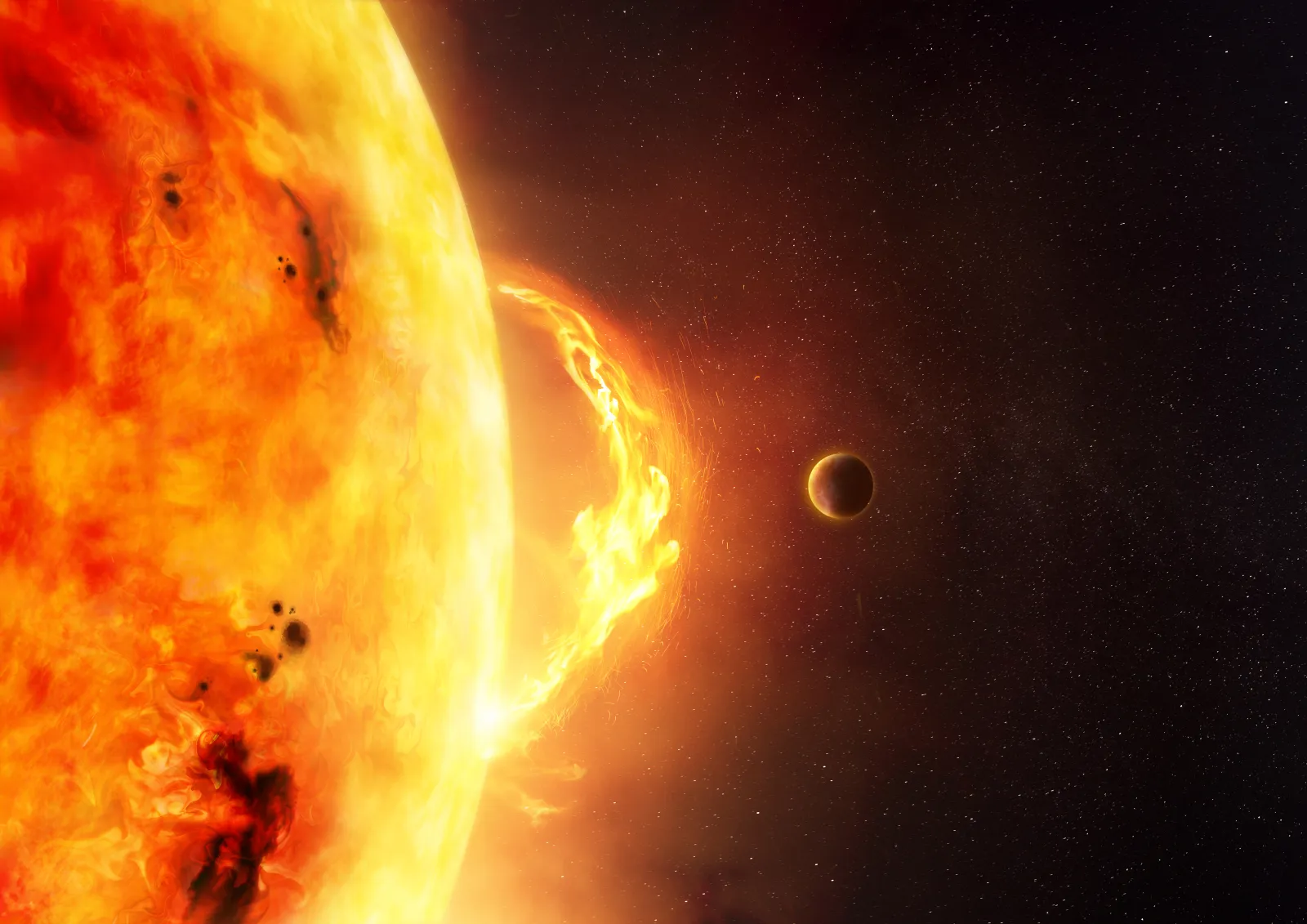
Caused by a solar flare, the space storm triggered a rare so-called 'Ground Level Enhancement' event on November 11, during which solar energetic particles penetrated deep into Earth's atmosphere, causing a radiation spike detectable at ground level.
Up in the atmosphere, the storm's impact was captured using new balloon-mounted space radiation probes developed by the Surrey Space Center at the University of Surrey in the United Kingdom.
Read More on Science
"This was the strongest Ground Level Event we've seen since December 2006,” professor Clive Dyer, a space weather expert at the Surrey Space Center, said in a statement.
“Neutron monitors around the world measured significant increases and, in conjunction with newly installed UK monitors at Lerwick, Guildford and Camborne, these will enable us to map the footprint of the event across the globe.”
"Our sensors have given the clearest picture yet of how rapidly conditions can change at aviation altitudes. We know from historical observations that significantly bigger events are possible, and we need to be ready."
...
The U.K. Met Office and the Royal Netherlands Meteorological Institute (KNMI) measured the solar storm in real time—at altitudes flown at by commercial aircraft altitude levels and into those used by business jets and supersonic transport—using weather observation balloons equipped with the Surrey Space Center sensors.
Radiation levels at 40,000 feet were measured to be at their highest since 2006, reaching nearly 10 times normal background levels for a short period.
While the latest solar event did not pose any immediate health concerns, larger storms in future could be more worrying, not least because they have the potential to disturb on-board aircraft electronic systems, the researchers warned.
At the recent storm's peak, so-called 'single-event upsets'—bit-flips in onboard computer memory caused by energetic particles—could have reached around 60 errors per hour per gigabyte, the team estimated.
Events such as the recent solar flare typically happen two or three times each solar cycle, but the sun has been “relatively quiet” over the past 20 years, according to the university.
The radiation surge seen on November 11 was only around two percent of the biggest event on record in 1956, when some planes would have received more than 100 times the normal dose, the university added.
Do you have a tip on a science story that Newsweek should be covering? Do you have a question about solar flares or radiation? Let us know via science@newsweek.com.
View 0 Comments
Submit Correction
View Editorial & AI Guidelines