...

By Alice Gibbs
Senior Reporter
0
Share
Newsweek is a Trust Project member
See more of our trusted coverage when you search.Prefer Newsweek on Googleto see more of our trusted coverage when you search.
A Soviet-era spacecraft stranded in orbit for more than half a century is now on a collision course with Earth.
Kosmos 482—originally launched on March 31, 1972, as part of the Soviet Union's ambitious Venera program to explore Venus—is expected to make a crash landing on Earth around May 9–10, 2025.
Due to a rocket malfunction shortly after launch, the spacecraft never made it out of Earth's orbit.
Read More on Science
Now, 53 years later, its descent module—a rugged, heat-shielded capsule engineered to survive atmospheric entry—will finally return home.
Re-entering Earth's atmosphere 53 years later
Unlike typical space junk, Kosmos 482's descent module was built to last. Weighing around 1,100 pounds and housed in a one-meter-wide spherical shell, it was intended to endure the searing heat and pressures of the Venusian atmosphere.
That durability means that there is a good chance it could survive also reentry into Earth's atmosphere.
However, its parachute system, designed to deploy during a Venus landing, is unlikely to function after more than five decades in space.
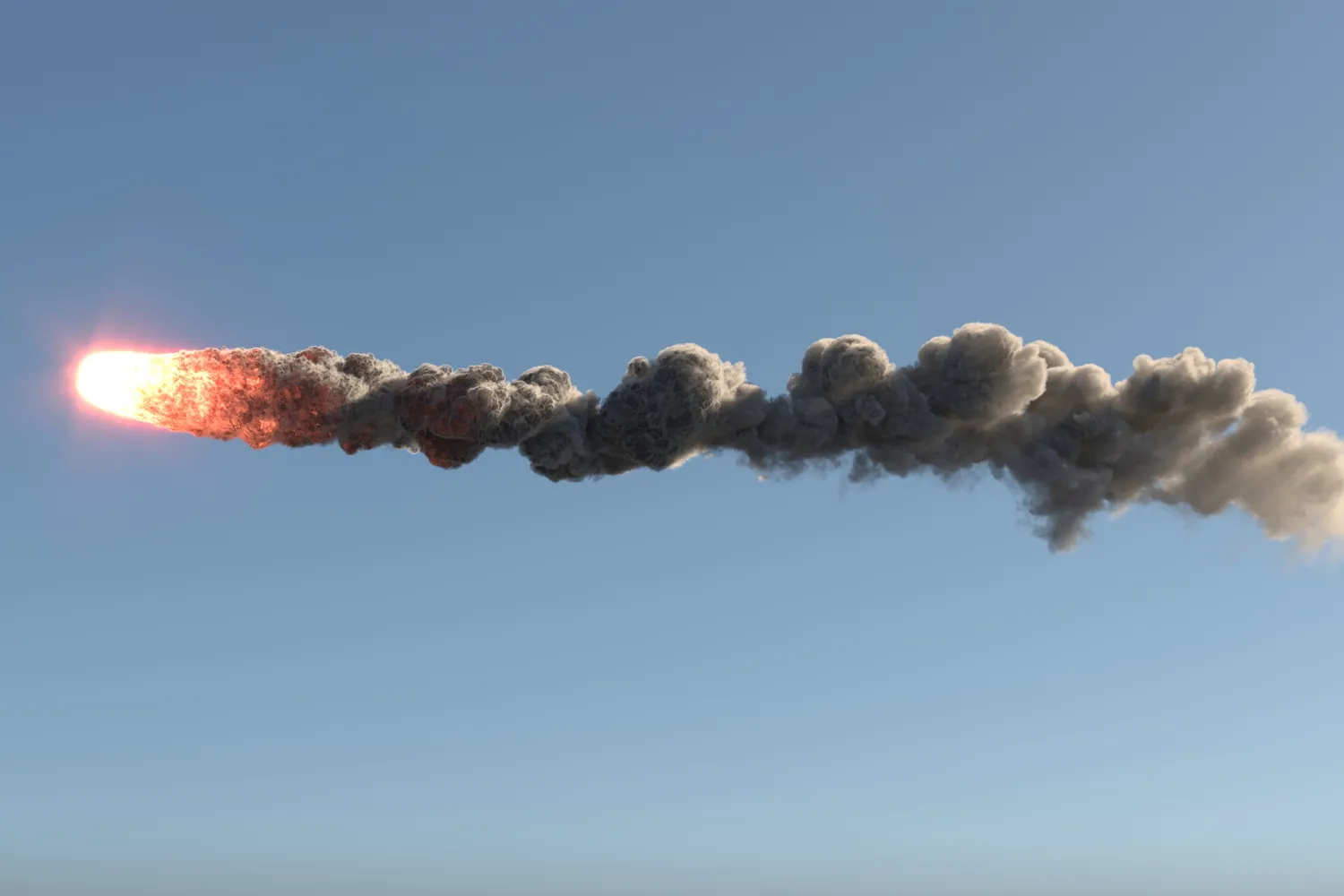
Experts expect it to hit the ground—or ocean—at speeds of up to 155 mph, similar to a small meteorite impact.
Should we be worried about the reappearance of Kosmos 482?
Marco Langbroek, a lecturer in Space Situational Awareness at Delft Technical University in the Netherlands has been following the space probe since 2019.
He told Newsweek: "The risk is not zero; but not too much, it is basically comparable, also in risk, to a meteorite fall, several of which happen each year."
...
Where will it land?
The precise location of Kosmos 482's reentry remains uncertain. The spacecraft's orbit crosses a vast swath of the globe between 52° North and 52° South latitude, which includes most of Earth's populated regions, including southern parts of the U.K., large parts of Europe, Asia, Russia, Canada and northern parts of the U.S.. But predicting an exact impact point remains nearly impossible until just hours before the event.
"All we can say is that it will be somewhere between latitudes 51.7 North and 51.7 South," Langbroek explained. "Even at the time of the reentry the model uncertainties... typically are half an hour or more. As the satellite is moving at 7.8 km/s [17,448 mph] in its orbit this uncertainty... means uncertainties of thousands of kilometers."
That unpredictability is mostly because of variations in Earth's upper atmosphere, particularly driven by solar activity, which affects how much atmospheric drag the spacecraft will experience.

...
A long fall from the edge of space
Kosmos 482's slow descent has been a decades-long process. Initially trapped in a predictable orbit, the spacecraft's path has gradually decayed due to atmospheric drag, especially at the lowest point of its orbit.
"Over the past 53 years, the apogee altitude [highest point of the orbit] has come down from initially 9800 km to 370 km as of yesterday," Langbroek said. "The lowest point in the orbit [the perigee], that for more than 50 years stayed more-or-less the same, is dropping."
Eventually, the craft will no longer have enough speed to complete another orbit.
"It will then reenter into the atmosphere," Langbroek said. "It essentially starts a free fall... I expect it to hit earth surface with a left-over speed of about 65–70 meters per second [150 mph]."
A reminder of the early space race
Kosmos 482 was launched just days after Venera 8, which did succeed in landing on Venus. Due to a faulty timer, the upper stage of Kosmos 482's rocket shut down prematurely, leaving it stranded.
In June 1972, its lander separated from the main bus. This eventually reentered Earth's atmosphere in 1981.
The object now on a collision course with Earth is the detached lander.
Who is responsible?
Under international law, Russia—as the legal successor to the Soviet Union—remains the owner and responsible party for Kosmos 482, in accordance with the 1967 Outer Space Treaty.
Still, the craft is now considered general space debris, like thousands of other defunct objects orbiting the planet.
With the majority of Earth's surface covered in water, the most likely outcome is an ocean splashdown. But until it happens, scientists and skywatchers will continue to monitor the descent of one of the oldest pieces of active space junk still aloft.
"You never know, there always is a small chance that it ends up in someone's backyard," Langbroek said.
Newsweek reached out to NASA and Russia's Roscosmos via email for comment.
Do you have a tip on a science story that Newsweek should be covering? Do you have a question about space junk? Let us know via science@newsweek.com.
View 0 Comments
Submit Correction
View Editorial & AI Guidelines