...

By Jon Paul Hoornstra
Contributing Sports Writer
0
Share
Newsweek is a Trust Project member
See more of our trusted coverage when you search.Prefer Newsweek on Googleto see more of our trusted coverage when you search.
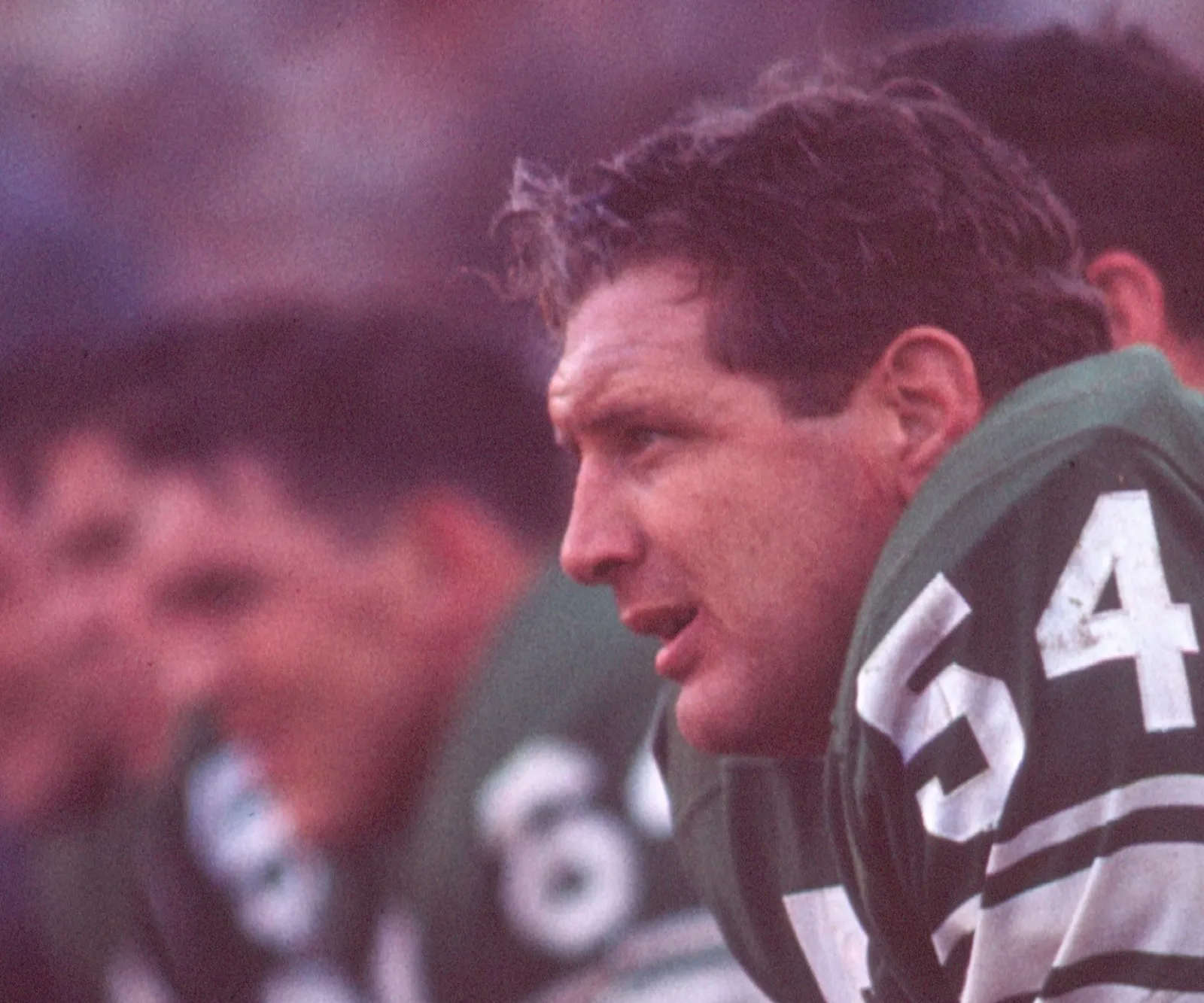
Ed Blaine, an All-Pro guard who played on a championship team in Green Bay before becoming a nationally regarded cardiovascular researcher, built a unique career that bridged professional football and medical science.
Blaine, who died March 22 after a brief illness at the age of 86, was recognized as a Hall of Famer by his college and a champion as a pro, but undoubtedly accomplished more off the gridiron than on.
Read More on NFL
More news: Former Jets Safety, Longtime Media Personality, Dies at 76
Blaine was born Jan. 30, 1940, in Farmington, Missouri. At the University of Missouri, he developed into one of the program’s best linemen while studying pre-med.
...
A three-year letterman from 1959-61, Blaine earned first-team All-American and All-Big Eight honors as a senior for the Tigers, and appeared in postseason all-star games, including the Senior Bowl and the College All-Star Game.
More news: College Football Hall of Famer, Heisman Trophy Runner-Up, Dies
The Green Bay Packers selected Blaine in the second round of the 1962 NFL Draft. On a roster coached by Vince Lombardi and anchored by veteran guards, he saw limited action as a rookie but was part of a team that won the 1962 NFL championship.
Traded to the Philadelphia Eagles in 1963, Blaine moved into a starting role and became a fixture on the offensive line. He started regularly and developed into one of the team’s most dependable blockers during a transitional period for the franchise.
More news: Former Cowboys Lineman, Super Bowl Veteran, Dies After Cancer Battle
Blaine's best season came in 1964, when he earned All-Pro recognition. Over five NFL seasons, he played in 70 games, starting 55.
While solid, Blaine’s football career was not his defining act.
After leaving the NFL in 1966, he returned to medicine, completing his training and embarking on a long career in pharmacology. He became director of the Dalton Cardiovascular Research Center at Missouri and a professor in medical pharmacology and physiology, focusing on hypertension and heart failure.
More news: Former Buccaneers Linebacker, 3-Year Pro, Dies Suddenly at 33
Blaine's work in science earned national recognition, extending his influence well beyond the field. He was also honored by the Boy Scouts of America as a Distinguished Eagle Scout.
Blaine was inducted into the University of Missouri Intercollegiate Athletics Hall of Fame in 1991 and later into the Missouri Sports Hall of Fame in recognition of both his athletic and professional achievements.
In a career that moved efficiently from the line of scrimmage to the laboratory, Blaine’s legacy rests on both: a dependable NFL guard and a physician-scientist whose second act reached further than his first.
For more NFL news, visit Newsweek Sports.
View 0 Comments
Submit Correction
View Editorial & AI Guidelines