...

By Jasmine Laws
Reporter
0
Share
Newsweek is a Trust Project member
See more of our trusted coverage when you search.Prefer Newsweek on Googleto see more of our trusted coverage when you search.
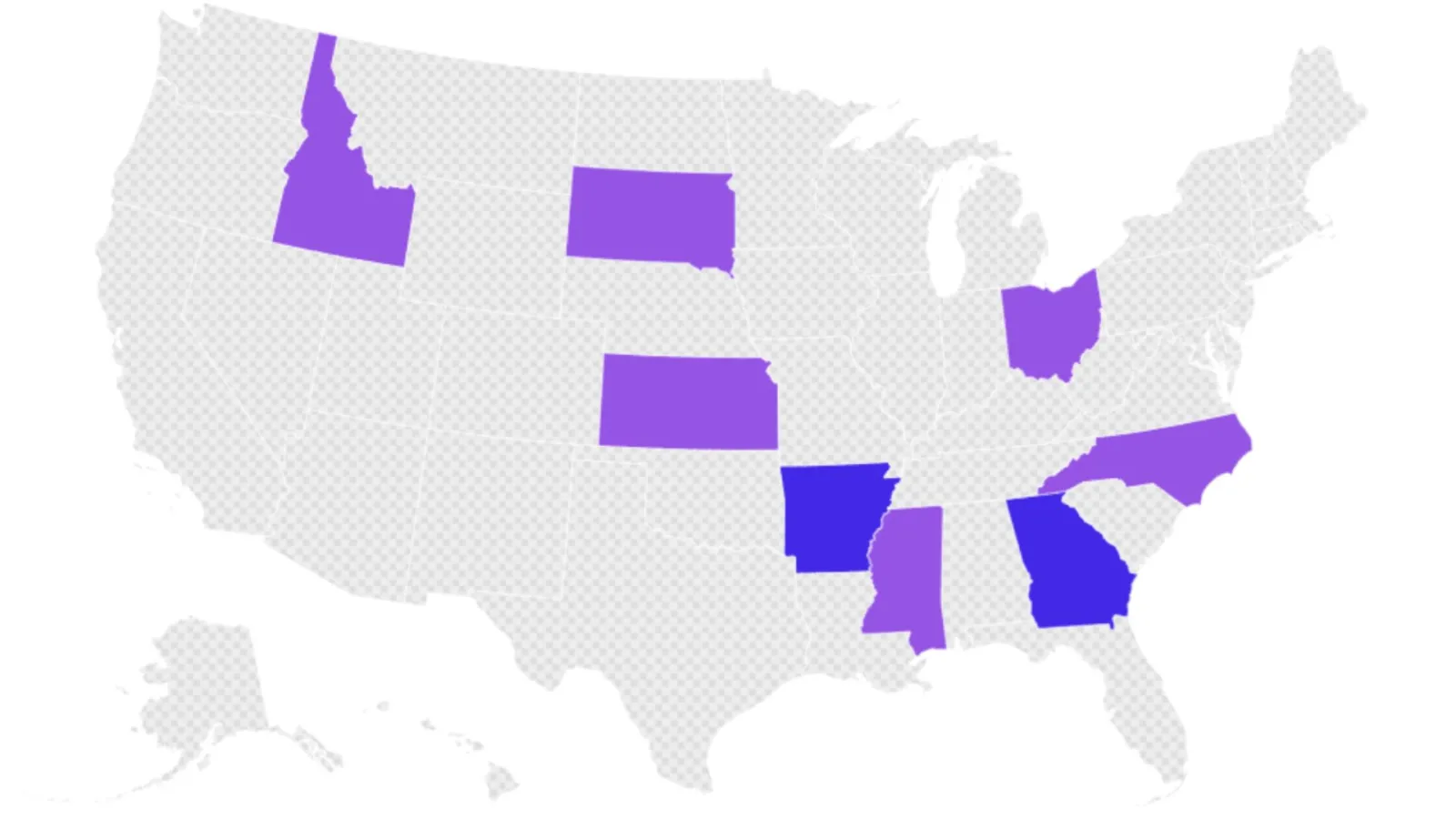
Governor Sarah Huckabee Sanders announced on Tuesday that Arkansas will bring in requirements for those using Medicaid to be in work or school, making the state the second to have such rules in place for 2025.
Georgia is the other state that has implemented work-based requirements for those seeking to gain Medicaid support, which were first established in 2023.
When Newsweek contacted Sanders for comment, the governor's communications office pointed Newsweek towards the letter Sanders sent to Department of Health and Human Services Secretary-Designate Robert F. Kennedy Jr.
Read More on News
Why It Matters
As Medicaid's main aim is to provide health coverage for those with limited incomes and resources, some have raised concerns that introducing work requirements would lead to many losing access to critical health services, according to the Foundation Commonwealth research firm.
What To Know
On Tuesday in a news conference, Sanders reportedly said the existing Arkansas Health and Opportunity for Me (ARHOME) Medicaid program will be updated to establish work and community engagement requirements, according to local news outlet K8 News.
Meanwhile, Michigan is set to eradicate such requirements, as of April this year, after a bill removing it was signed on January 21 by Governor Gretchen Whitmer, according to local news outlet mlive.com.
According to mlive, the work requirements in Michigan stipulated that those receiving Medicaid under the Healthy Michigan Plan had to complete 20 hours per week, or 80 hours per month, of working or going to school.
However, the requirements have not been active since they were ruled illegal in 2020 by a federal judge a few months after the legislation was passed by Republican lawmakers, mlive.com reported.
Before Arkansas announced it would be implementing work requirements, Georgia was the only state to have had such legislation in place, according to the Commonwealth Fund.
There are a number of other states that are considering, or are in the process of implementing, work requirements for Medicaid enrollees, as the map above shows.
According to health insurance website healthinsurance.org, Ohio reportedly plans to bring in work requirements for Medicaid this year, which will need federal approval. Per the outlet, the state has previously received approval for such legislation, but it was never brought into action.
In South Dakota, a ballot measure on the issue was approved in 2024, which allows the state to impose a work requirement for the Medicaid expansion population once it receives federal approval, according to healthinsurance.org.
For North Carolina, according to the site, the state may seek to implement work requirements for Medicaid after it expanded the eligibility of the program in 2023.
Mississippi, Idaho and Kansas have all reportedly considered legislation for work requirements in recent years, which were unsuccessful, so, per healthinsurance.org report, they may again try to get approval of the legislation under the President Donald Trump's new administration.
What People Are Saying
Sanders, reportedly wrote in a letter to U.S. Department of Health and Human Services Secretary-Designate Robert F. Kennedy Jr., shared with Newsweek: "Our goal is never to take services away from those who need it, but to help people stand on their own two feet, so they don't have to count on the government."
Mlive reported that Michigan state Representative Julie Rogers, a Democrat, said: "The repeal of the burdensome work requirements provision is a win for Michiganders who cannot afford commercial health insurance.
"Medicaid is healthcare, period, and was never intended to be a jobs program. Timely access to affordable medical care, including preventive screenings, prioritizes the well-being of our communities, saves our state money and avoids costly emergency room visits."
Dr. Megan B. Cole, co-director of Boston University Medicaid Policy Lab, told Newsweek: "Implementing work requirements within Medicaid is a policy priority for Congressional Republicans and the new Trump administration.
"While the theoretical idea is that Medicaid work requirements would incentivize individuals to work, this is very misguided—nearly all able bodied persons enrolled in Medicaid currently work. Those who do not work are either disabled or having care taking responsibilities.
"Rather, the Medicaid work requirement would merely serve as an administrative barrier to remaining enrolled in Medicaid, as it involves onerous administrative reporting requirements, where a small mistake in reporting your worked hours or a misinterpretation of the reporting instructions may drop you from insurance coverage entirely.
"Ultimately, work requirements do nothing to increase labor participation, while they would result in millions of Americans losing health insurance coverage."
Jamila Michener, Associate Professor of Government and Public Policy at Cornell University, told Newsweek: "Medicaid work reporting requirements are an ineffective policy mechanism that achieves little except to create barriers to healthcare access.
"Work requirements have already proven to be a failed policy that produce no discernable benefit. There is growing evidence of the harms of work reporting requirements including cutting off access to health care, driving up uninsured rates, increasing the burden of medical debt, and a range of other adverse consequences.
"Work reporting requirements create administrative burdens for already vulnerable populations. They also create confusion and unwarranted disenrollment from Medicaid, as people often don't know about them, causing perfectly eligible beneficiaries to lose benefits simply due to lack of information."
Professor Michener added that the "harmful effects" of work requirements "are concentrated among Black Medicaid beneficiaries, making the policy a driver of inequality."
Dr. Paul Shafer, co-director of Boston University Medicaid Policy Lab, told Newsweek: "[Work requirements] are a solution in search of a problem. At worst, they are a way to slash the Medicaid rolls by burying people in more paperwork who already meet the requirements.
"Most working aged Medicaid enrollees are already working; have other qualifying activities, like caregiving responsibilities or being a student; or are disabled or pregnant. The argument that we need force people on Medicaid to work is backwards, people are able to work and hold down better jobs if they are healthy.
"The Congressional Budget Office estimated in 2023 that work requirements would kick 600,000 Americans off of Medicaid without increasing employment."
Shafer added that "when Arkansas implemented work requirements back in 2018, the policy was poorly understood and enrollees had difficulty reporting their activity.
"They also did not see increased employment among low-income adults in the state," he said.
He also said: "A 2019 study found that a majority of Medicaid expansion enrollees in Michigan reported that Medicaid coverage made it easier to look for a job and do a better job at work, countering the argument that work requirements are needed at all."
What's Next
Introducing work requirements for Medicaid recipients is something the GOP has suggested could be brought into action under the Trump administration, but there would be some exemptions, such as pregnant women, primary caregivers of dependents, individuals with disabilities or health-related barriers to employment, and full-time students.
Update 01/30/25, 09:47 a.m. ET: This article has been updated with comment from Dr. Megan B. Cole.
Update 01/30/25, 10:12 a.m. ET: This article has been updated with comment from Professor Jamila Michener.
Update 01/31/25, 03:08 a.m. ET: This article has been updated with a response from Sanders' office and comment from Dr. Paul Shafer.
View 0 Comments
Submit Correction
View Editorial & AI Guidelines