
...

By Amanda Greenwood
Associate News Editor
0
Share
Newsweek is a Trust Project member
See more of our trusted coverage when you search.Prefer Newsweek on Googleto see more of our trusted coverage when you search.
California's recent admission that it was using several high-risk artificial intelligence systems after previously reporting none has highlighted a growing reality: AI is already helping shape U.S. government decisions that affect millions of people.
In a report by Cal Matters published in June 2026, state officials disclosed in June that California agencies were using six high-risk AI systems in areas ranging from fraud detection to education oversight, despite earlier disclosures indicating no such systems were in operation.
The tools are used to flag potential unemployment fraud, monitor university examinations and identify suspected AI-generated student work.
Read More on News
The episode has fueled broader concerns about transparency. Critics argue that, if governments struggle to track their own AI systems, the public may have little visibility into how automated tools are influencing important decisions.
That debate matters because AI is no longer confined to experimental pilot programs. Across the country, states are using algorithms to help guide criminal justice decisions, process benefits claims, monitor students and manage transportation systems—areas that can directly affect people's rights, finances and daily lives.
California is far from alone.
How States Are Using AI in Criminal Justice

...
One of the most controversial uses of AI is in criminal justice. California uses systems designed to estimate the likelihood that incarcerated individuals will reoffend, while states including Pennsylvania have developed risk-assessment tools intended to support judicial decision-making.
Algorithms such as COMPAS (Correctional Offender Management Profiling for Alternative Sanctions) are also used in several states, including Pennsylvania, New York, Wisconsin and Florida, to generate risk scores that can influence decisions related to bail, parole and sentencing.
Critics have long questioned whether such systems can reinforce existing biases, while supporters argue they provide consistency and data-driven insights.
AI Is Also Shaping Benefits Decisions
States increasingly rely on AI to manage benefits programs, identify potential fraud and process large volumes of claims.
California has used automated systems to evaluate unemployment claims, while Nevada recently introduced an AI-assisted process that helps draft unemployment appeal rulings for human review.
The risks of automation have also become clear. Michigan's unemployment fraud detection system wrongly identified thousands of people as fraudsters before the state returned to greater human oversight, a case frequently cited by advocates calling for stricter safeguards.
Schools and Universities Are Turning to AI

...
AI is spreading rapidly through education systems. California uses tools designed to detect AI-generated assignments, while Wisconsin operates an algorithm-driven early-warning system that predicts which students may be at risk of not graduating.
Schools are also experimenting with AI-powered tutoring systems, personalized learning tools and administrative software, reflecting the technology's growing role in classrooms nationwide.
Managing Roads and Traffic With AI
...
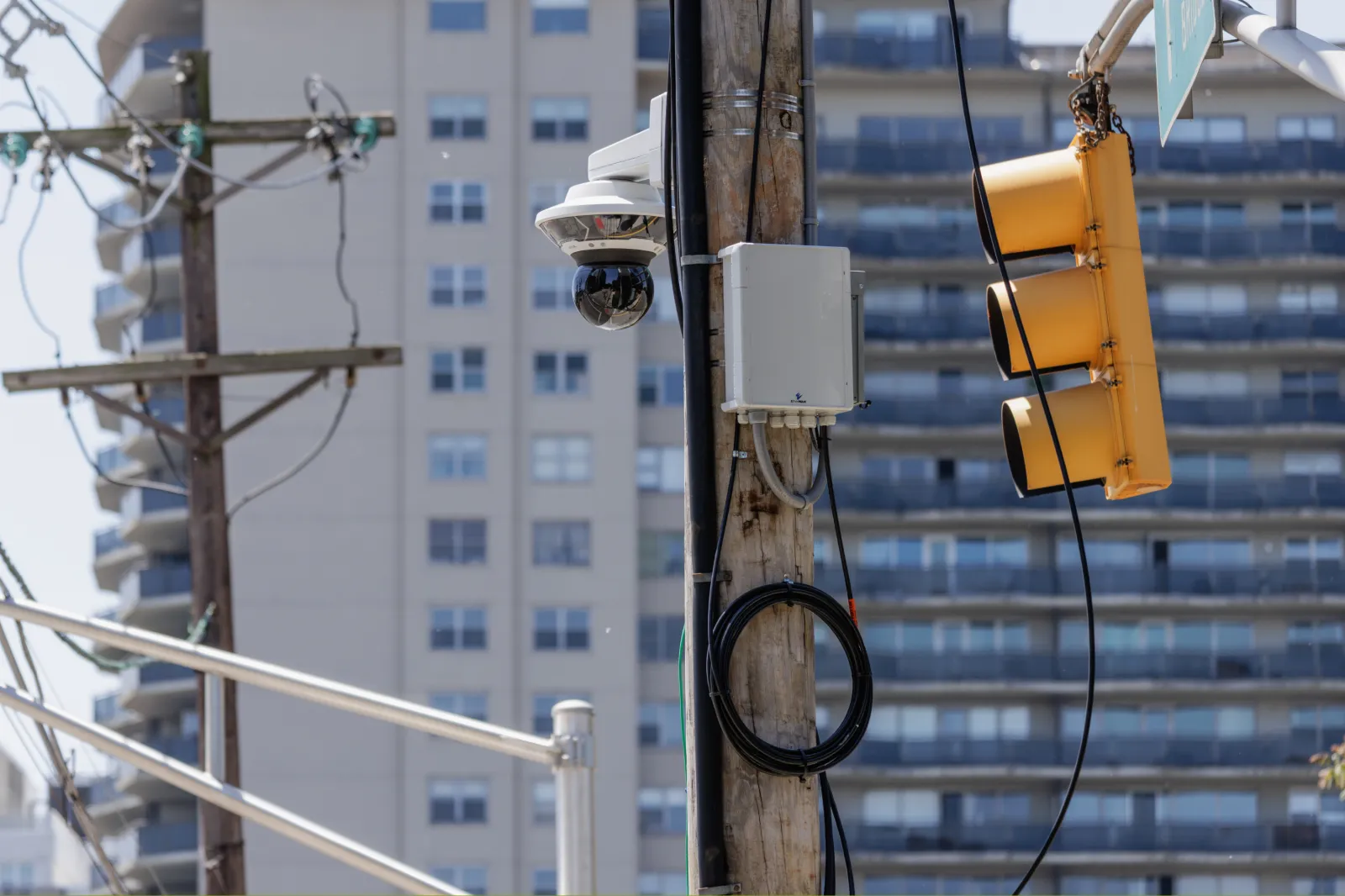
Transportation departments are increasingly using AI to manage congestion, monitor infrastructure and make real-time operational decisions.
Texas, Tennessee and North Carolina have all deployed systems that analyze traffic data and adjust roadway operations based on live conditions.
Supporters argue these systems can reduce congestion and improve efficiency, while critics warn that increased automation can raise concerns about oversight and accountability.
Which States Are Furthest Ahead?
While adoption is widespread, according to GL Solutions, some states are emerging as leaders:
- California: broad use across criminal justice, benefits, and government services
- Texas: use of AI in Medicaid oversight and fraud detection
- New York: AI-driven unemployment fraud detection systems and consumer protection
- Virginia: AI-powered transportation systems for traffic management
Other states, including Colorado, Utah, and Virginia, are also advancing policy frameworks or pilot programs focused on AI governance and deployment, though the scope and specifics vary.
A Nationwide AI Shift Is Already Happening
Taken together, these examples show that AI is no longer experimental in state government. It is already embedded in many of the systems that help determine how public services are delivered and how government agencies make decisions.
Nearly every state has tested or deployed AI in some capacity, whether through fraud detection, education systems, transportation networks or administrative functions.
Adoption is accelerating as agencies confront staffing shortages, rising workloads and pressure to improve efficiency through automation.
The debate is increasingly shifting away from whether governments should use AI and toward how those systems should be governed.
As AI becomes more deeply embedded in government operations, lawmakers, watchdog groups and citizens are asking a fundamental question: how much transparency and accountability should exist when algorithms help shape decisions that affect people's lives?
View 0 Comments
Submit Correction
View Editorial & AI Guidelines