
10
Loading video...


By Leonardo Feldman and Gabe Whisnant
0
Share
Newsweek is a Trust Project member
See more of our trusted coverage when you search.Prefer Newsweek on Googleto see more of our trusted coverage when you search.
President Donald Trump responded to a question from Newsweek on Wednesday about the status of the Strait of Hormuz.
The Strait of Hormuz, a narrow waterway off Iran’s coast that has effectively been shut by the war, is so critical to the global economy that governments are already drawing up plans to quickly reopen it to oil tankers and other shipping once fighting ends.
The president, departing the White House for a trip to Kentucky and Ohio, responded to a question from Newsweek's Leonardo Feldman about reopening the crucial straight to cargo, "It’s working out very well, and I think you are going to see that."
Read More on U.S.
Why It Matters
A surge in oil prices points to what may be Iran’s most effective weapon and the United States’ biggest vulnerability in continuing the campaign: Damaging the world economy. Wednesday’s major developments include Iranian attacks against commercial ships — setting a Thai cargo ship ablaze in the Strait of Hormuz — and drones targeting Dubai International Airport, escalating a campaign of squeezing the oil-rich region as global energy concerns mount.

...
Iran appears to be continuing oil exports through the Strait of Hormuz despite the escalating conflict, according to U.S. officials and shipping data. The United States has vowed to keep the vital waterway open and has carried out heavy airstrikes targeting Iran’s navy and the port city of Bandar Abbas.
The U.S. military said Tuesday it destroyed 16 Iranian minelaying vessels near the strait, though Trump said on social media there were no reports that Iran had actually mined the passage. Some oil tankers believed to be linked to Iran have continued transiting the strait using so‑called “dark” voyages, switching off tracking systems commonly disabled by vessels carrying sanctioned crude.
The commodity‑tracking firm Kpler said Iran has also resumed crude exports through its Jask oil terminal on the Gulf of Oman, reporting that a tanker loaded about 2 million barrels there on March 7.
Who Controls the Strait of Hormuz?
The Strait of Hormuz lies between Iran to the north and Oman to the south, with shipping lanes passing through the territorial waters of both countries but governed by international maritime law. Iran exerts significant influence because of its long northern coastline and control of nearby islands overlooking the narrow shipping lanes, while Oman oversees the southern side.
The United States and allied navies also operate in the area to protect freedom of navigation, though Iran’s military posture has given it leverage during periods of conflict.
Former naval officers familiar with the narrow Strait of Hormuz say ships would be highly vulnerable if military forces attempted to reopen the waterway before fighting ends.
“In today’s context, sending warships or civilian vessels into the Strait of Hormuz would be suicidal,” retired French Vice Adm. Pascal Ausseur told The Associated Press.
A cease-fire with Iran, he said, “would move the situation from suicidal to dangerous,” allowing military vessels to deploy and escort operations to begin.
How Much Oil Passes Through the Strait?
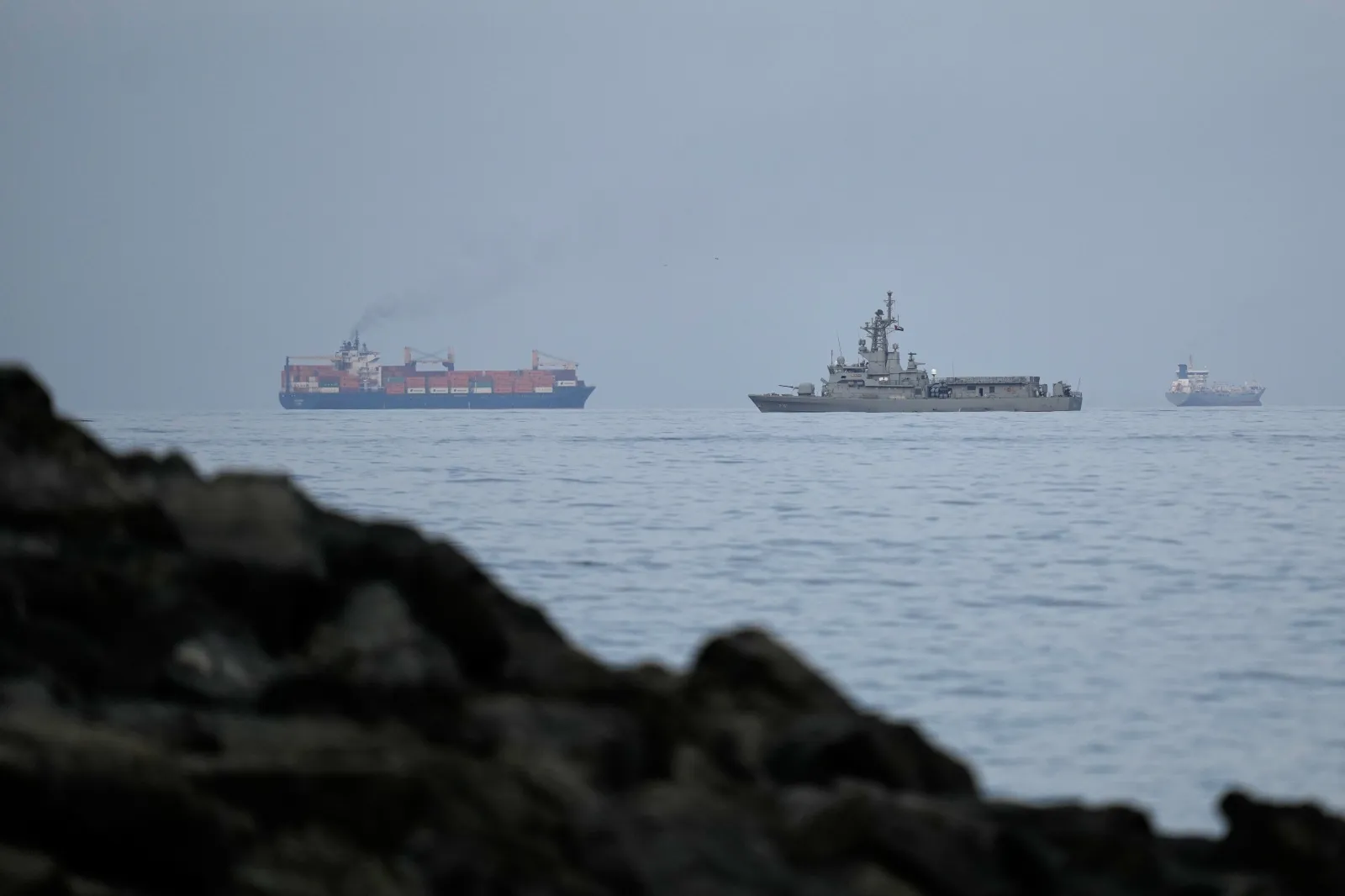
Roughly 20 million barrels of oil per day — about one‑fifth of global petroleum consumption — normally transit the Strait of Hormuz, according to U.S. Energy Information Administration data. The waterway is also a critical route for liquefied natural gas, carrying about 20 percent of global LNG trade, largely from Qatar. Most of the oil shipped through the strait is bound for Asian markets, making disruptions especially significant for global energy prices.
...
Why Is the Strait Closed?
Shipping through the Strait of Hormuz has sharply declined amid the war after Iranian threats, missile and drone attacks near the waterway, and U.S. military strikes on suspected Iranian minelaying vessels. Many shipping companies and insurers have pulled back because of safety risks and soaring insurance costs, effectively halting commercial traffic even without a formal blockade. Iranian forces have warned vessels against transiting the strait, while repeated attacks on commercial ships have reinforced concerns about navigation through the area.
What Is the Narrowest Point in the Strait of Hormuz?
At its narrowest point, the Strait of Hormuz is about 21 miles wide, but the shipping lanes used by large tankers are far narrower. Vessels travel through two lanes — one inbound and one outbound — each about 2 miles wide, separated by a buffer zone. This tight geography makes the strait a natural chokepoint and leaves ships highly vulnerable to mines, missiles and other attacks.
Updates: 3/11/26, 1:24 p.m. ET: This article was updated with new information and remarks.
Updates: 3/11/26, 1:24 p.m. ET: This article was updated with new information.
This article includes reporting by the Associated Press.
In a polarized era, the center is dismissed as bland. At Newsweek, ours is different: The Courageous Center—it's not "both sides," it's sharp, challenging and alive with ideas. We follow facts, not factions. If that sounds like the kind of journalism you want to see thrive, we need you.
When you become a Newsweek Member, you support a mission to keep the center strong and vibrant. Members enjoy: Ad-free browsing, exclusive content and editor conversations. Help keep the center courageous. Join today.


View 0 Comments
Submit Correction
View Editorial & AI Guidelines