...

By Suzanne Blake
Reporter
0
Share
Newsweek is a Trust Project member
See more of our trusted coverage when you search.Prefer Newsweek on Googleto see more of our trusted coverage when you search.
House Republicans have introduced a bill that would formally authorize the transfer of millions of federal student loan accounts from the Department of Education to the Treasury Department.
This would codify the Trump administration's effort to shrink the Education Department's role in managing student debt into law.
The proposal is among 10 bills unveiled by House Republicans aimed at what they describe as "right-sizing" the Department of Education by shifting certain responsibilities to other federal agencies.
Read More on Education
Why It Matters
The change could affect more than 40 million Americans with federal student loans and massively reshape how the government's roughly $1.7 trillion student loan portfolio is administered.
For borrowers, the proposal raises questions about who will ultimately manage their loans and how their repayment programs will operate. Some are also concerned about whether the Treasury has the operational infrastructure needed to oversee millions of student loans.
...
What To Know
The transfer of the student loans from the Education Department to Treasury would likely occur in stages.
The first phase would focus on borrowers who have already defaulted on their federal student loans, according to an agreement between the Education and Treasury departments released in March.
The Treasury would assume operational responsibility for collecting those debts. Eventually, management of non-defaulted loans would go to the Treasury as well.
The new legislation effectively wrote that earlier plan between the agencies into law.
“This proposal would not erase student loans or automatically change what they owe, but would instead move the operation behind federal student-loan servicing and collection from the Education Department toward the Treasury Department, starting with defaulted loans and potentially expanding from there,” Alex Beene, financial literacy instructor for the University of Tennessee at Martin, told Newsweek.
“While the change hypothetically shouldn't impact borrowers significantly, it could result in new portals, new notices, new collections and processes that borrowers will have to stay aware of in order to navigate correctly.”
House Education and Workforce Committee Chairman Tim Walberg said the bills are designed to move responsibilities to agencies that Republicans believe are better equipped to carry them out.
"Rather than allowing unnecessary layers of Washington bureaucracy stand between families and the services they rely on, the bills would transfer key statutory authorities to agencies better equipped to carry them out," Walberg said in a statement.
What Borrowers Should Expect
At least for now, borrowers are not expected to see immediate changes to how they make their payments.
When the Treasury-Education agreement was initially announced, officials said borrowers would continue working with their existing loan servicers and continue making payments the same way while the transition occurs.
The first borrowers likely to be affected are those with loans already in default.
For months, the Treasury has been preparing to assume responsibility for the defaulted federal student loan portfolio, which the Trump administration said could improve collections and taxpayer accountability.
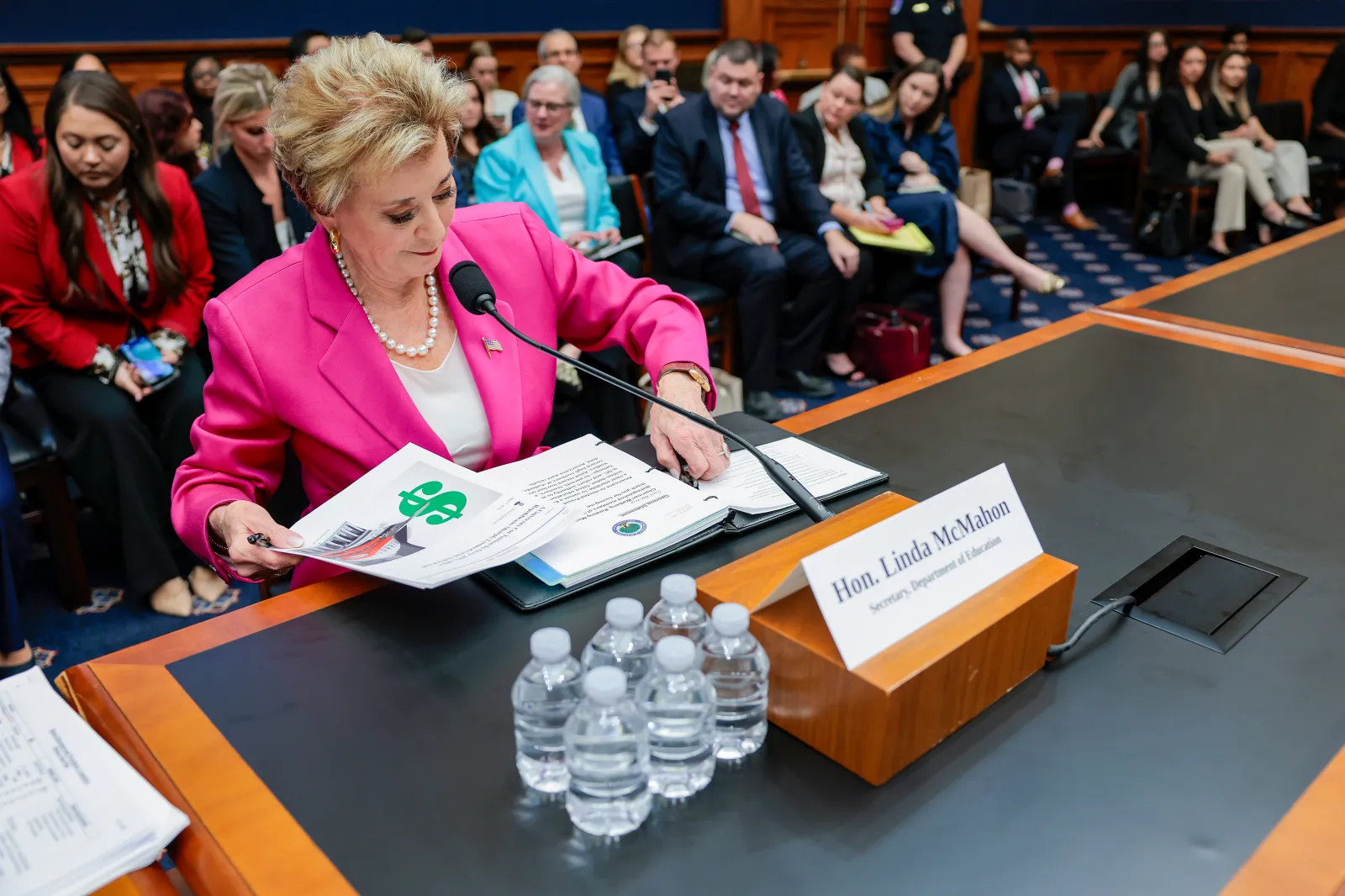
In March, Education Secretary Linda McMahon said that the department had "failed to effectively manage" federal student loan programs, while Treasury Secretary Scott Bessent said the Treasury has "the unique experience, the operational capability, and the financial expertise to bring long overdue financial discipline to the program and be better stewards of taxpayer dollars."
Possible Borrower Confusion
Not everyone agrees that shifting student loans to the Treasury will improve the system.
There’s some concern around whether the Treasury has the infrastructure required to manage the complex repayment and forgiveness programs historically administered by the Education Department.
“Supporters will argue Treasury is better suited to manage a massive federal debt portfolio, but the risk is that student loans are not just ordinary debt,” Beene said. “The fear would be if the transfer proves to be challenging, it could result in damaged credit and delayed relief.”
There are also legal concerns. Federal law assigns responsibility for federal student aid programs to the Education Department, and shifting the loan accounts to the Treasury could face court challenges.
How Many Borrowers Could Be Affected?
The federal government oversees approximately $1.7 trillion in student debt, and defaulted loans alone account for roughly $180 billion, or about 11 percent, of the federal portfolio.
More than 40 million Americans hold federal student loans, and a larger dismantling of the Department of Education could hold far-reaching implications for these borrowers.
What Happens Next
The proposal will need to advance through Congress before becoming law.
However, the Trump administration is continuing to prepare for the student loan transfer under the March agreement between the Education and Treasury departments.
Contact Newsweek editors on this story: Jason Lemon and Edward T. Cummins.
View 0 Comments
Submit Correction
View Editorial & AI Guidelines