...

By Gabe Whisnant
News Editor
0
Share
Newsweek is a Trust Project member
See more of our trusted coverage when you search.Prefer Newsweek on Googleto see more of our trusted coverage when you search.
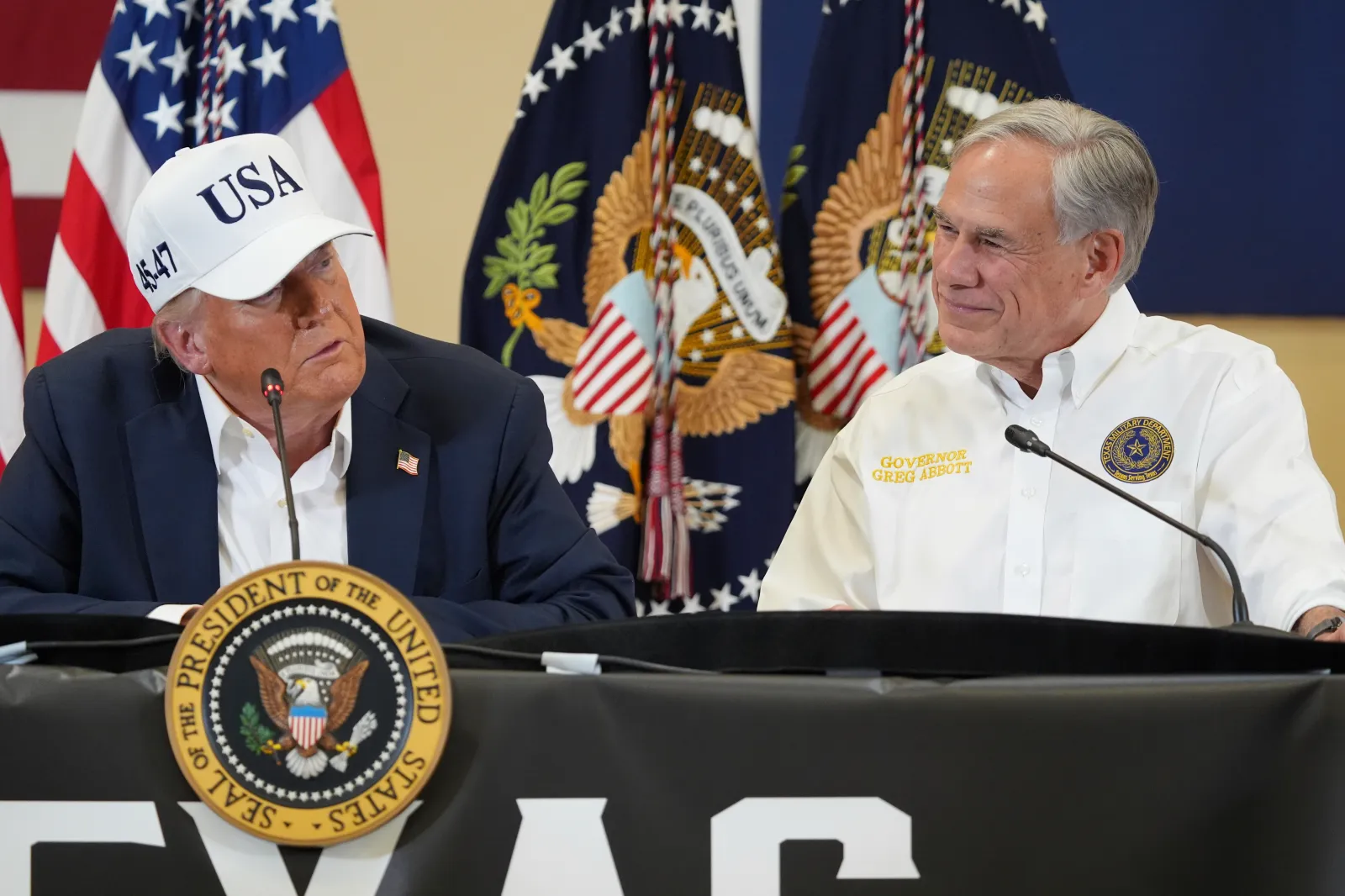
The Supreme Court on Thursday allowed Texas to move forward with using its new congressional map in next year’s elections, granting a significant victory to state Republicans and President Donald Trump even as a lower court found the plan was likely drawn to diminish the influence of Black and Latino voters.
The unsigned order, issued as part of an emergency appeal, pauses a 2–1 ruling that had blocked the map. Texas officials had urged the court to act quickly, noting that candidate qualifying for the March primaries is already underway.
Why It Matters
With the Supreme Court’s intervention, Texas voters will cast ballots under the new map next year unless the justices later rule otherwise — a decision that could have major implications for the fight over control of the U.S. House.
Read More on News
...
What To Know
Justice Samuel Alito had previously issued a temporary administrative stay while the full court weighed the request. The high court’s decision follows a pattern in recent years in which it has halted lower-court rulings in redistricting disputes close to election deadlines, including in Alabama and Louisiana. The Texas plan, enacted last summer at Trump’s urging, is designed to give Republicans five additional U.S. House seats and has become a flashpoint in a broader, nationwide fight over political maps ahead of the 2026 elections.
Texas was the first state to meet Trump’s call for aggressive partisan remapping, and several others soon followed. North Carolina and Missouri each approved maps expected to add a Republican seat, while California voters backed a ballot measure projected to give Democrats five new seats. Those maps, like Texas’, have been challenged in court. A three-judge panel has allowed North Carolina to use its new districts in 2026, while litigation continues in California and Missouri. The Trump administration is suing to block California’s changes but urged the Supreme Court to leave Texas’s map intact during its appeal.
The justices are also considering a separate Louisiana case that could further narrow how race may be considered under Section 2 of the Voting Rights Act, an outcome that could ripple through the current redistricting cycle. For now, the Texas map will remain in place despite a sharply worded ruling from two lower-court judges who determined that the plan likely violates the Constitution by diluting minority voting strength.
U.S. District Judges Jeffrey V. Brown and David Guaderrama found that the state’s mapmakers engaged in racial gerrymandering when drawing new districts. Brown, appointed by Trump, wrote that while partisan politics clearly influenced the process, “it was much more than just politics,” concluding that extensive evidence showed intentional discrimination. Guaderrama, appointed by President Barack Obama, joined the opinion.
The decision prompted an unusually blistering dissent from Judge Jerry Smith, a Reagan appointee on the three-judge panel. Smith accused Brown of “pernicious judicial misbehavior” for issuing the ruling before he believed adequate deliberation had occurred.
On the merits, he criticized the majority’s findings as so unfounded that, he wrote, they “would be a candidate for the Nobel Prize for Fiction.” He added that “the main winners” from blocking the map would be liberal donor George Soros and California Gov. Gavin Newsom, while “the obvious losers are the People of Texas and the Rule of Law.”
...
What People Are Saying
Texas Attorney General Ken Paxton said the Supreme Court's order "defended Texas’s fundamental right to draw a map that ensures we are represented by Republicans.": “Texas is paving the way as we take our country back, district by district, state by state. This map reflects the political climate of our state and is a massive win for Texas and every conservative who is tired of watching the left try to upend the political system with bogus lawsuits.”
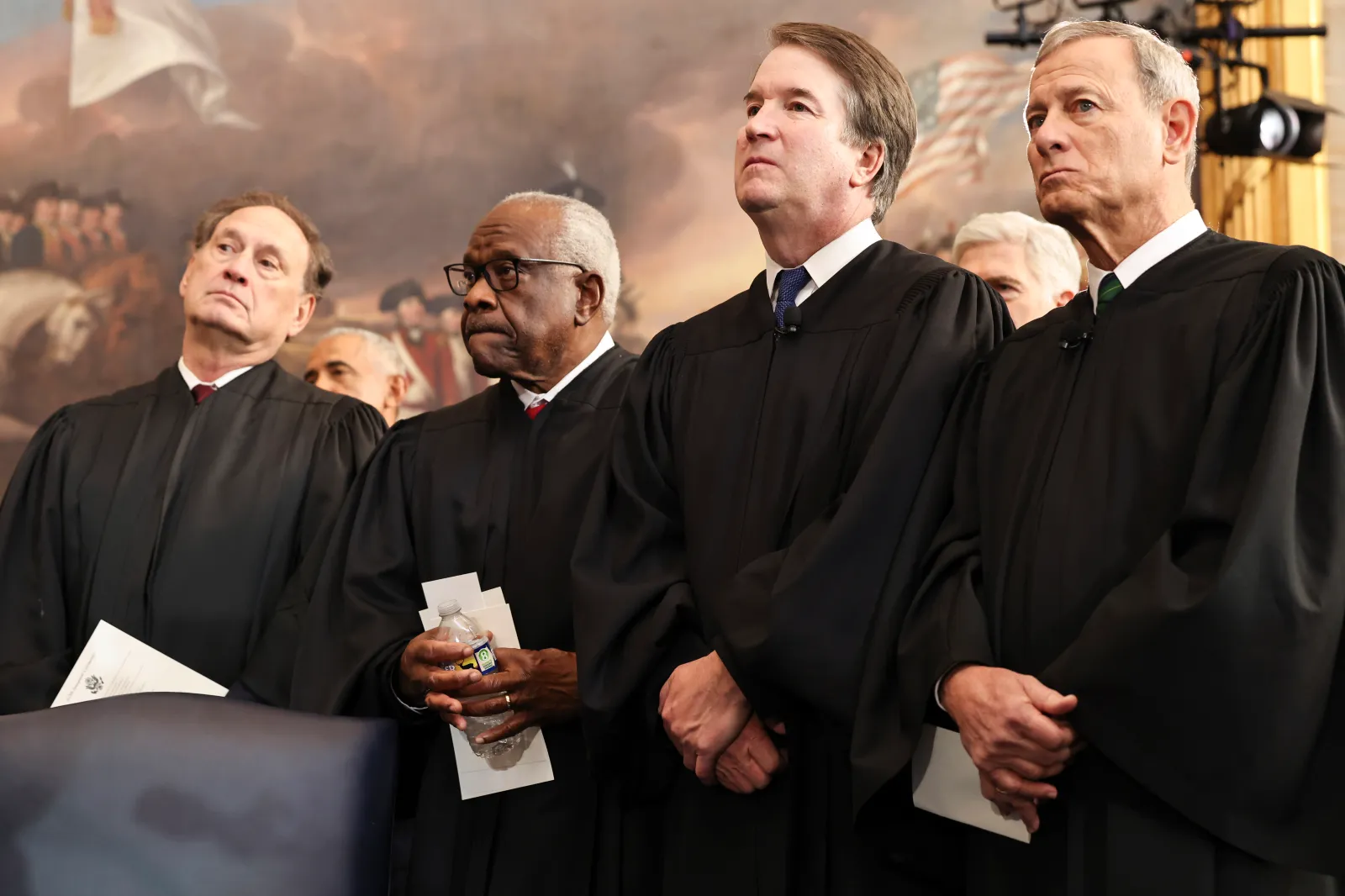
In a dissent joined by the court’s three liberal justices, Justice Elena Kagan argued that the majority should not have stepped in at this stage of the case. Doing so, she wrote, “ensures that many Texas citizens, for no good reason, will be placed in electoral districts because of their race. And that result, as this Court has pronounced year in and year out, is a violation of the Constitution.”
Democratic National Committee Chair Ken Martin said in a statement, “Today’s decision by the Supreme Court to allow Texas Republicans’ rigged, racially gerrymandered maps to go into effect is wrong — both morally and legally. Once again, the Supreme Court gave Trump exactly what he wanted: a rigged map to help Republicans avoid accountability in the midterms for turning their backs on the American people. But it will backfire. Texas Democrats fought every step of the way against these unlawful, rigged congressional maps and sparked a national movement. Democrats are fighting back, responding in kind to even the playing field across the country. Republicans are about to be taught one valuable lesson: Don’t mess with Texas voters. The DNC stands committed to building power in Texas, no matter the maps in play, one election at a time.”
Richard Hasen, an election law expert at the University of California at Los Angeles law school, wrote on the Election Law Blog that the high court's vote “is a green light for there to be even more re-redistricting, and a strong message to lower courts to butt out."
What Happens Next
Thursday’s order does not settle whether the Texas map is lawful — it only freezes the lower court’s ruling so the map can be used in the upcoming election. The case now returns to the Supreme Court’s regular docket, where the justices must decide whether to take it up for full briefing and argument later this term or issue a summary decision based on the filings already submitted.
That means the underlying question — whether Texas unconstitutionally diluted the power of Black and Latino voters — remains unresolved. The timing is critical: unless the Court later reverses itself, today’s stay ensures the GOP-drawn map will govern the 2026 races while broader redistricting battles continue in courts around the country.
Updates: 12/4/25, 7:34 p.m. ET: This article was updated with new information and remarks.
This article includes reporting by the Associated Press.
View 0 Comments
Submit Correction
View Editorial & AI Guidelines