...

By Robert Alexander
Senior Crime & Court Reporter
0
Share
Newsweek is a Trust Project member
See more of our trusted coverage when you search.Prefer Newsweek on Googleto see more of our trusted coverage when you search.
A federal immigration class action has raised unusual questions about the security of the judiciary and the pressures surrounding high-profile cases involving President Donald Trump.
In the case brought by five Venezuelan men challenging their detention and potential removal from the United States, Delaware attorney Meghan Kelly submitted a motion seeking permission to file a second amicus brief—a filing by a non-party to a case offering information, expertise, or arguments intended to assist the court—outlining what she describes as systemic threats to judicial independence.
Newsweek contacted the DOJ for comment via email outside of normal office hours on Thursday.
Read More
Congress Rewrites Hemp Definition, Reshaping Cannabis Rules4 min read

Supreme Court’s Birthright Citizenship Ruling: What To Know11 min read

Judge Orders Key Testimonies in Kristi Noem Criminal Inquiry5 min read

Why It Matters
In a federal immigration case already drawing national attention, a new court filing has escalated concerns about the integrity of the judiciary itself.
Delaware attorney Meghan Kelly argues that judges at every level—from the trial bench to the Supreme Court—may be facing improper political pressure, raising questions about whether recent landmark rulings and ongoing proceedings can be insulated from threats or retaliation.
Her motion, submitted in J.G.G. v. Trump, contends that such pressures could undermine due-process rights for detained immigrants and erode the courts’ ability to function as neutral arbiters, placing judicial independence at the center of a case ostensibly about immigration enforcement.
...
What To Know
Claims Of Threats To Judicial Independence
Meghan Kelly’s 44-paragraph motion asks the U.S. District Court for the District of Columbia to consider a series of constitutional issues that she argues bear directly on the integrity of ongoing proceedings.
Her filing asserts that federal courts must be positioned to guard against improper influence by officials in the executive and legislative branches.
Central among her claims is that federal judges—including the Supreme Court—may have faced threats when ruling on cases involving Trump.
Kelly writes that the court should be able to consider "whether the Supreme Court justices’ decisions in Trump and Snyder were based on threats against the justices which unfairly compromised their capacity to do what is right to serve their country by safeguarding the lives and freedoms of the people instead of themselves and their own at the country’s expense."
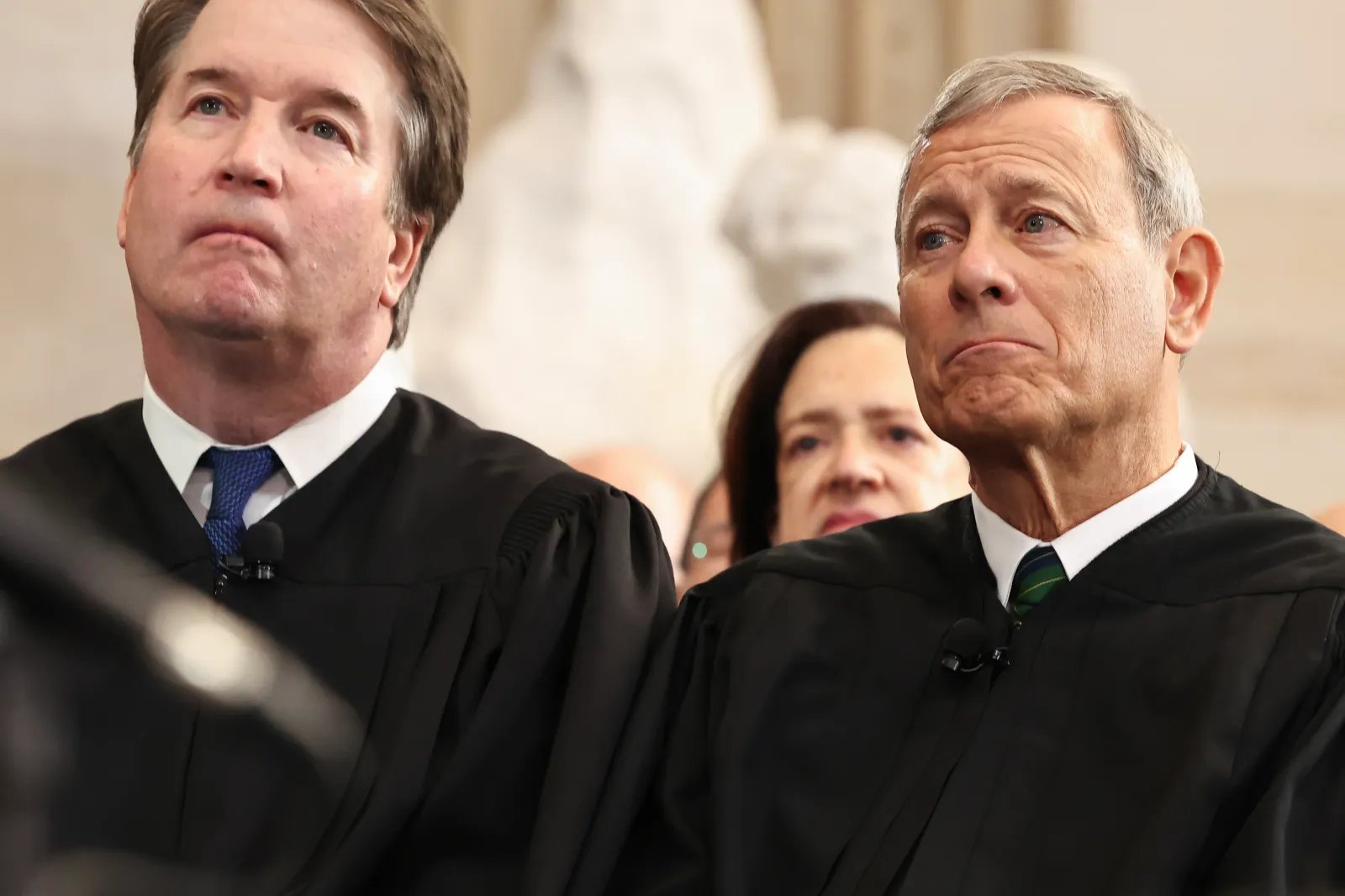
Justice Brett Kavanaugh wrote the majority opinion in Snyder v. United States (2024), joined by Chief Justice John Roberts and the Court’s conservative bloc, while the three liberal justices dissented.
The reference concerns Trump v. United States (2024), which addressed presidential immunity, and Snyder v. United States (2024), a case limiting the reach of federal bribery statutes.
Kelly contends that both rulings may warrant later scrutiny by the trial court in the immigration case.
Allegations Of Pressure On Attorneys And Congress
Throughout her filing, Kelly argues that the judiciary faces mounting pressure from government actors who may attempt to influence case outcomes through intimidation or political leverage.
She asserts that judges "are in danger when two branches, the executive and legislative branches misuse their power to affect the public and private people’s legal constitutional power to petition fairly…by threatening the judges, parties or even their own counsel in cases to force the outcome according to government whims."
Kelly also raises concerns about the safety and independence of attorneys involved in the case, including federal and state attorneys general.
She says that Trump and his allies have previously used the "threat of treason to kill members of Congress and Special Counsel Jack Smith," adding that "it is not far-fetched that he would use treason or even kill his own lawyers if they sought to do what is right."
There is no evidence in the public record that Trump or his advisers have made such threats, and neither the plaintiffs nor the government have endorsed Kelly’s characterization of his conduct.
Kelly also argues that Congress could attempt to influence the case through measures such as impeachment threats or funding pressure, and she asks the court to consider restraining any such actions if they infringe on the plaintiffs’ due-process rights.
In supplemental notes, she repeats her concern that recent Supreme Court rulings "may be ‘based on threats’ to justices," and she notes that while her earlier amicus brief was accepted—an outcome she calls "the greatest honor of my life"—there is no indication another will be.
Although Kelly frames her allegations as urgent, neither the plaintiffs nor the government have taken a position on her motion, and she acknowledges that "to her horror, none intervened. Far worse, 25 state attorneys general wrote in support of overturning this Court’s past orders on amicus at the U.S. Supreme Court level in this case."
Potential Impact On The Immigration Case
The plaintiffs in J.G.G. v. Trump continue to pursue classwide relief concerning detention and removal procedures.
Kelly’s motion, if accepted, would introduce broader constitutional questions into a case already drawing significant national attention.
What People Are Saying
Delaware attorney Meghan Kelly on her own safety and alleged government retaliation: "I am likely not going to be OK. I will receive more government backed threats. No one will protect me from," and on national security and alleged collusion between branches of government: "The court, the petitioners and our nation face national security threats by the collusion of Article I and Article II members to eliminate the rule of law that binds Americans as a people."
What Happens Next
The case J.G.G. v. Trump now hinges on whether the judge allows Meghan Kelly’s amicus brief, a decision the court can make at any time and without a hearing.
Regardless of the outcome, the case will proceed on its core questions about the legality of the plaintiffs’ detention and removal, while Kelly’s allegations of political pressure on judges are likely to be noted but not formally investigated unless the court finds them directly relevant.
The judge may request responses from the government or hold a status conference, but most often such filings are either accepted for the record or set aside.
Ultimately, the court will issue rulings on due process and enforcement practices that could carry national implications, with any substantive decision almost certain to be appealed to the D.C. Circuit and potentially the Supreme Court.
View 0 Comments
Submit Correction
View Editorial & AI Guidelines