10
Loading video...

By Hugh Cameron
Reporter
0
Share
Newsweek is a Trust Project member
See more of our trusted coverage when you search.Prefer Newsweek on Googleto see more of our trusted coverage when you search.
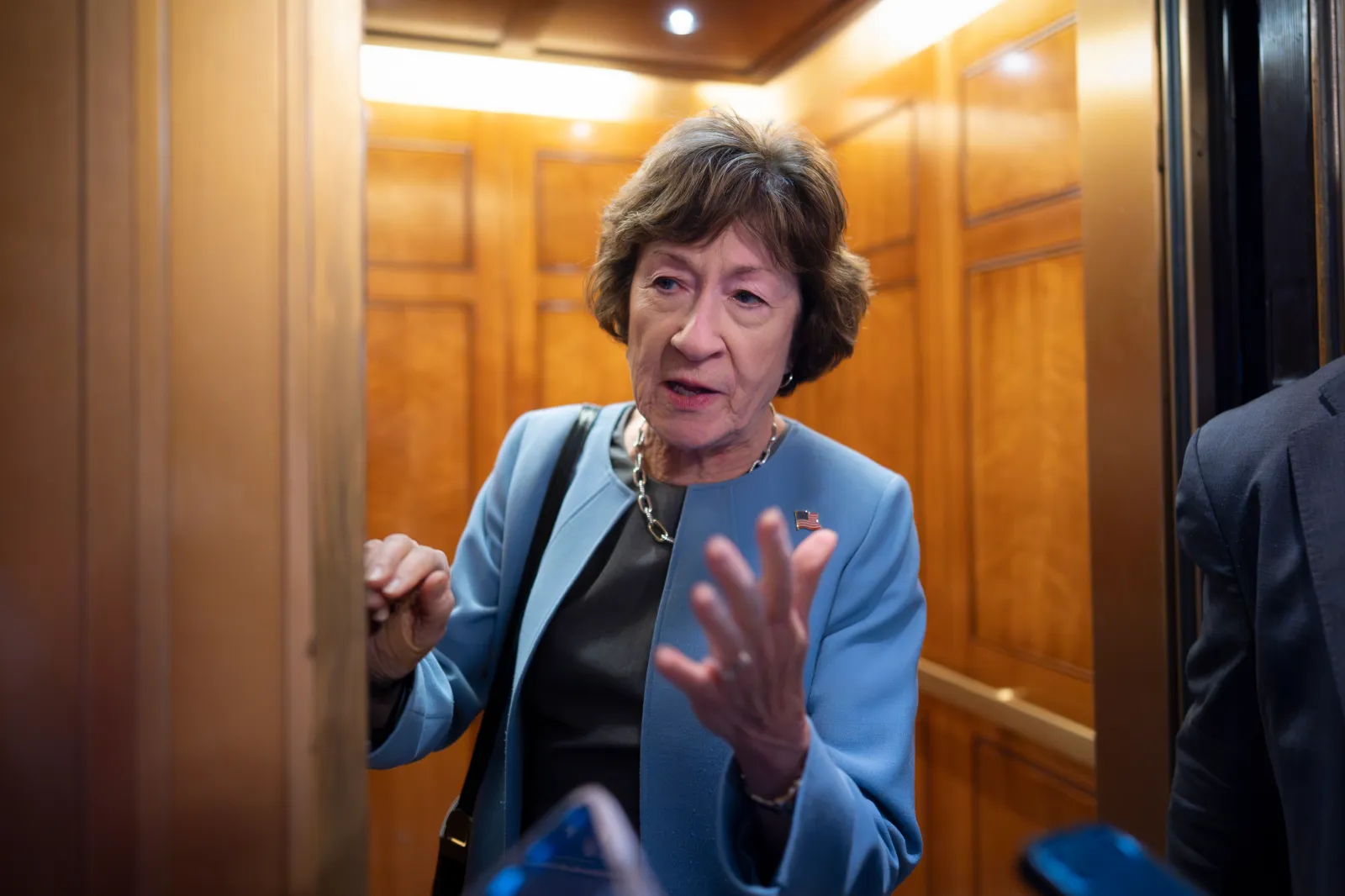
Surveys show that Maine Senator Susan Collins is making headway with female voters weeks out from the midterms, though the topic of abortion appears set to present a challenge for the five-term Republican.
Though her opponent, Democrat Troy Jackson, still leads among women, polls since Graham Platner left the race show Collins gaining momentum with female Mainers. According to a September 17 to September 21 survey from the University of New Hampshire, published last week, women are siding with Jackson 51 percent to 47 percent. Overall, Collins' current standing with this group is 40 percent favorable, 50 percent unfavorable and 10 percent neutral.
This marks an improvement from July, when the same pollster found that 41 percent of women intended to vote for Collins, compared with Jackson’s 54 percent.
Read More on Politics
The July 15 to July 20 poll, conducted before Jackson became the official nominee, also showed Collins with an even weaker popularity profile: only 34 percent of women viewed her favorably, compared with 52 percent unfavorably, 13 percent neutrally and 1 percent unsure about the senator.
“Maine women are seeing right through Susan Collins’ excuses and ‘concern’ while she has voted with Donald Trump 96 percent of the time, cast the pivotal vote to confirm [Supreme Court Justice] Brett Kavanaugh, who helped overturn Roe v. Wade, and delivered for the billionaires cutting her checks,” Jackson’s campaign spokesperson, Maggie Amjad, said in a statement to Newsweek.
Why the Maine Senate Race Matters in the 2026 Midterms
While Democrats appear to hold a significant advantage in the House, election forecasters like RacetotheWH show a closer competition for the Senate. But the party would only need to flip a few Republican seats to gain control of the upper chamber for the second half of President Donald Trump’s term, putting close races like Maine in particular focus.
...
Collins' success has also been viewed as a bellwether of broader national trends. She has crafted a reputation as one of the Republican Party's more moderate and bipartisan voices. Whether this status can overcome contemporary frustration with the Trump administration and a challenge from a progressive Democrat could reflect the forces that decide the wider balance of Congress come November.
Roe v. Wade Clouds Collins' Female Support
Despite her improved standing with women, some have noted that her vote to confirm Supreme Court Justice Brett Kavanaugh—a decision which contributed to the landmark Roe v. Wade decision being reversed—could upset this trend.
This year’s election will be Collins’ first since the 2022 ruling, and signs have already emerged that it could become a key attack line for her opponents.
During an interview last week, Collins said she did not regret her vote to confirm Kavanaugh, despite having said at the time she was confident the now-justice would not vote to overturn Roe.
According to town hall remarks quoted by MS Now, Jackson said that Collins' remark “says everything to me because I sure as hell do, and everybody else in this state and everybody else in this country does.”

...
Planned Parenthood had in the past honored Collins as one of the “Republican lawmakers who champion reproductive health care issues and who fight to ensure the rights granted to women.” However, the organization announced in August that its super PAC, Planned Parenthood Votes, would be spending “over $600,000” on an ad campaign highlighting “Maine voters' disapproval of Sen. Susan Collins’s anti-abortion votes, including her vote to confirm Brett Kavanaugh.”
Jackson, meanwhile, was opposed to abortion access early in his career, but has since 2017 enjoyed a 100 percent rating from the Planned Parenthood Maine Action Fund and secured backing from other pro-choice groups like Reproductive Freedom for All.
“Troy Jackson has a long record of fighting for reproductive freedom, including helping pass some of the strongest abortion protections in the country after Roe was overturned,” his campaign spokesperson told Newsweek. “That’s why Jackson holds a 100 percent rating from Maine’s Planned Parenthood for his reproductive record, and why Maine women know he’ll fight to restore abortion rights nationwide and protect their freedom to make their own health care decisions.”
Collins vs. Jackson: What Latest Polls Say
Since becoming the party nominee, Jackson has led in all but one of the major surveys tracked by The New York Times, though many of these advantages fall within the margin of error and suggest the contest for the Maine Senate seat will be competitive.
A New York Times/Portland Press Herald/Siena poll published last week gave Collins a 3-point edge. Some 49 percent supported her, compared with 46 percent for Jackson and 5 percent undecided.
Related Story
Susan Collins Faces New Headwind as Maine Heating Costs Hit Record High
Latest Developments in the Maine Senate Race Between Collins and Jackson
On Monday morning, a Maine state lawmaker posted an image of Collins’ office in Biddeford, which had been vandalized with the words “Trump W***e” spray-painted in red.
“Vandalism is unacceptable,” Collins’ Chief of Staff Katie Brown said in a statement to Fox News Digital, adding that the senator and her staff “will not be intimidated” and that the office “remains open.”
Jackson also responded to the act of vandalism, telling the outlet that there was "no place for this in Maine.”
Vandalism and intimidation are wrong, full stop...Senator Collins and her staff should be able to do their jobs without anyone defacing their office, and I condemn whoever did this."
Newsweek reached out to the Biddeford Police Department for comment.
Contact Newsweek editors on this story: Daniel Orton and Sam Wilson.
Update 9/30/26, 9:19 a.m. ET: This article was updated with a statement from the Jackson campaign.
View 0 Comments
Submit Correction
View Editorial & AI Guidelines