...

By Soo Kim
Reporter
0
Share
Newsweek is a Trust Project member
See more of our trusted coverage when you search.Prefer Newsweek on Googleto see more of our trusted coverage when you search.
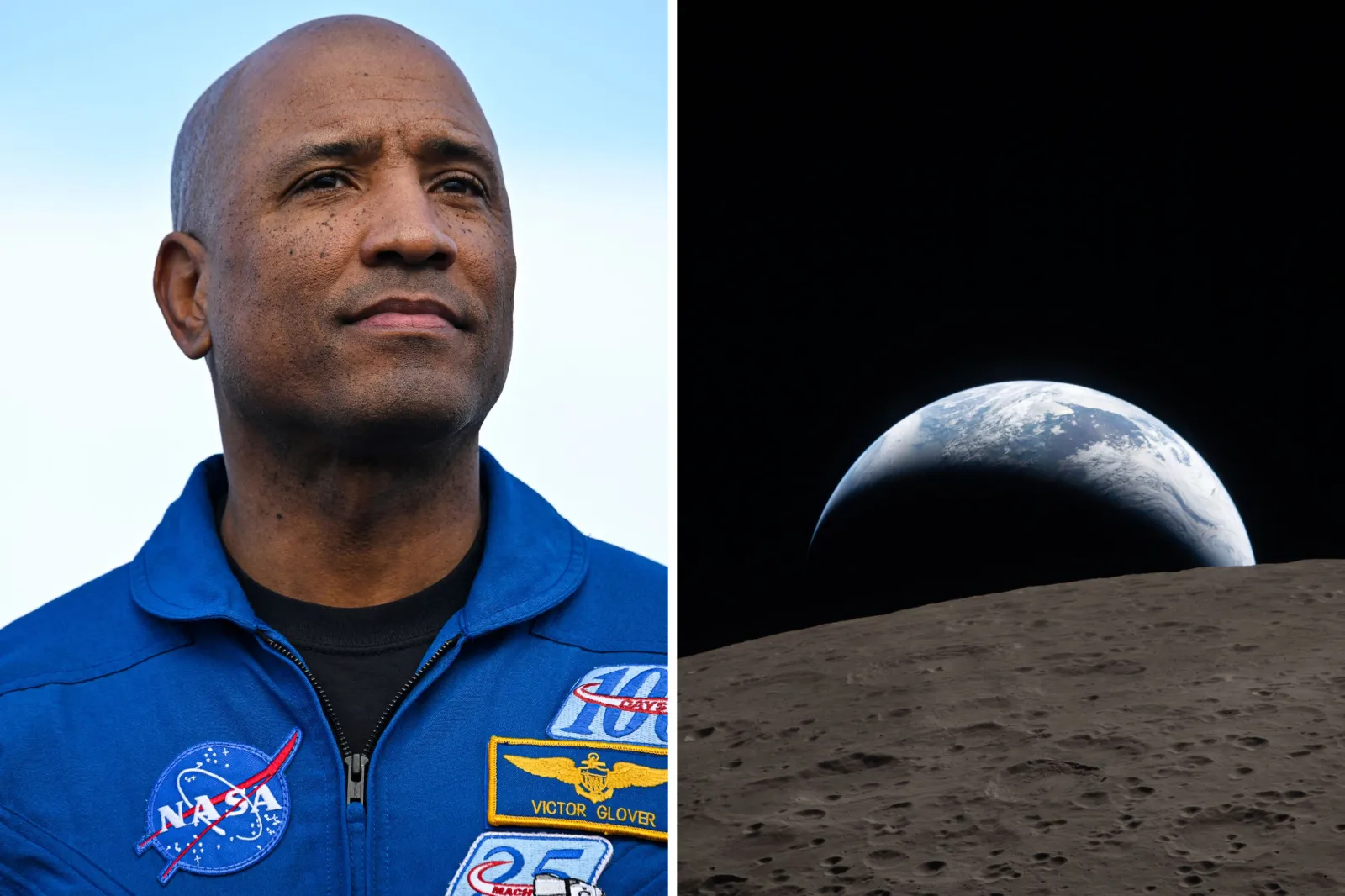
The final words from NASA astronaut Victor Glover moments before the spacecraft went out of communication as it passed the moon as part of the historic Artemis 2 mission have caused a flood of tears on social media.
The astronaut’s moving message, captured via NASA’s livestream coverage of the mission, was highlighted in a clip shared in a post on Threads by Melody Peralta (@melodyinthemaking). The post has amassed over 170,000 views since it was posted on Tuesday.
The caption of the post says: "Did anyone else burst into tears listening to this on the NASA livestream? Because let me tell you…I was an absolute puddle. (Victor Glover, moments before they entered the communication blackout, as Artemis II passes directly behind the moon)."
Read More on Science
Glover’s message, which took place around six minutes before the aircraft’s 40-minute "lunar flyby," said: "As we get close to the nearest point to the moon and farthest point from Earth, as we continue to unlock the mysteries of the cosmos, I would like to remind you of one of the most important mysteries there on Earth, and that’s love."
Glover continued: "Christ said, in response to what was the greatest commandment, that it was to love God with all that you are. And he, also being a great teacher, said the second is equal to it, and that is to love your neighbor as yourself. And, so, as we prepare to go out of radio communication, we’re still open to feel your love from Earth, and to all of you down there on Earth and around Earth, we love you from the moon…we will see you on the other side."
Peralta told Newsweek that the most moving element about Glover's words was that "it really put into perspective the uniqueness of being a human on planet Earth."
It was "a beautiful reminder that even in this unique experience, and despite all the things that seem to divide us, we all just want to be and feel connected, be part of something bigger than ourselves, and most of all, to be loved," she noted.
On April 1, NASA launched Artemis 2, a landmark mission that sent four astronauts around the moon for the first time in more than 50 years, marking a major step in the space agency’s long‑term plan to bring humans back to the lunar surface.
Glover is joined by three other astronauts aboard the Orion spacecraft on a planned test flight around the moon and back. The launch marked the beginning of a space mission that will last approximately 10 days.
During a planned multihour "lunar flyby" on April 6, the astronauts were expected to take photographs and make observations of the moon’s surface as "the first people to lay eyes on some areas of the far side," NASA noted in a statement.
'Absolutely Sobbing'
Threads users were touched by the astronaut’s compelling last words before the craft lost communication.
User @michelle_falls_all_the_time said: "I was in tears. The Greatest Commandment, words of Christ, inferring faith and science are not mutually exclusive…Absolute sobbing."
User @writethebook_drea agreed, noting: "What a humble, inspiring human. I also could not hold back the tears when at NASA Control, the leading woman exclaimed, ‘How great thou art’ in response to the magnitude of what Artemis and Integrity Crew has accomplished. Just. WOW."
User @scotthagen_pb wrote: "The contrast between these exceptional and awe-inspiring humans…Godspeed, Integrity."
User @colleenmcgee.creative noted: "Simply beautiful. This my friends—is a glimpse of what New Earth is (and will be). I keep being reminded that even in the worst of times—there can be the best of times…"
Newsweek has contacted the original poster for comment via Threads.
Do you have a tip on a science story that Newsweek should be covering? Do you have a question about space missions? Let us know via science@newsweek.com.
...
Update 04/08/26, 5:12 a.m. ET: This article was updated with comment from Melody Peralta.
View 0 Comments
Submit Correction
View Editorial & AI Guidelines