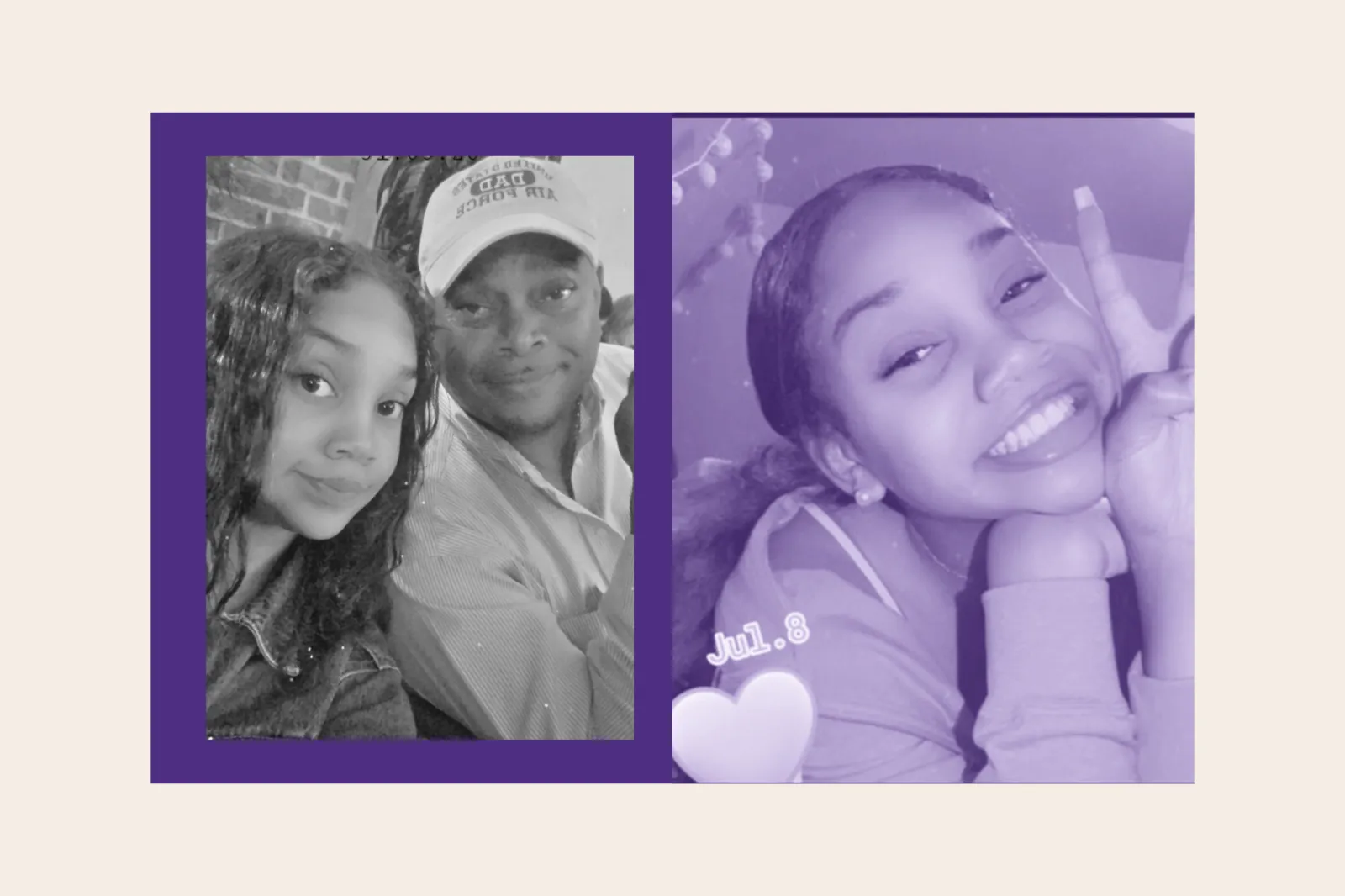
Photo-illustration by Newsweek/Courtesy of Brandy and Toney Roberts

By Brandy and Toney Roberts
0
Share
Newsweek is a Trust Project member
See more of our trusted coverage when you search.Prefer Newsweek on Googleto see more of our trusted coverage when you search.
We did everything we thought responsible parents should do to protect our daughter online. It still wasn’t enough.
Across the country, families are discovering how social media platforms use powerful algorithms and engagement tools designed to keep users scrolling as long as possible. For young people, like our daughter Englyn, that can mean being repeatedly exposed to content related to self-harm, eating disorders and other harmful behaviors.
She loved dancing—with hip-hop and lyrical dance being her favorites—and dreamed of opening her own dance studio someday. She loved traveling, trying new restaurants and spending time with her family. Like many teenagers, she also loved taking pictures and connecting with friends.
Read More on My Turn
My 12-Year-Old Daughter Woke Up As Usual—That Same Day Life Changed Forever6 min read

I Loved Tanning. 22 Years Later, I’m still Living With the Consequences9 min read

A Stranger Put $250 in My Kid’s Account. Twice4 min read


...
When Englyn was 11 years old, we gave her a cellphone so she could stay in touch with family and friends. We tried to be attentive parents. We knew her phone’s passcode. We asked her to share passwords. We checked her device and believed we had a good understanding of what she was doing online.
What we didn’t understand at the time was how powerful and persuasive social media platforms can be—especially for young people.
Without our knowledge, Englyn downloaded several social media apps. Over time, we began noticing changes in her. The confident girl who loved to move began struggling with anxiety, depression and self-harm. Dancing was replaced by scrolling. We did not realize the effect these algorithms had on her mental health.

...
On Aug. 29, 2020, in the early hours of the morning, we received a message from another parent asking us to check on Englyn. We rushed to her room and found she had attempted to take her life. We did all we could to keep her alive while waiting for emergency responders to arrive.
Doctors were able to restore her pulse, and Englyn was placed on life support. For nine days, we stayed by her side—holding her hand, singing to her and hoping she would wake up.
She never did.
A week later, we made the unimaginable decision to say goodbye to our 14-year-old daughter.
After Frances Haugen, the Facebook whistleblower who accused the platform of knowingly harming users, bravely came forward, we scoured every hidden corner of Englyn’s device and discovered things that still haunt us.

...
Meta had been targeting her and her friends with dark and depressing advertisements and videos, including one depicting a woman pretending to attempt suicide in the same exact manner our daughter had that terrible night. We could see that the accounts interacting with the video were all teenagers and adolescents.
We reported this video. No matter how many times we reported the video, Meta is still allowing the video to be circulated today.
When you lose a child, the grief is impossible to put into words. There is heartbreak, anger and a thousand questions that never leave your mind: What happened? Could we have stopped it? How did something like this reach our child in the first place?
Since Englyn’s death, we have learned that our story is far from unique.
Parents are often told to rely on screentime limits or parental controls. But these tools are incomplete, easy for young users to bypass, or ineffective against recommendation systems that continuously push new content.
Internal documents released reveal these multibillion-dollar companies’ business strategies hinge on addicting users. Multiple lawsuits allege that their predatory practices involve selling student geolocations to advertisers, targeting kids under the age of 13 and allowing rampant compulsive use.
They are even willing to admit the damaging ways they have shaped our kids’ lives. Meta admitted “teens can’t switch off from Instagram even if they want to” and a YouTube employee boasted that their “goal is not viewership, it’s viewer addiction.”

...
In March, a California jury found Meta and YouTube negligent in the design of their platforms and responsible for harming a young woman’s mental health. Families like mine are seeing something chilling in the evidence revealed in the landmark social media trial: the stories of other parents who tried to protect their children and lost them anyway. Society has told us for years that our children’s suffering was our fault as parents. This trial proved we were being gaslit by Big Tech.
They knowingly designed these harms and now it is time for Congress to act on what this case has revealed.
This is why we demand our lawmakers pass meaningful federal legislation, like the Senate version of the Kids Online Safety Act, which establishes a duty of care and strong safety-by-design standards for these platforms. We need common-sense guardrails created without the influence of Big Tech. We need to listen to parents and not platforms that intentionally cause harm.
It’s time for Big Tech to take accountability for the lives that have been lost and stop killing our kids.
All views expressed in this article are the author's own.
Do you have a personal essay you want to share with Newsweek? Send your story to MyTurn@newsweek.com.
View 0 Comments
Submit Correction
View Editorial & AI Guidelines