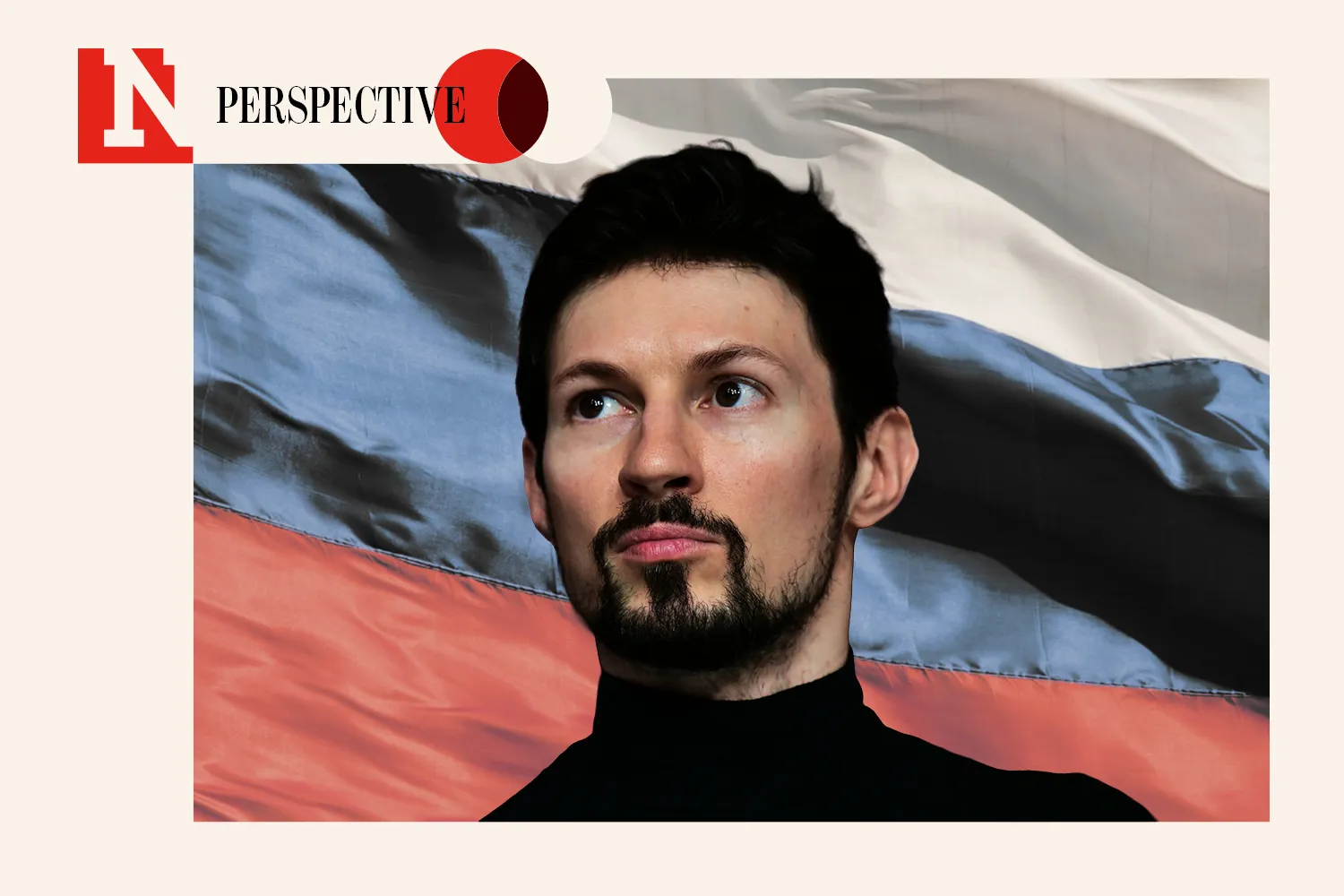
Getty Images

By David Averre
0
Share
Newsweek is a Trust Project member
See more of our trusted coverage when you search.Prefer Newsweek on Googleto see more of our trusted coverage when you search.
In America, we have a complicated relationship with Big Tech billionaires. Elon Musk’s wealth is obscene, and the influence he wields can be terrifying. There are millions of people driving Teslas, communities worldwide getting internet from Starlink—and soon humans might once again set foot on the Moon.
Whatever your feelings on the cohort of ultra tech bros, it’s hard to deny that the U.S. has benefited immensely from their work. You might not like them, but you probably wouldn’t want them to take their skills, technologies and money elsewhere.
Spare a thought, then, for the people of Russia.
Read More on Analysis
Their own tech bro-in-chief, Pavel Durov, created Russia’s largest social network, VKontakte, and the messaging app Telegram, which has roughly a billion active monthly users worldwide. But if Vladimir Putin gets his way, not a single Russian will be using Telegram—and Durov will end up in a Siberian jail cell.
Russia’s Federal Security Service (FSB) announced this morning that the Telegram founder, now based in Dubai, was charged with aiding terrorist activity and placed on an international wanted list. They say that Durov’s alleged refusal to remove channels and bots associated with Ukraine’s intelligence services and extremist groups means he’s facilitating terrorism.
The charges are serious, but they are not a real reflection of what Moscow is concerned about.

...
A New Kind of Civil Society
The FSB is right: Telegram is most certainly used by Ukrainian operatives, extremist networks, criminal groups and propagandists to carry out their plans.
Other countries are wary of Durov, too: In 2024, he was arrested in France on allegations of failing to properly moderate Telegram content (though he was later allowed to leave the country while investigations continue).
It goes both ways, though. Russia’s military, intelligence services, and outfits like the Wagner Group (remember them?) have used Telegram as a tool to wage war in Ukraine. It’s how Russian bot farms and cyber warfare groups wage disinformation campaigns, and how the security services recruit foot soldiers to carry out their bidding across Europe.
In fact, almost every single politician, media personality, journalist, influencer and business owner in Russia has used Telegram as their go-to tool to promote themselves and their messages. Nearly 100 million Russians own accounts on the platform.
The motivation behind the charges, then, runs much deeper than just “one rule for me, one rule for thee.” Moscow’s real gripe is that Telegram’s insistence on privacy, free speech and anti-censorship represents a giant obstacle in the Kremlin’s quest to control how Russians think, what they see, and what they say.
“Telegram is a threat to the Kremlin because it serves as a substitute for things that no longer exist,” Andrei Soldatov, an expert on Russia’s security services and the author of Our Dear Friends in Moscow, told Newsweek.
“Telegram is a substitute for civil society. In Russia, you do not have the same ability to publicly criticize the government or protest in the streets like you can in Western countries. Telegram is one of the only places where people can discuss things they can no longer discuss out in the open.
“The charges against Durov are part of this big push to lock the information space into complete Kremlin control.”
More Terrifying Than Terror
The charges brought against Durov represent a new escalation in a decades-long war between the Russian state and one of its most successful business leaders.
Born in St. Petersburg in the final decade of the Soviet Union, Durov rose to fame as the chief architect of VKontakte—Russia’s first social network launched in 2006 that became known worldwide as “Russian Facebook”.
He looked like the kind of figure any country would want to claim as its own: extremely smart, good-looking, and successful.
Not so in Russia. Rather than harness Durov’s talents to promote the Russian tech sector and supercharge the economy, the state turned against him.
The tech mogul quickly came under the watchful eye of Russia’s security services after refusing to shut down VKontakte groups criticizing Putin, and in 2014 chose to sell his stake in the company before fleeing the country and taking his business elsewhere.
In exile, Durov turned his attention to building Telegram, an app built entirely around the principle that private communication should remain private. Despite the FSB’s best efforts to block, fine and otherwise scupper the platform, it exploded in popularity at home and abroad and is among the world’s most widely used messaging apps.
So Putin turned to alternative methods of control.

...
After the full-scale invasion of Ukraine, Russia quickly developed a new legal framework to blacklist any individual, organization or business deemed to be working against state interests as "extremist."
Mark Zuckerberg’s Meta is just one tech giant that fell afoul of these regulations when a Moscow court banned Facebook and Instagram—part of the Kremlin’s broader effort to squeeze Western-owned social media out of Russian public life.
But going after Durov personally on terror charges pushes the stakes higher still.
“Terrorism charges serve several purposes simultaneously. It might make Durov’s life abroad more difficult in terms of travel and banking, for example, but it could also have some effect on his audience in Russia,” Soldatov said.
“Terror charges are really serious, and many Russian citizens will be fearful of interacting with Telegram if they feel there is any possibility they too could be investigated by the FSB. Just the threat alone could drive people off the platform.”
Americans Fear Big Tech. Putin Fears Free Tech.
In the West, we are rightly concerned about the influence of large tech corporations and social media companies on our politics and societies. Russians have the opposite problem.
Related Story

Even Putin’s Own Polls Show Russia’s Social Contract Is Cracking
“Westerners, especially people in the U.S., don't like the power that tech and media moguls have, understandably so. But there, social media is just part of a well-developed society that also has traditional media, independent media and a range of opinions,” Soldatov said.
“For Russians, they don't care if a tech mogul is behind their social media platform or if Durov is rich. The most important thing is that it's not under the control of the FSB.
“Telegram might be ugly, and there are parts of it that are not nice. But it’s the only independent forum Russians have got to think, say and discuss ideas freely.”
In another world, Durov could have been proof that Russia was capable of producing world-changing technology—a symbol of another lucrative industry beyond just oil, gas and natural resources. VKontakte and Telegram could have anchored a different kind of Russian economy; younger, richer, more connected to the world.
But this fantasy could never exist alongside Putin and the Kremlin’s need for absolute control. The courts will continue to pursue Durov, just as Russia’s communications regulator and security services will continue to steadily impede, disrupt and breakdown Telegram while forcing citizens to move across to state-backed platforms.
Durov is a very wealthy man, with passports in France and the UAE, and plenty of resources; if he can remain beyond the clutches of Russia’s security services, he’ll be just fine. Putin will continue to exercise absolute authority and ensure nothing could destabilize his rule.
As always, it is the Russian people who shall bear the cost of this war.
View 0 Comments
Submit Correction
View Editorial & AI Guidelines