...

By Anna Skinner
Associate News Editor
0
Share
Newsweek is a Trust Project member
See more of our trusted coverage when you search.Prefer Newsweek on Googleto see more of our trusted coverage when you search.
Temperatures dropped to 5 degrees Fahrenheit in California on Wednesday as a cold winter weather system passed through the state.
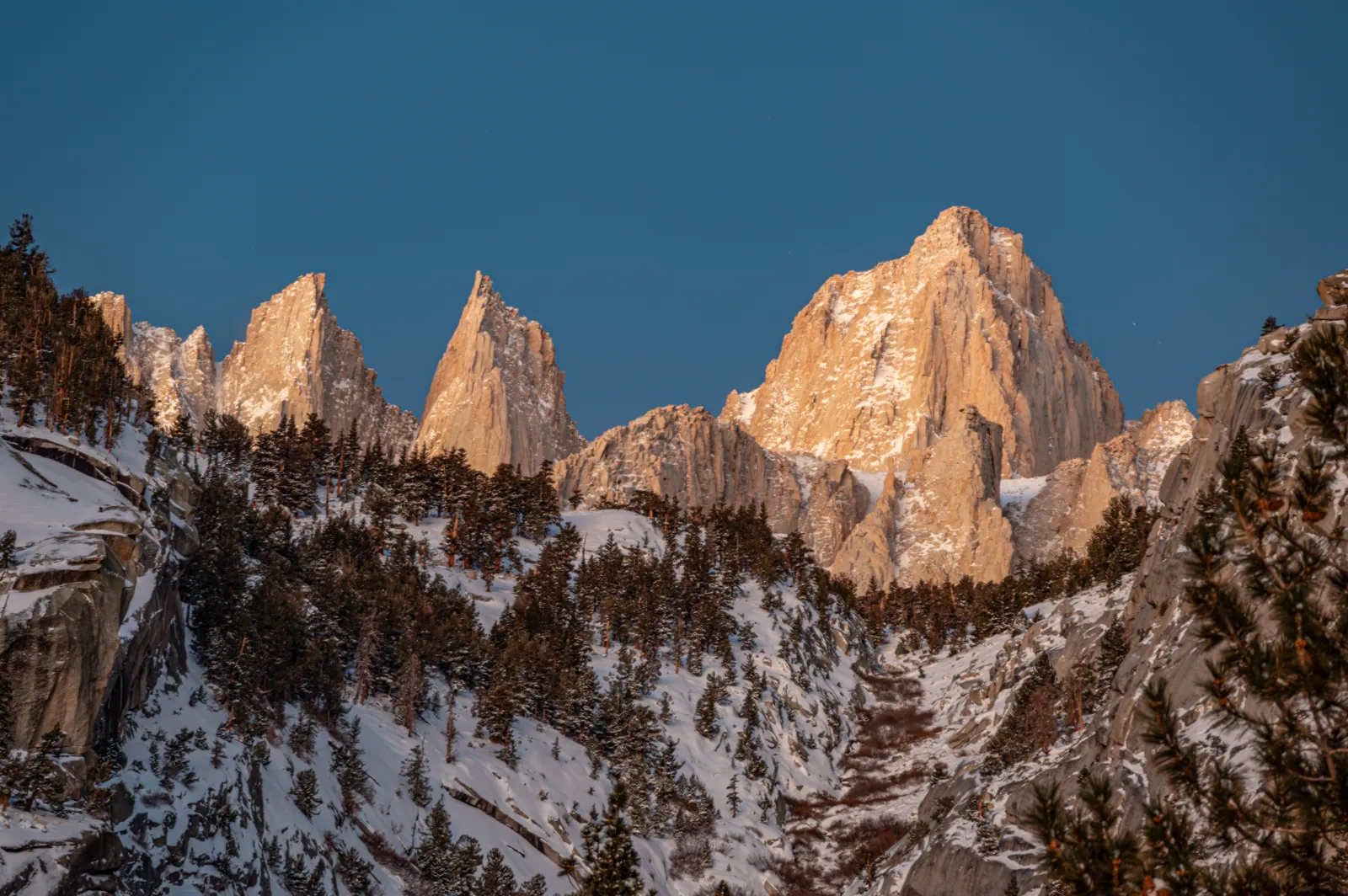
A climate site near Mount Whitney, which exceeds 14,000 feet, registered a low of 5 degrees at 2 a.m. on Wednesday morning.
The National Weather Service (NWS) doesn't keep temperature records at that high elevation, NWS meteorologist Andrew Gorelow told Newsweek, but temperature trends nearby indicated that it was colder than average for this time of year.
Read More on U.S.
Why It Matters
A snow-laden winter storm moved through California earlier this week, bringing heavy snowfall to high-elevation parts of the Sierra Nevada mountains. Sierra Nevada mountains frequently see lots of snow during the winter, particularly at the highest elevations, but such large amounts--forecasted as up to 3 feet in some places--were unusual this early in the season.
The system also ushered in cold temperatures.
...
What to Know
On Wednesday night, extreme weather chaser Colin McCarthy shared the climate data on X.
"The coldest place in the United States today was in California," McCarthy posted on X. "Two weather stations located just below Mount Whitney, the tallest mountain in the Lower 48, recorded a frigid 5°F this morning."
However, the NWS Weather Prediction Center measured the national low temperature for Wednesday as being 17 degrees Fahrenheit near Augusta, Montana.
The Weather Prediction Center doesn't consider some climatological sites, such as hydrological sites intended to measure precipitation, as they can be remote.
"Their thermometer gauges can be a little suspect," NWS Weather Prediction Center meteorologist Gregg Gallina told Newsweek. "That doesn't mean it's not right, we just don't consider them. That 5 could very well be legitimate."
Gorelow, who works at the Las Vegas NWS office, which issues forecasts for the area around Mount Whitney, told Newsweek that the closest climate site is at Crabtree Meadows, which is at 10,800 feet elevation. He confirmed that the site registered a low of 5 degrees Fahrenheit on Wednesday morning.
In Bishop, California, which is at 4,400 feet elevation, temperatures dropped to 32 degrees Fahrenheit, which is 6 degrees below average for this time of year.
The system has passed through California, and all winter weather-related alerts have expired in the Golden State. Temperatures are going to rise over the next few days, Gorelow said.
What People Are Saying
Gorelow told Newsweek: "Looking at the departures [from average] their low temperature at Bishop was 6 degrees below normal, so that tells me even up in those elevations for this time of year is below normal. Exactly how far below I'm not sure, but it definitely was below normal."
Gorelow added: "Temperatures are going to jump today probably about 5 to 6 degrees over yesterday. By Saturday, they're going to be about 10 to 15 degrees warmer. All the way through the weekend, you're going to see temperatures rise."
What Happens Next
After temperatures rise this weekend, Gorelow said they will "come down somewhat next week." Looking even further out, the NWS Climate Prediction Center anticipates a slight chance for above-average temperatures across California between October 23 and 29, according to the eight- to 14-day temperature outlook.
View 0 Comments
Submit Correction
View Editorial & AI Guidelines