...

By Stephen J. Romano and Jeremy Hurewitz
Interfor Academy
0
Share
Newsweek is a Trust Project member
See more of our trusted coverage when you search.Prefer Newsweek on Googleto see more of our trusted coverage when you search.
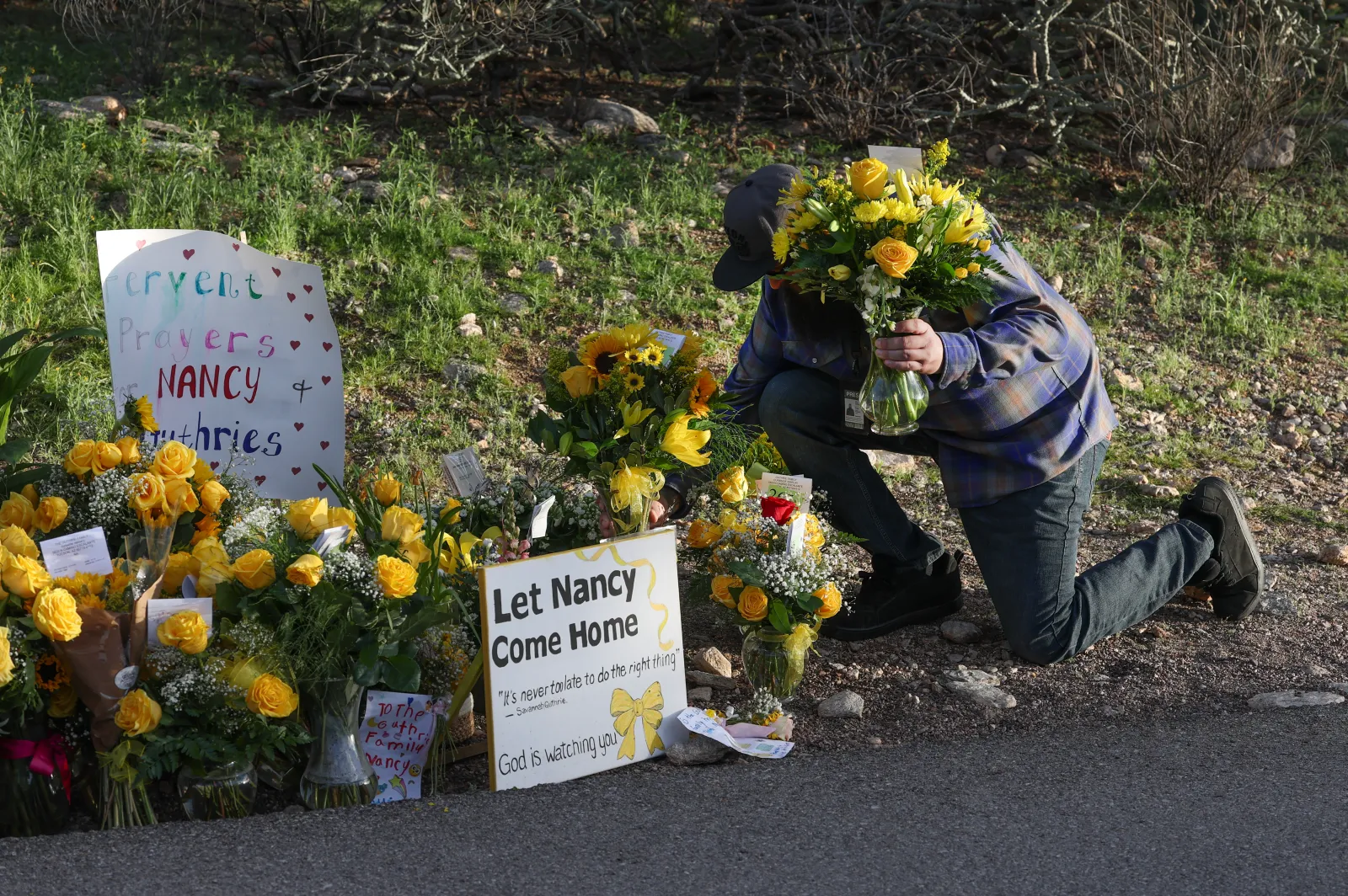
The kidnapping of Nancy Guthrie has captivated the nation. The combination of her celebrity daughter, Savannah, and the story of a beloved grandmother has humanized the crime in a way that has made the pain of their family easy to relate to. With our backgrounds in kidnap-for-ransom cases, a few things have stood out to us about Nancy’s abduction.
A lot of media discussion has centered on the perceived lack of professionalism of Nancy’s kidnappers. Many have commented on the video of footage from the doorbell camera and the unorthodox manner in which the abductor’s firearm is carried on the front of his body, and others have noted the low-quality of the holster. The abductor’s crude manner of obstructing the home’s camera with vegetation and his counter-productive disconnecting of the camera (which is what allowed investigators to actually recover the footage) underscore this belief.
...
Read More on Opinion
What stands out to us is the nature of the ransom demand. In nearly all kidnap-for-ransom cases an initial ransom request comes in high and then is negotiated down. In the Guthrie case the kidnappers supposedly asked for $4 million for Nancy’s return and then raised the amount to $6 million. These details, combined with what has been noted about the abductor’s gear, point to a lack of experience with this sort of crime.
We are quite concerned for Nancy’s safety. The news of the family offering $1 million for tips on her return and using language acknowledging she might not be alive was noteworthy. She is an 84-year-old woman with health issues. We know she was taken around 2:30 a.m. and no one realized she was gone until around noon the next day. With a nearly 10-hour headstart the kidnappers could be anywhere. While only one kidnapper is on video, we feel that it is at least a two-person operation as Nancy’s age and needs mean she would require significant care to remain alive and valuable to the kidnappers. The fact that Nancy was bleeding when she was removed from the house increases our concern.
We are not aware of any proof of life shared with law enforcement. In these cases generally, kidnappers will seek to prove that their abductee is alive to build urgency and receive their ransom. That lack of proof of life combined with minimal communication from the kidnappers is worrisome.
Kidnapping is a rare crime in America. It is estimated that stranger on stranger abductions occur less than 100 times per year in the entire U.S. Most reported kidnappings are not for ransom but involve custody disputes and the odds of a child being abducted by a stranger are low. Kidnap-for-ransom cases do occur with more frequency along the U.S.-Mexico border, which is the same region in which Nancy lived and was abducted from. But these are small cases, typically involving $5-10,000, and increasingly the limited number of kidnap-for-ransom cases are what’s known as “express” or “virtual” kidnappings.
Kidnap-for-ransom cases are far more prevalent overseas, in areas of Latin America in particular. In our careers, when we have worked with business travelers, who are frequently targeted in certain locations for kidnap-for-ransom, we help them to understand that if they are abducted, they should not resist because they will generally be treated with limited violence if they acquiesce due to their monetary value to the kidnappers. But we counsel that if someone is targeted in the developed world it is more likely about predation than ransom and they should resist. Some of the most difficult kidnap-for-ransom cases involve ideology—for instance, a radical Islamic terrorist abducting an American. These are often prolonged cases with bad outcomes.
Nancy’s case is concerning because it does not fit any standard pattern of abduction. We typically see three things in these cases—demands, deadlines and threats. The kidnappers have communicated only sporadically with demands that are not typical; the deadlines they have communicated were nebulous; we have not been made aware of any threats. Our biggest concern though is that the kidnappers have thus far refused to provide a proof of life. We therefore speculate that the abduction is either a kidnap-for-ransom case that has gone badly and the amateurish abductors don’t know what to do, or this case has a personal or ideological motive. Perhaps the kidnappers have some kind of vendetta against Nancy’s high-profile daughter Savannah.
Kidnapping cases make for sensational media stories—a beloved family member snatched in the middle of the night by masked assailants and held incommunicado. It is the stuff of movies and TV shows and speaks to the fears each of us have about the safety of our loved ones. Decades of law enforcement experience have helped get us to a place where kidnappers in the U.S. are usually caught. We believe that will eventually happen in this case, hopefully in time to save a fragile but cherished member of a family we can all sympathize with.
Stephen J. Romano is a former chief hostage negotiator at the FBI and is a member of Interfor Academy.
Jeremy Hurewitz is the head of Interfor Academy and author of the book Sell Like a Spy.
The views expressed in this article are the writers’ own.
View 0 Comments
Submit Correction
View Editorial & AI Guidelines