10
Loading video...

By Sarah Brennan
0
Share
Newsweek is a Trust Project member
See more of our trusted coverage when you search.Prefer Newsweek on Googleto see more of our trusted coverage when you search.
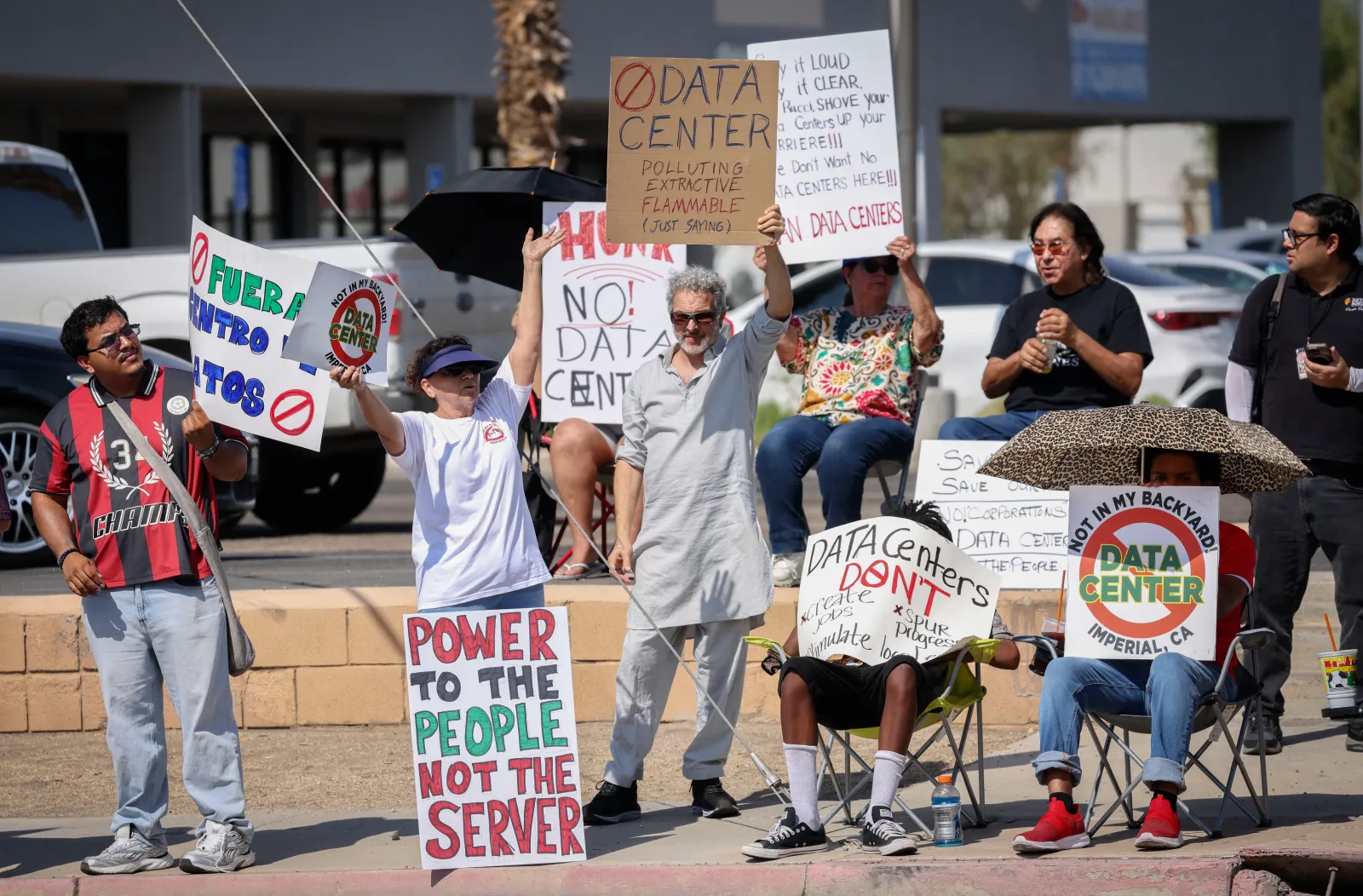
We are in the midst of a widespread uprising of grassroots activism, from the data center rebellion sweeping the country, to Iowa where cancer is the number one issue this election cycle, to residents of Corpus Christi pushing back against industry’s rapacious use of water during a drought. The Trump administration is trying to squelch this activism, announcing recently that they are limiting public comment on new sources of pollution. But, thankfully, Americans across the political spectrum are saying yes—yes to clean air and water, safe food and local control—and an emphatic no to decisions that put their health, their neighborhoods and their livelihoods at risk.
Election day is coming quickly. If you’re a politician of either party, remember that voters and nonvoters alike value their health and safety. Environmental regulations are popular, corporations are not. If you’re a professional climate advocate, as I am, there’s an important lesson in what’s happening across the country—and in what didn’t happen to defend Biden’s signature climate achievement, the Inflation Reduction Act. Holding polluters accountable is far more likely to mobilize people than tax credits for clean energy.
Unfortunately, this cross-partisan revolt has not yet stopped what is happening in Washington. Under President Donald Trump, the Environmental Protection Agency's (EPA’s) agenda has shifted away from a mandate to protect the environment to now, “unleash energy dominance, bring back American auto jobs, pursue permitting reform and make America the AI capital of the world.” The White House has eviscerated protective regulations, abandoned enforcement of the regulations that remain and, under the guise of an "energy emergency," specifically accelerated the permitting of new infrastructure for data centers and the oil and gas industry—including the largest gas-fired power plant ever and a massive gas export terminal.
Read More on Opinion
...
The scale of what’s happening is too much to comprehend. Have you heard that the federal government recently approved testing mirrors in space that will direct more sunlight to specific locations to improve farm productivity and make it easier for construction workers to build at night time? No environmental review required. Too much to comprehend.
Back here on earth, EPA recently decided that massive private energy grids do not need to comply with a decades-long component of the Clean Air Act, unlike traditional power plants. According to a recent analysis by BloombergNEF, proposed new data centers would increase pollution from electricity by 20 percent. The fact that AI is driving a dirty gas boom is confusing, since market observers note that clean energy is cheaper than fossil-powered electricity. Turns out, clean energy doesn’t have much of a cost advantage in a world without environmental regulations.
Even after notching these victories, polluters are still asking for more. They are pushing Congress for what is euphemistically called "permitting reform" but is really a way to permanently weaken environmental laws and limit opportunities for people to push back on new sources of toxic emissions that contaminate our air and water.
This deregulatory agenda is unpopular, but also highly technical and confusing. Among Trump’s base, for example, two-thirds of conservatives believe EPA should prioritize protecting people’s health from toxic chemicals and pollution, even if it means higher costs. But most people aren’t even aware that Trump is weakening protective regulations. Since it’s hard to feel like you can influence the outcome in Washington, why bother?
Americans are paying close attention to what’s happening at home. They are investing their time and money to protect themselves. Political analysts have noted the Make America Healthy Again (MAHA) movement, motivated by concern about threats from pesticides like glyphosate and forever chemicals like PFAS, but that is just a small part of what’s happening.
People are showing up at public hearings across the country to say how important their environment is to them. And they are winning much of the time, through litigation, local zoning challenges and by passing moratoria against data centers in more than 500 communities. By stopping $130 billion of data center projects in the first quarter of 2026, local activists—from both parties—had almost as much success as they had in the previous year.
People are also punishing politicians. Given the breadth of public opposition, two remarkably different politicians—New York Governor Kathy Hochul and Texas Governor Greg Abbott—recently made a big show of hitting the pause button on new data centers. Both of these "moratoria" were likely crafted with significant behind-the-scenes input from industry and are deeply flawed: NY’s may eventually lead to a reduction in required environmental review, while Texas’ may drive data centers to weakly regulated private grids. But both governors felt the need to do something.
I am in awe of the power of "small d" democratic engagement by people throughout the country. If you are fighting a dirty data center, a toxic industrial farm, or any other polluting factory that is receiving special dispensation from the federal government right now—thank you.
As politicians keep telling us, America is a nation that builds. Though we sometimes struggle to build public goods like highways and affordable housing, we have no problem letting corporations build, build, build. Corporations have built massive new infrastructure to allow the United States to become the world’s largest exporter of gas and gasoline, as well as the largest producer of both oil and gas. Their appetite is insatiable: They want to keep building more, regardless of the harm they cause.
Instead, let’s tell our politicians that we want to rebuild our health, safety and environmental regulations. Those of us who work in politics every day should recognize the remarkable opportunity to rebuild the environmental movement around the pro-people activism emerging across the country. We can help politicians respond to what people care about: reducing pollution. We can draw connections between what happens at home, in our nation’s capital and what happens around the world. In partnership with grassroots activists, we can build a stronger foundation that gives the American people the freedom to build lives of health and prosperity.
Sarah Brennan is director of the Funder Collaborative on Oil and Gas, an initiative of the Rockefeller Family Fund that works to stop oil and gas expansion and curb the industry's financial and political influence. She previously served as initiative lead for Beyond Carbon at Bloomberg Philanthropies, led the environment portfolio at the Robertson Foundation, and is former associate director of Columbia University's Earth Institute.
The views expressed in this article are the writer's own.
View 0 Comments
Submit Correction
View Editorial & AI Guidelines