10
Loading video...

By Giulia Carbonaro
Senior Reporter
0
Share
Newsweek is a Trust Project member
See more of our trusted coverage when you search.Prefer Newsweek on Googleto see more of our trusted coverage when you search.
Florida Governor Ron DeSantis has emerged as one of the nation’s most vocal opponents of the rapid expansion of artificial intelligence data centers, arguing that residential utility customers should not be forced to subsidize the energy-intensive facilities.
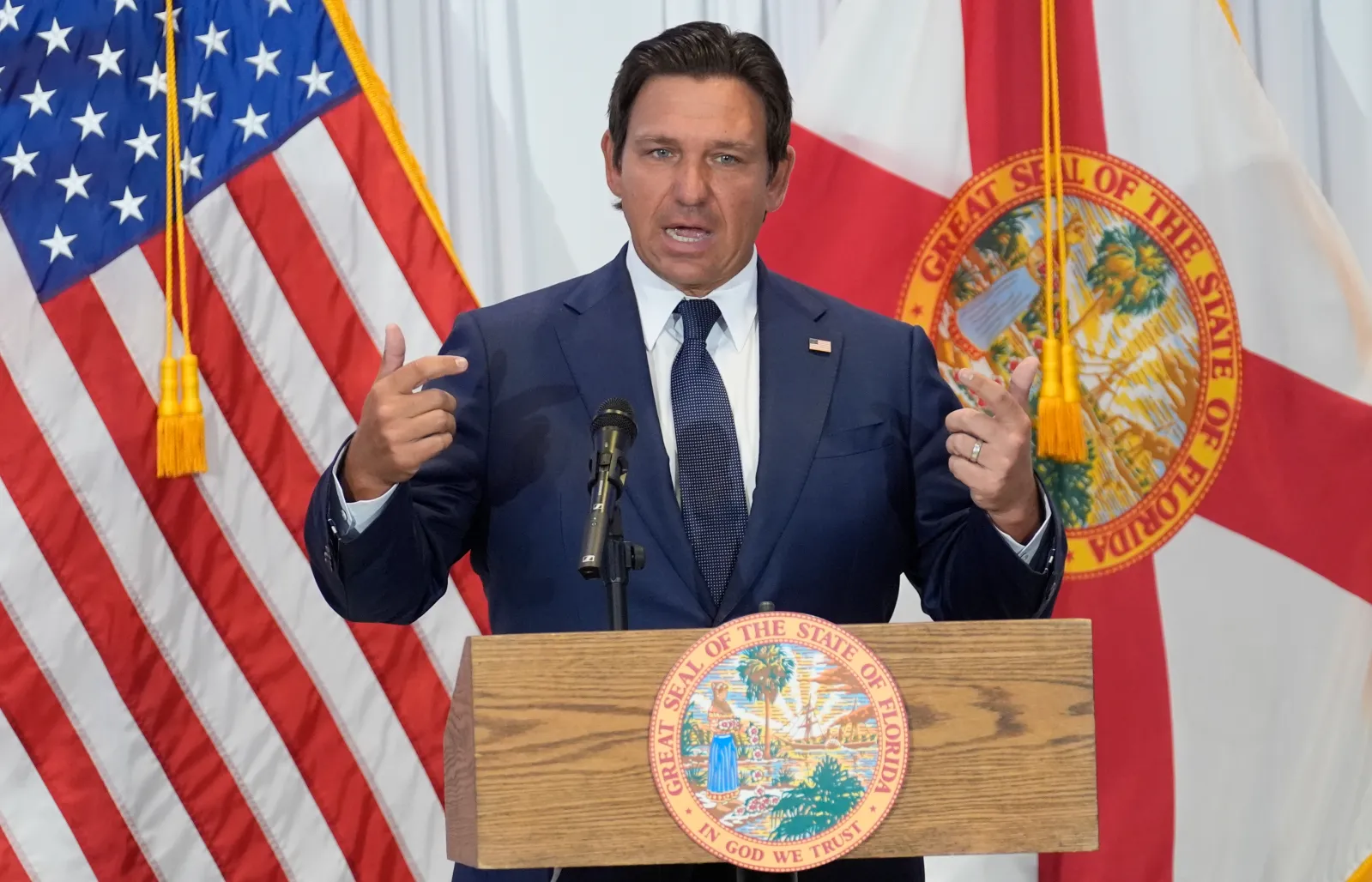
In May, DeSantis signed legislation directing state regulators to keep the infrastructure and operational costs of AI data centers off residential electricity bills. The move positions Florida as one of the first states to enact consumer protections against the strain data centers place on the commercial power grid.
“You should not, as a hard-working Floridian, have to subsidize some of the wealthiest companies in the history of humanity,” DeSantis said during the bill-signing ceremony.
Read More on News
Yet even as the Republican governor publicly criticizes the facilities, his administration continues to back lucrative tax incentives designed to attract those same technology companies to the Sunshine State. The competing priorities highlight a challenging balancing act for state leaders nationwide: how to secure a foothold in the high-tech economy of the future without shifting the financial burden onto everyday taxpayers.
Newsweek contacted DeSantis’ office for comment by email on Saturday morning.
How DeSantis Has Moved To Restrict Data Centers
Under Senate Bill 484, large-scale AI data centers are required to pay the full cost of their utility service. The law prohibits utility providers from passing data center development or electricity costs onto Florida’s residential and small-business customers.
The legislation also affirms that local governments retain authority over zoning, permitting, and land use, clarifying that municipalities have the power to set stricter local standards or deny project proposals altogether.
However, the bill faced pushback during the legislative process. Lawmakers significantly weakened early drafts of the legislation by removing a provision that would have banned government officials from signing nondisclosure agreements with AI data center developers.
...
How Florida Is Still Trying To Lure Data Centers Into Florida
Florida’s efforts to attract tech infrastructure date back to July 2017, when the state first enacted a tax exemption for data centers—before the current wave of rapid AI development.
The policy eliminates sales and use taxes on data center infrastructure, equipment, property, and electricity consumption. Originally scheduled to expire in 2022, the exemption has been extended twice by state lawmakers, most recently in 2025.
Last year, the Legislature amended the incentive to target larger projects. Effective August 2025, qualifying facilities must hit a minimum cumulative capital investment of $150 million and support a critical IT load of 100 megawatts or higher—an increase from the previous 15-megawatt threshold. The change effectively disqualifies smaller facilities moving forward.
The revised exemption, which now carries an application deadline of June 30, 2037, continues to cover equipment, infrastructure, electricity, and construction materials used exclusively by the data centers.
GOP state Representative Wyman Duggan, who sponsored the amendment, noted that the extension of the tax break carried the governor's backing. “That came from the governor’s office,” he told the Tampa Bay Times.
DeSantis’ office’s budget proposal last year also shows that the governor wanted to make the tax break permanent.
State Department of Revenue data shared with the Tampa Bay Times shows that three companies have utilized the exemption since 2017: New Hampshire-based information management firm Iron Mountain, Los Angeles-based developer Metrobloks, and Nevada-based AI company TensorWave. All three operate properties in the Miami area.
A spokesperson for Iron Mountain told the newspaper the tax break spurs local investment and is “not a taxpayer-funded incentive.”
“Iron Mountain and our customers pay significant property tax to Miami-Dade County, which determines how this tax income directly benefits the local community through schools, roads and other County infrastructure,” the company wrote in an email.

...
The Next Move Will Be Up to DeSantis’ Successor
With DeSantis term-limited and set to leave office in January 2027, the future of Florida’s tech-energy policy will fall to his successor.
Representative Byron Donalds, who is currently the frontrunner for the Republican nomination for governor, co-sponsored the state’s original data center tax exemption as a state lawmaker in 2017.
In a statement to the Tampa Bay Times, a spokesperson for Donalds defended the earlier vote while pledging strict consumer protections ahead.
“This 2017 bill was a broad tax relief bill, and as Governor, Byron will continue working to cut taxes for Floridians at every opportunity,” the statement said. “He will put Floridians first by requiring tech companies to supply their own power demand for any potential AI data center, putting ironclad taxpayer rate protections in place, and protecting Florida’s water resources from abuse.”
“As Governor, Byron will continue working to cut taxes for Floridians at every opportunity,” a spokesperson for Donalds’ gubernatorial campaign told Newsweek in a statement. “He will put Floridians first by requiring tech companies to supply their own power demand for any potential AI data center, putting ironclad taxpayer rate protections in place, and protecting Florida’s water resources from abuse.”
Public sentiment surrounding the facilities remains highly skeptical. A recent Gallup survey found that 70 percent of Americans oppose the construction of AI data centers in their local communities, with 48 percent strongly opposed.
In Florida, public support aligns closely with regulatory restrictions. Nearly 90 percent of voters favored the utility-protection law signed by DeSantis in May, according to polling by the Tallahassee-based Sachs Media.
Local governments are already reacting to the friction. More than a dozen Florida cities and counties have enacted temporary pauses on large data center approvals, citing mounting concerns over local water supplies, grid capacity, and environmental impacts.
Contact Newsweek editors for this story: Ben Kelly and Anthony Murray
Update 6/29/26, 4:03 a.m. ET: This article was updated to include a comment from a spokesperson for the Donalds campaign.
View 0 Comments
Submit Correction
View Editorial & AI Guidelines