
By Matthew Tostevin
0
Share
Newsweek is a Trust Project member
See more of our trusted coverage when you search.Prefer Newsweek on Googleto see more of our trusted coverage when you search.
Abu Dhabi is staking its claim as a cultural capital, unveiling landmark institutions at a breathtaking pace. In November 2025, the city celebrated the opening of its world-class Natural History Museum, followed in December by the spectacular Zayed National Museum—a tribute to the United Arab Emirates’ founding father. Earlier in 2025, visitors were captivated by teamLab Phenomena, an immersive art experience blending technology and creativity in breathtaking ways.
These additions join an already impressive lineup. Abu Dhabi boasts its own branch of Paris’ Louvre and, just a short walk away, construction is underway on a Guggenheim art museum that promises to redefine contemporary art in the region. Together, these landmarks are transforming the UAE’s capital into a destination where culture, innovation and heritage converge.
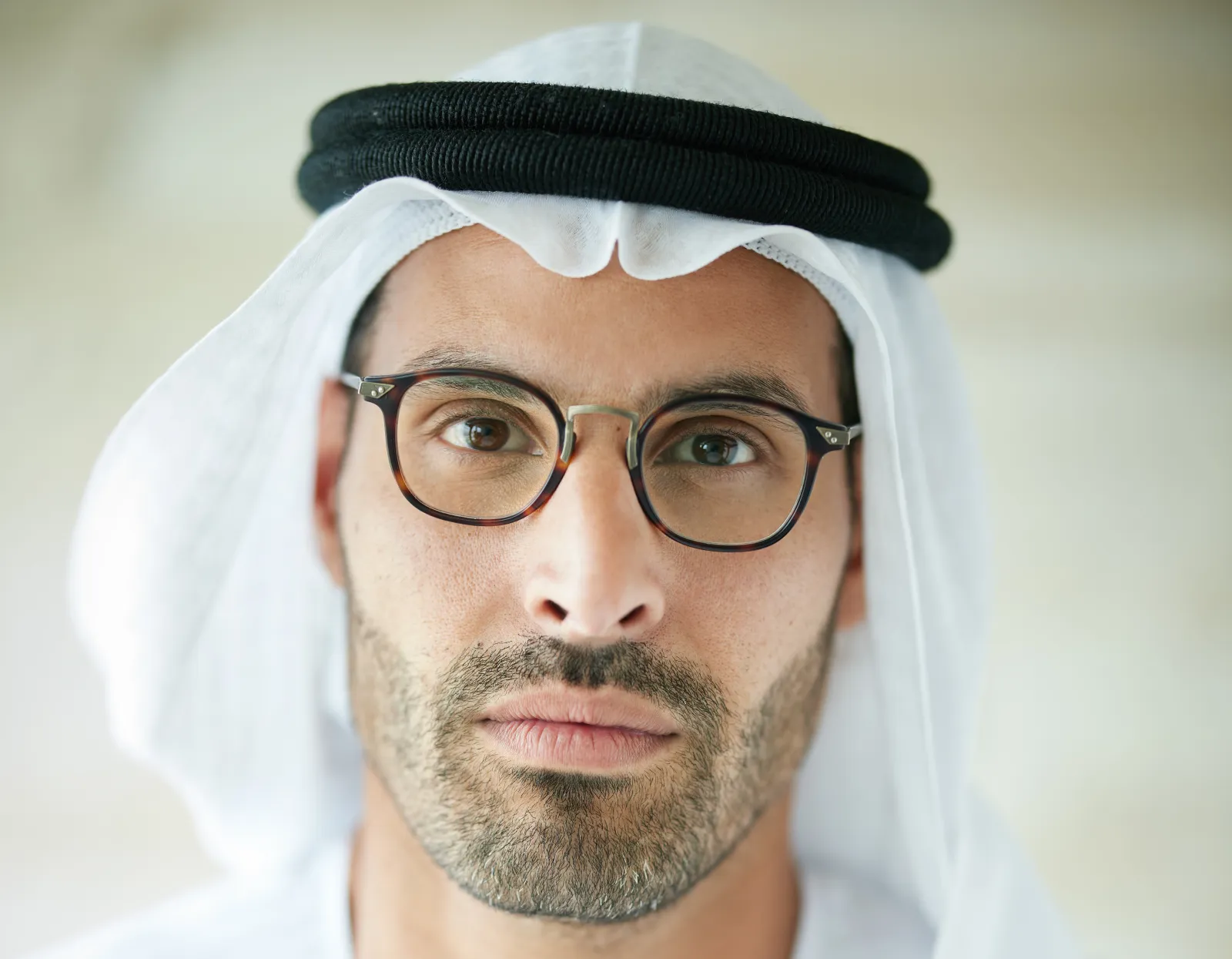
The museums are an increasing draw for visitors, but Mohamed Khalifa Al Mubarak, chairman of the Department of Culture and Tourism Abu Dhabi, told Newsweek that, more importantly, they are intended as educational centers—and they send a message of the UAE’s vision of itself and its place in the world at a time the country is playing a growing role in the Middle East and beyond.
Read More on World

...
“Many of the questions that come from abroad are, ‘Is this a tourism game?’ Of course, that comes from the knowledge that many of the European institutes and the global institutes do bring a lot of tourists,” Al Mubarak told Newsweek in an interview in Abu Dhabi.
“I’ll be lying to you if I tell you, tourists do not visit these museums. They do, but their sole purpose is to continuously educate the masses that live here in the UAE and play a role in their growth and at the same time, if we can play a role in the education and the growth of visitors from all over the world, great,” he said.
“The land of the Emirates has always been a bridge between East and West. So a lot of these museums are a metaphor of the land itself. So that is why we are doing this.”
The UAE built its wealth on oil but now seeks to diversify. It has become an increasingly important geopolitical player with a close relationship to U.S. President Donald Trump. It was one of the first signatories of his Abraham Accords with Israel. It is now also at the heart of the U.S.-backed “Stargate” project to make it an AI hub.
But it is also open to China and to the rising power of India, only three hours away by plane. UAE positions itself as a transport bridge between regions, with the world’s busiest international airport in Dubai, and as an increasingly important finance center with a time zone that can span working with East Asia, Europe and the United States.
The UAE’s origins are on display at the new national museum—dedicated to late founder and President Sheikh Zayed bin Sultan Al Nahyan. Visitors are met by an archive photo of the Bedouin sheikh barefoot in the desert before he helped to bring together the emirates that made up the former British protectorate.

...
The centerpiece of the museum is a reconstruction of the Magan boat that as far back as the Bronze Age plied the waters of the Gulf. Al Mubarak told how a visiting child compared the vessel’s travel to modern-day space missions: exactly the kind of link between time, space and cultures that the UAE is keen to draw as it seeks to portray the image of a modern Muslim country that is home to people from more than 200 countries.
“The why is for the future generation. The why is to equip future generations in the knowledge of our culture, other people’s cultures, and other people’s histories and our own history, because we believe that allows you to accept so much more. It allows you to have a much stronger view of how a unified world should look like,” he said.
“It’s a message about religion and an accepting and tolerant religion. And at the same time, our people, the Arab Bedouins, that roamed the land of the Emirates for thousands of years,” he said. “They have also been a very accepting and tolerant people, because they’ve always engaged with traders coming from ancient Asia and traders coming from Europe and beyond.”
As an example of UAE’s diversity and tolerance, Al Mubarak said his daughter attends a school where she hears the church bells every day as well as the five daily Muslim calls to prayer. On Yom Kippur, the Jewish Day of Atonement, she hears the blowing of the shofar. Her fellow pupils are from all over the world.
“They come with their different languages, they come with their different cultures, different heritages, and more than ever, we push them to have these dialogues and discussions and to learn from each other. And that is a very powerful tool,” he said.
...
The museums also play a part in Abu Dhabi’s plan for diversifying away from oil.
Its cultural ambitions are not only at the highbrow end. There’s a Warner Bros. World, and Disneyland is building its first theme park in the Middle East at Abu Dhabi’s Yas Island. It also markets its natural attractions from the sea to the mangroves to the desert mountains.
“If you can imagine in the next sort of five to six years, visiting Abu Dhabi, where you can be in Disney World in the morning and do great things, and then go have lunch at the Louvre Abu Dhabi, and then see a beautiful performance at the National Museum and end having an amazing dinner overlooking dinosaurs at the National History Museum,” Al Mubarak said. “And you can throw in an early morning sinking your feet in white sands and sitting in blue waters. This can happen in a 12- to 14-hour span, and that’s when you start understanding we have something special.”
Abu Dhabi’s museums are designed as masterpieces of modern architecture in themselves. So is the elegant white marble-clad Sheikh Zayed Grand Mosque, which blends Mamluk, Ottoman, Fatimid and Moorish styles and has the capacity for over 40,000 worshippers. Inland from Abu Dhabi is the emirate’s historic oasis of Al Ain with its Al Jahili Fort, built of sun-dried mud brick.

...
Realizing the ambitions of modern architects was not always easy, Al Mubarak said. “Making sure you find the right balance, making sure that you can deliver on the promises of the architect but, at the same time, make sure that these are also operational assets that will live and breathe with the people who are entering these museums,” he said. “The thousands and thousands of people that have helped create these assets really are the superheroes in the story.”
One of the latest big challenges was the onyx cone atop the Frank Gehry-designed Guggenheim, he said. “That has never happened in any other building around the world,” he said. “It’s been a tough task, but, thankfully now that’s behind us.”
Before that was the Louvre, surrounded with water and salt that should see any museum director run the other way. “We took it full on, and there’s a lot of learning,” he said. That said, Abu Dhabi is consistently ranked the world’s safest city, so its Louvre has less need to worry about a Paris-style heist of exhibits.
Abu Dhabi’s cultural assets and museums have seen an increase in visitors by about 40 percent to five million in around the past year, Al Mubarak said. The split was roughly 60:40 between residents and tourists. “When we look at our cultural and creative industry strategies, it’s currently bringing a little over 5 percent of our GDP contribution. We’re looking to double that over the next five years,” Al Mubarak said.
“By 2030, we’re looking to bring in another close to over 55,000 jobs specifically within the creative industries,” he said. “Many of these jobs did not exist 10 years ago; curators, museographers, conservators, researchers, and the list goes on. We’re looking at basically everything from music designers, costume designers, film crews, game designers, so really a vast array of creatives within different sectors.”
By 2030, Abu Dhabi also plans to double its 35,000 hotel rooms. That’s still behind Dubai’s 150,000 or so, but Al Mubarak said the neighboring emirate was not so much seen as a rival in the tourism business as an asset, given that it’s only 45 minutes away by car—if there’s no traffic—and will be only 22 minutes away on a new high-speed train. “We feel this is a perfect time for us to showcase who we are through our version of storytelling, through our perspective,” Al Mubarak said. “The hope is that the future generations uses these opportunities to continuously create content about who we are and stories from our land.”
View 0 Comments
Submit Correction
View Editorial & AI Guidelines