
10
Loading video...

By Jesus Mesa
Reporter
0
Share
Newsweek is a Trust Project member
See more of our trusted coverage when you search.Prefer Newsweek on Googleto see more of our trusted coverage when you search.
A small but growing group of Republican senators has begun pushing back against President Donald Trump on a range of issues, from the Iran war to administration nominees to a controversial Justice Department fund, as the 2026 midterm elections approach and the political cost of loyalty to the president becomes harder to calculate.
Senate Republican leaders are now coming to grips with the reality that advancing Trump's priorities may be in conflict with their efforts to retain the majority, with one Republican senator delivering this assessment: "Our majority is melting down before our eyes."
The senators most likely to defect fall into three tiers: those who have already established a consistent pattern of opposition, those who break with the president on specific high-profile issues, and those who have begun creating distance for electoral reasons.
Read More on Politics
Here is a ranking of the seven most likely to rebel.
Most Likely
Lisa Murkowski (Alaska)
- Voted to convict Trump after January 6 and survived a Trump-backed primary challenger in Alaska
- Voted with Democrats to limit presidential war powers, prompting Trump to say she "should never be elected again."
- Has said she is open to caucusing with Democrats if they pick up Senate seats in 2026
Murkowski has the longest and most consistent record of opposition to Trump among Republican senators. She voted to convict him after January 6, defeated a Trump-backed challenger in Alaska, and has continued breaking with her party on war powers, executive authority and administration nominees.
She is not up for reelection until 2028, which limits Trump's leverage over her considerably. While Republicans hold 53 seats in the Senate, the president already has to contend with a pair of moderates in Murkowski and Collins, along with politically untethered retirees.
Susan Collins (Maine)
- Voted against Trump's "Big, Beautiful Bill" over Medicaid cuts
- Broke with Republican leadership on the Iran war powers vote
- Faces a competitive reelection in a state Trump lost by 7 points
Collins has established herself over multiple terms as the Senate's most consistent moderate Republican, breaking with Trump on executive power, trade and national security. She voted against the big tax bill and has continued casting dissenting votes on war powers and administration nominees.
Her reelection race in Maine this cycle is among the most competitive in the country, giving her both the incentive and the political cover to demonstrate independence from the White House.
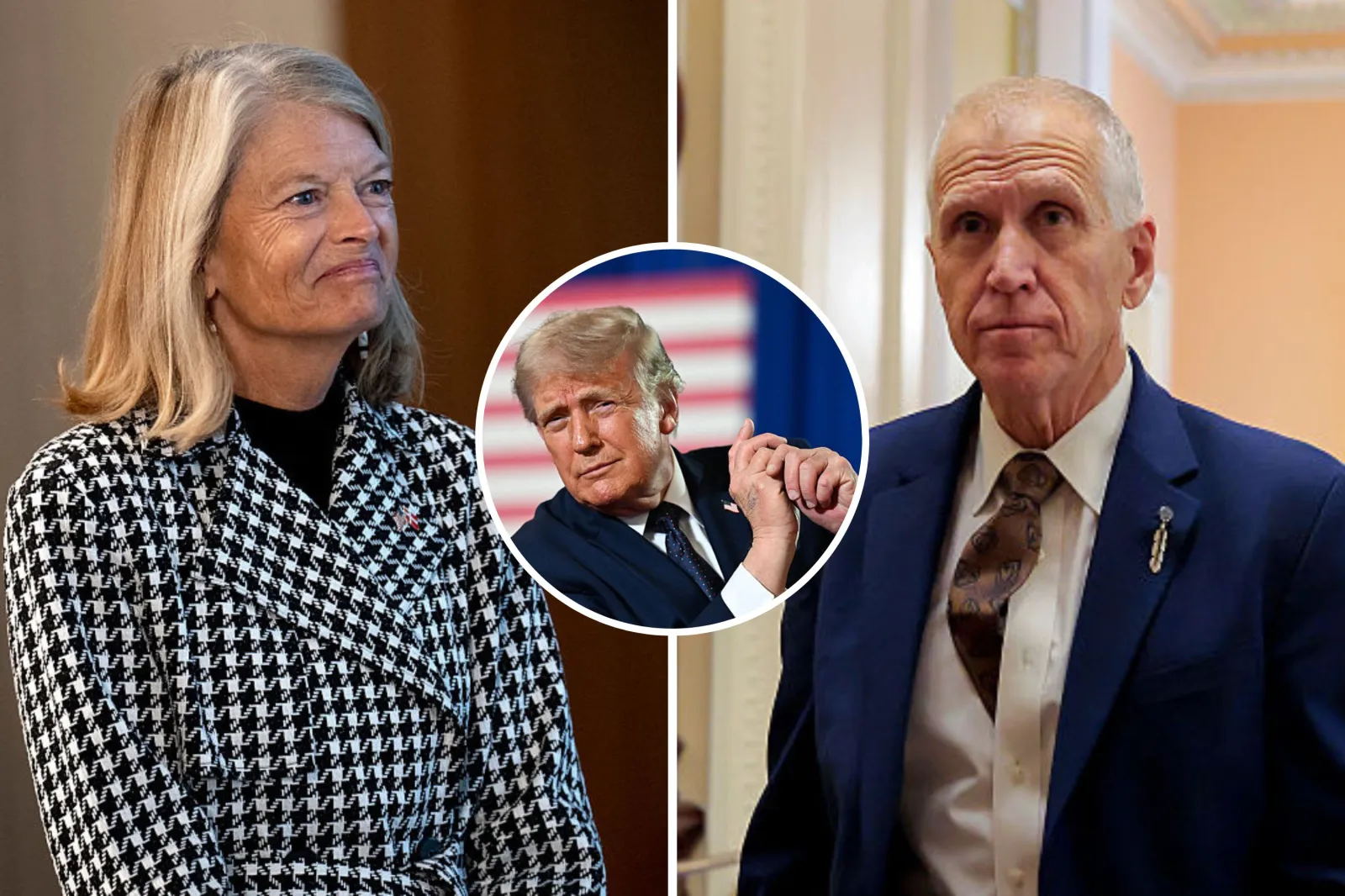
...
Thom Tillis (North Carolina)
- Voted against Trump's signature tax legislation over Medicaid cuts, triggering a primary threat that led him to announce he would not seek reelection. He remains in office until January 3, 2027.
- Successfully blocked a Justice Department nomination and held up the Federal Reserve chair confirmation
- Publicly called the anti-weaponization fund "an embarrassment" and said he is "tired of amateur hour" at the Trump administration
Tillis has become the most outspoken Republican critic of the Trump administration since announcing his retirement.
He has challenged the president publicly on Medicaid, NATO, personnel decisions and the upcoming Todd Blanche attorney general nomination, on which he sits as a member of the Senate Judiciary Committee.
He has said the anti-weaponization fund that Blanche signed off on will factor into his confirmation vote, and that he wants to know whose fingerprints were on the Comey re-indictment. As a retiring senator, his incentives to stay loyal have effectively disappeared.
Likely on Specific Issues
Bill Cassidy (Louisiana)
- Voted to convict Trump after January 6 and was subsequently defeated in a Trump-backed primary
- Has become more outspoken against Trump since losing his primary, complicating the administration's legislative agenda
- Called for legislation to permanently eliminate the anti-weaponization fund, saying: "You want to make sure it's really dead."
Cassidy's opposition to Trump is rooted in a specific history. He voted to convict him after January 6, Trump endorsed against him, and he lost his primary.
Now in the final months of his Senate career, he has shown a growing willingness to challenge the administration publicly. His record of opposition is narrower than Murkowski, Collins or Tillis, but the anti-weaponization fund fight and the upcoming Blanche confirmation hearing give him a platform he appears prepared to use.
Mitch McConnell (Kentucky)
- Has broken with Trump on tariffs, with Trump accusing him of "playing with the lives of the American people."
- No longer Senate majority leader, and increasingly willing to criticize Trump on foreign policy and national security
- Retiring at the end of this term, with no remaining electoral incentive to defer to the White House
McConnell operates differently from the others on this list. He does not make cable news appearances designed to antagonize the White House, and he tends to focus his opposition on institutional and foreign policy concerns rather than broad resistance. But he has been willing to make his frustrations known, and as a retiring senator with decades of institutional knowledge, he carries more weight when he speaks than almost anyone else in the chamber. He, like Tillis, remains in office until January 3.
Occasional but Less Frequent
John Cornyn (Texas)
- Was driven out of his seat by a Trump-backed challenger, immediately raising questions about whether he would join other recently ousted Republicans in bucking the president
- Publicly called for legislation to kill the anti-weaponization fund
- Has a personal grievance against Trump following the primary
Cornyn spent most of his Senate career as a party institutionalist who preferred working inside the conference to public confrontation. That dynamic shifted after Trump helped drive him out of his seat.
Senator Ted Cruz said on his podcast that it is "fair to expect John's going to be less than thrilled" and suggested Cornyn could become more of a problem for GOP vote counters. He is not expected to become a frequent critic in the mold of Tillis or Cassidy, but with nothing left to lose electorally, any issue he objects to, he now has little incentive to swallow.
Dan Sullivan (Alaska)
- Faces a competitive reelection against Democrat Mary Peltola, a former congresswoman who has already won statewide in Alaska
- Alaska has absorbed significant economic impact from Trump administration policies, including ACA subsidy cuts and DOGE reductions
- Has occasionally broken with the administration on foreign policy and Alaska-specific issues
Sullivan split with Murkowski and voted against the war powers resolution on Iran, indicating he is not prepared to break openly on major symbolic votes. But his reelection math is difficult. Peltola is a well-known opponent in a state that has been hit hard by several Trump policies, and Sullivan has a clear incentive to put distance between himself and a president with historically low approval ratings heading into a competitive general election.
What to Watch Next
- Upcoming Senate votes could test GOP unity: Decisions on the Blanche nomination, DOJ funding fights, and war powers measures will show how far Republican dissent goes.
- Election pressure may drive more breaks: Vulnerable incumbents like Susan Collins and Dan Sullivan face growing incentives to distance themselves from Trump.
- Retirees could become key swing votes: With no campaigns ahead, senators like Tillis and McConnell have more freedom to oppose the administration.
- A small number of defections could shape outcomes: Republicans’ narrow majority means even a few breakaways could stall major legislation heading into 2026.
View 0 Comments
Submit Correction
View Editorial & AI Guidelines