...

By Amanda Greenwood
Associate News Editor
0
Share
Newsweek is a Trust Project member
See more of our trusted coverage when you search.Prefer Newsweek on Googleto see more of our trusted coverage when you search.
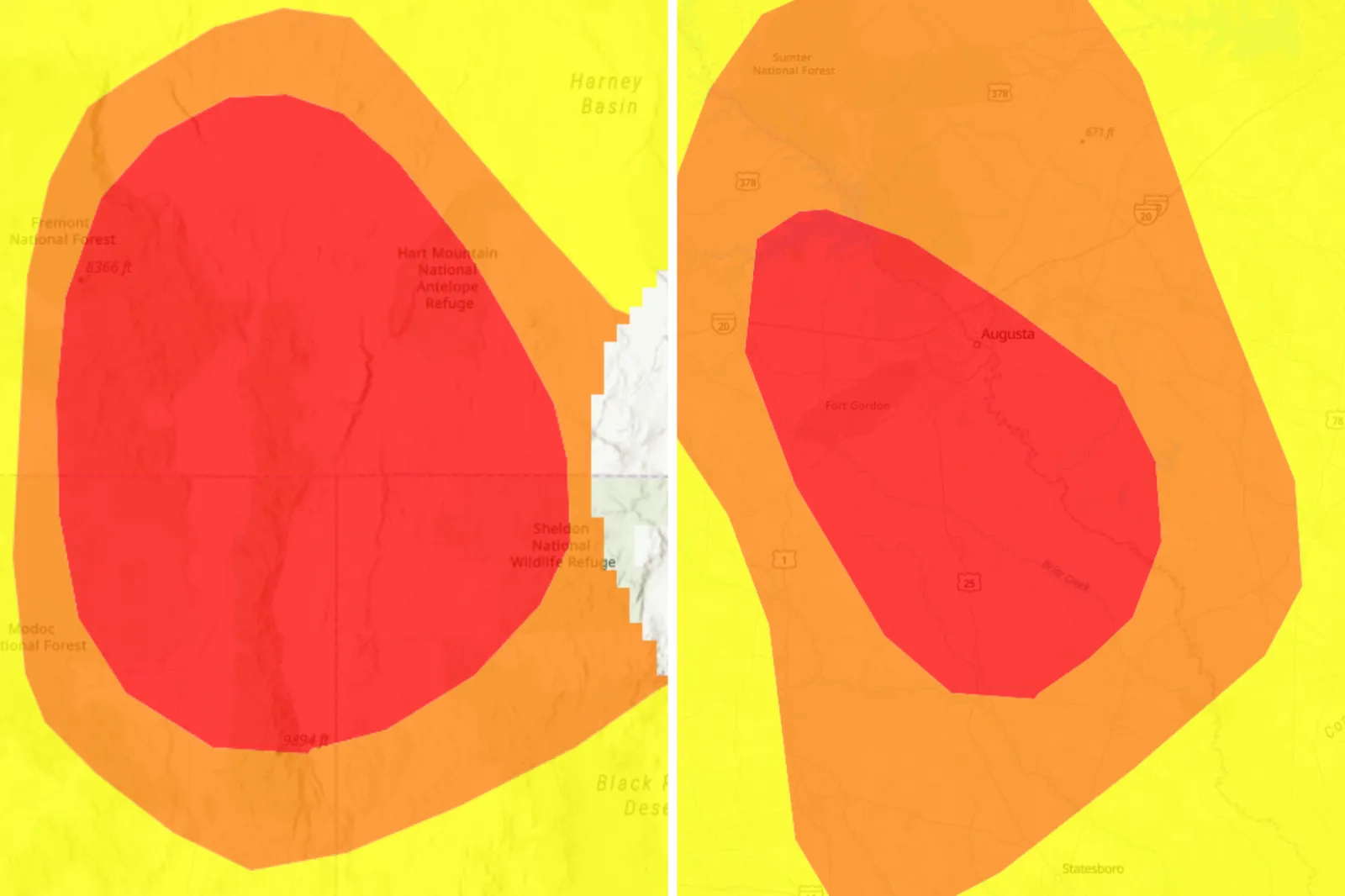
Thousands of residents in communities across parts of Oregon, Nevada, California and Georgia have been urged to stay inside by the Environmental Protection Agency (EPA) because of elevated amounts of fine particle pollution (PM2.5) in the atmosphere.
- Essential Reading: If Iran is on the Brink, Californian Pistachios Helped Put It There
- Conventional Wisdom: Fed Criminal Investigation Edition
As of January 13 at 3 a.m. Eastern time, PM2.5 reached an "unhealthy" level across all four states, according to the EPA's AirNow map.
Read More on News
...
AirNow uses the Air Quality Index (AQI)—a standardized scale that categorizes air quality from "good" to "hazardous"—to monitor, record and communicate air quality conditions across the United States.
Why Does This Matter?
According to the EPA, "unhealthy" levels of PM2.5 can affect all members of the public. However, those in sensitive groups—including the elderly, children and individuals with certain health conditions—may experience more severe health effects.
PM2.5 is considered one of the most dangerous forms of air pollution, according to the EPA, as the particles are so small (less than 2.5 micrometers in size) they can be unknowingly inhaled and penetrate deep into the lungs or bloodstream. This has the potential to trigger or worsen cardiac or respiratory issues, such as asthma, or cause symptoms such as coughing; throat, eye, and nose irritation; shortness of breath; and chest tightness.
"Numerous studies link particle levels to increased hospital admissions and emergency room visits—and even to death from heart or lung diseases. Both long- and short-term particle exposures have been linked to health problems," the EPA warns.
Long-term exposure to particle pollution has been related to issues such as reduced lung function and conditions that include chronic bronchitis. Short-term exposure has the potential to increase "susceptibility to respiratory infections," according to the EPA.
EPA Advice for People in Areas With 'Unhealthy' Air Quality
The EPA advises people in sensitive groups to avoid any long or intense outdoor activities and to move them indoors whenever possible. Everyone else is urged to reduce prolonged or strenuous outdoor activities, such as choosing a walk instead of a run. This is because more intense activity causes people to breathe harder, increasing the likelihood of inhaling fine particulate pollution deeply into the lungs, which can lead to short‑term or long‑term health problems.
When particle pollution is elevated, it can also affect the quality of air indoors, too. The EPA suggests that people in affected areas use air filters or cleaners to reduce levels and reduce the use of candles, wood-burning stoves or indoor open fires.
Those in affected areas should closely monitor the AirNow map for any updates.
What Causes 'Unhealthy' Air Quality?
In this case, the EPA hasn't released any information to confirm what's causing the unhealthy air quality across Oregon, Nevada, California and Georgia.
However, PM2.5 can come from a variety of sources, including dust from unpaved roads or construction sites, smoke from wildfires or smokestacks, or emissions released into the atmosphere from vehicles or industrial power plants.
View 0 Comments
Submit Correction
View Editorial & AI Guidelines