...

By Amanda Greenwood
Associate News Editor
0
Share
Newsweek is a Trust Project member
See more of our trusted coverage when you search.Prefer Newsweek on Googleto see more of our trusted coverage when you search.
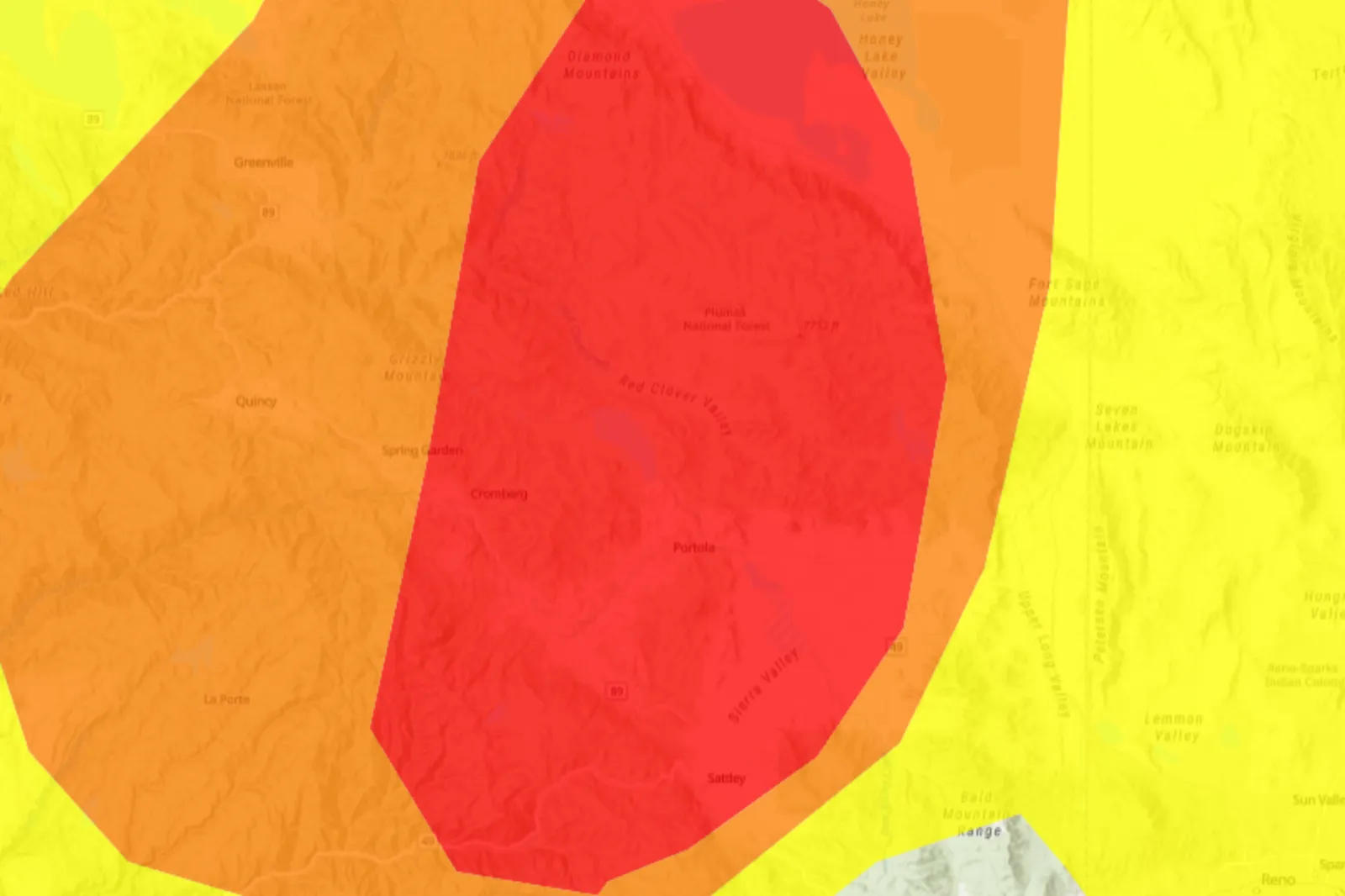
Thousands of residents across parts of California have been urged to stay indoors on Wednesday morning amid concerns over high air pollution levels, a map from AirNow shows.
The map showed an area of fine particle (PM2.5) pollution in the "unhealthy" Air Quality Index (AQI) category around the town of Portland, and parts of the Plumas National Forest and Sierra Valley at 3 a.m. ET. Meanwhile, the same warning was issued for an area along the Mexican border south of San Diego at 5 a.m. ET.
When air quality reaches the "unhealthy" category, the Environmental Protection Agency (EPA) advises that sensitive groups—including young children, older adults and those with certain medical conditions—avoid long or intense outdoor activities and to consider rescheduling or moving activities indoors.
Read More on News
The general population is advised to reduce long or intense activities, and to take more breaks during outdoor activities.
...
What To Know
The AQI is a standardized system, created by the EPA, that measures and categorizes air quality across the U.S. using a scale between 0 to 301 or above.
The AQI categories are as follows:
- 0–50 is "good," which means air pollution poses little or no risk to the public.
- 51–100 is "moderate," meaning the air quality is ok, but those who are highly sensitive to air pollution may be affected.
- 101—150 is "unhealthy for sensitive groups," which means although the general population may remain unaffected by the air quality, those in sensitive or vulnerable groups might experience some health issues.
151—200 is "unhealthy," meaning the levels of pollution in the air could affect the general public, and those in vulnerable groups could experience more severe health issues. - 201—300 is "very unhealthy," which is an official health warning, as the air quality could affect everyone's health.
- 300+ is "hazardous," which is classified as an emergency, meaning everyone is likely to be affected.
Air quality is primarily determined by the concentration of ground-level ozone and particulate matter (PM), such as PM2.5 and PM10, in the atmosphere.
The EPA considers PM2.5—particles with a diameter of 2.5 micrometers or smaller—as one of the most harmful pollutants, as the particles can be inhaled, penetrating deep into the lungs, and even entering the bloodstream, potentially triggering or worsening respiratory and cardiovascular conditions.
What People Are Saying
The EPA says on its website that the AQI was developed "to make information available about the health effects of the five most common air pollutants, and how to avoid those effects."
It adds: "Even if you are healthy, you may experience temporary symptoms from exposure to elevated levels of particles. Symptoms may include: irritation of the eyes, nose and throat; coughing; phlegm; chest tightness; and shortness of breath. At greatest risk from particle pollution are people with heart or lung disease, older adults (possibly because they may have undiagnosed heart or lung disease), and children."
What Happens Next
Residents in affected areas are advised to keep monitoring the air quality levels in their area, as conditions could change rapidly.
View 0 Comments
Submit Correction
View Editorial & AI Guidelines