...

By Hollie Silverman
News Editor
0
Share
Newsweek is a Trust Project member
See more of our trusted coverage when you search.Prefer Newsweek on Googleto see more of our trusted coverage when you search.
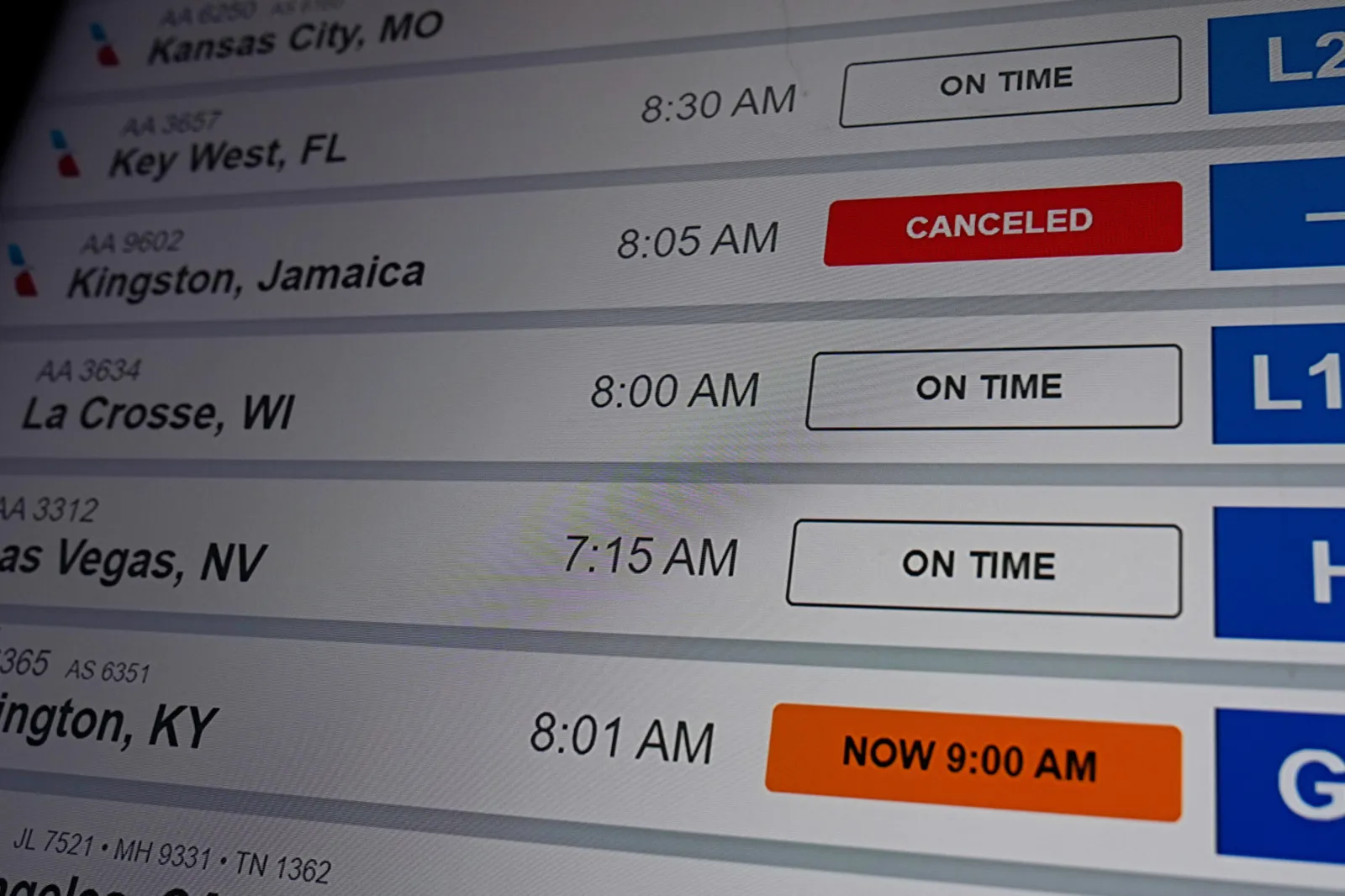
Various airlines have canceled thousands of flights and logged more than 12,000 delays on Sunday as severe weather swept parts of the country, snarling operations at multiple hubs, according to real-time tracking by FlightAware.
Data from FlightAware shows nearly 3,000 flights cancelled nationwide and over 12,000 delays as of Sunday afternoon.
The disruptions affected departures and arrivals nationwide, prompting airlines to issue waivers and rebook passengers as operations were constrained by storms and winter weather impacts, according to the Federal Aviation Administration’s National Airspace System (FAA NAS) status advisories and airline alerts posted throughout the day.
Read More on News
Why It Matters
With spring break travel underway, Sunday’s weather-driven cancellations and delays risk stranding travelers, mispositioning aircraft and crews, and increasing costs for carriers and passengers.
The latest update unfolded as airports continue to struggle during the partial government shutdown of the Department of Homeland Security (DHS) that has seen Transportation Security Administration (TSA) agents go without pay, disrupting travel operations across the country.
Airports already warned of longer lines and potential flight delays as unscheduled absences increased and more than 300 TSA officers left their jobs since the partial shutdown began, according to CBS News.
What To Know
FlightAware’s live dashboard showed thousands of cancellations and more than 10,000 delays within, into, or out of the U.S. on Sunday, reflecting widespread operational disruption tied to severe weather.
Minneapolis St. Paul Airport saw the largest number of cancellations, with 343 flights canceled Sunday morning, accounting for 73 percent of all flights departing from the airport.
Chicago's O'Hare International airport saw another 286 cancellations, and 205 delays, according to Flightaware.
Both airports had over 300 arrivals cancelled along with hundreds of delays, the data shows.
Multiple weather warnings are in effect Sunday, with blizzard and high wind warnings across the Midwest and Great Plains as severe storm warnings were issued for parts of the Southeast.
When thunderstorms, low ceilings, snow, or high winds constrain capacity, the FAA implements Traffic Management Initiatives such as ground delay programs and ground stops to manage safety and flow, which can lengthen taxi, departure, and arrival time.
...
What People Are Saying
The National Weather Service La Crosse, Wisconsin, office said in a warning Sunday: "Snow continues through noon, dangerous travel. Accumulating snow continues throughout the remainder of the morning with heavy snowfall rates of 1-2"/hr at times. Numerous roads north of I-90 are impassable as 12-18 inches or more has already fallen in these areas. Winds will begin to increase this afternoon which will result in blizzard conditions across the area.
The Federal Aviation Administration's (FAA) Airport Status Information website reads Sunday: "Due to WEATHER / THUNDERSTORMS, departure traffic destined to Chicago OHare International Airport, Chicago, IL (ORD) is currently experiencing delays averaging 5 hours and 56 minutes."
Delta Airlines said in a press release on Sunday: "Airports in the Midwest, including Delta’s Minneapolis-St. Paul hub, continue to see snowfall and strong winds. We expect Delta flights to gradually resume once airport conditions improve. Delays and additional schedule adjustments are possible as operations recover. The safety of Delta customers and our people remains first and foremost as we closely monitor forecasts to determine necessary adjustments to flight schedules. Customers are encouraged to watch their flight status closely on delta.com or the app for the latest information. Delta will provide customers with as much notice as possible about changes to flight schedules. When a cancellation occurs, Delta automatically rebooks customers to the next best itinerary."
What Happens Next
Airlines typically restore schedules as weather clears and equipment and crews return to position, while the FAA adjusts or cancels traffic management programs as airport conditions improve.
Passengers with upcoming travel should monitor airline notifications, verify airport conditions, and review federal forecasts for updated hazards before heading to the airport.
In a polarized era, the center is dismissed as bland. At Newsweek, ours is different: The Courageous Center—it's not "both sides," it's sharp, challenging and alive with ideas. We follow facts, not factions. If that sounds like the kind of journalism you want to see thrive, we need you.
When you become a Newsweek Member, you support a mission to keep the center strong and vibrant. Members enjoy: Ad-free browsing, exclusive content and editor conversations. Help keep the center courageous. Join today.


View 0 Comments
Submit Correction
View Editorial & AI Guidelines