...

By Emma Marsden
Reporter
0
Share
Newsweek is a Trust Project member
See more of our trusted coverage when you search.Prefer Newsweek on Googleto see more of our trusted coverage when you search.
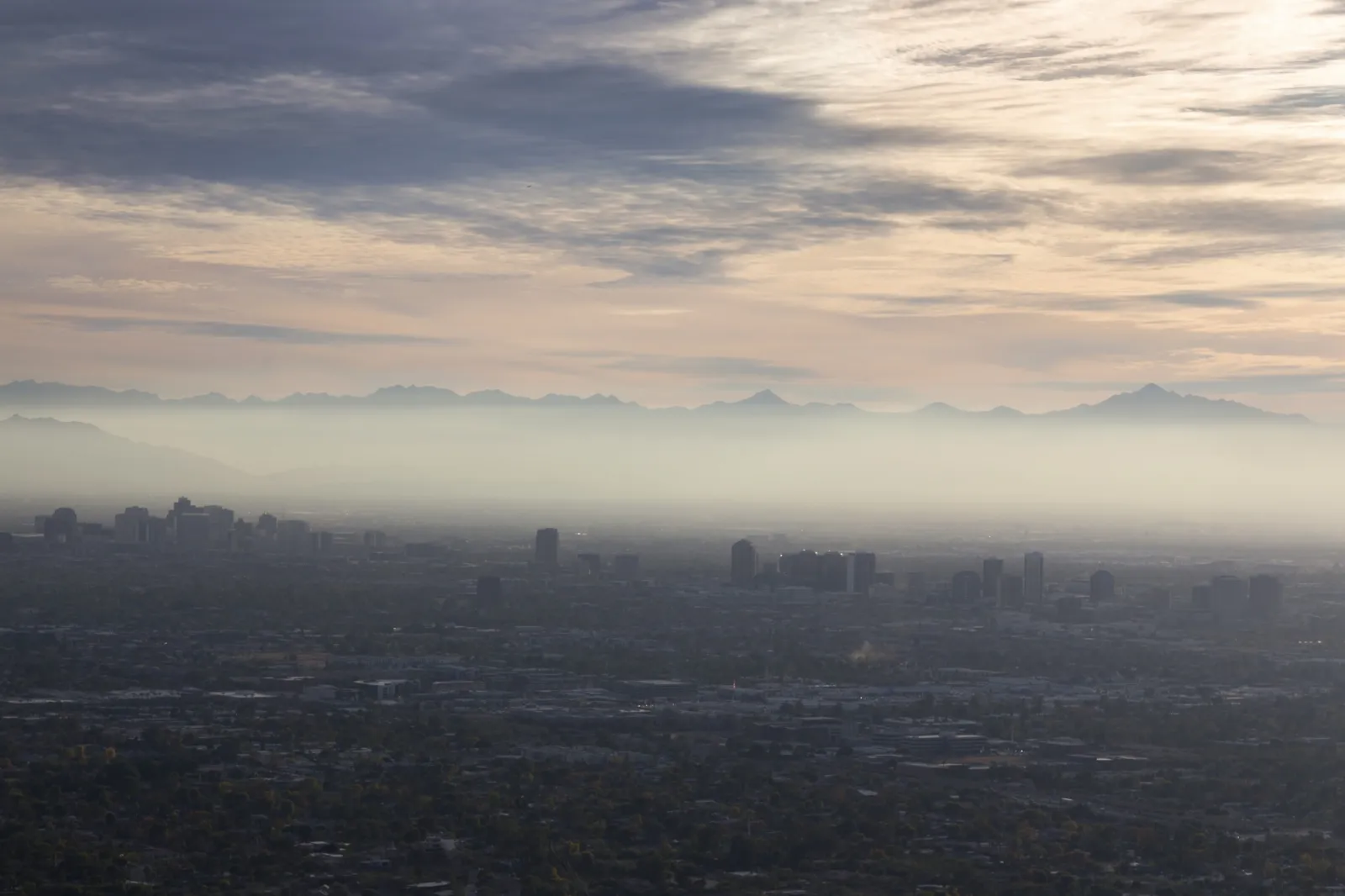
Residents in Yuma, Arizona, have been urged to stay indoors and reduce activity levels after a hazardous air quality warning was issued by the Environmental Protection Agency (EPA) through the AirNow service.
The area has been placed under a critical air quality alert because of elevated levels of particulate matter (PM). The primary pollutant involved is PM10, which has reached an alarming Air Quality Index (AQI) reading of 961, far surpassing safe levels. The EPA advises that everyone, especially vulnerable populations such as children, the elderly, and individuals with respiratory conditions, should remain indoors until conditions improve.
The dangerously high levels of particulate matter, which are often the result of dust storms or other environmental factors, can cause a range of health problems, including respiratory distress, exacerbation of asthma, and increased risk for heart and lung diseases.
Read More
...
The EPA’s guidelines recommend that residents avoid outdoor activities altogether, particularly strenuous physical exertion. For those with preexisting health conditions, it is essential to follow their doctor’s advice and take precautions to minimize exposure to the hazardous air.
Officials are urging residents to stay updated by following local news outlets for further advisories. While the hazardous air quality is expected to persist, local authorities are monitoring the situation closely and will issue updates as necessary.
For now, those in Yuma and surrounding areas are advised to close windows and doors, and use air purifiers if possible. Residents should also limit the use of air conditioning systems that do not filter outdoor air.
Air Quality Alert Issued for Coachella Valley Amid Hazardous Dust Pollution Levels
The National Weather Service (NWS) has also issued an air quality alert for the Coachella Valley from 4 p.m. Sunday to 11:59 p.m. Monday, due to harmful levels of particle pollution caused by windblown dust. The South Coast Air Quality Management District (AQMD) has warned residents that particle pollution can deeply affect the lungs, leading to serious health problems like asthma attacks, heart and lung disease symptoms, and an increased risk of lung infections.
The alert covers areas including Indio, Palm Springs, Cathedral City, Palm Desert, and Coachella. Pollution levels are expected to vary depending on local weather conditions and emissions, so it is advised to check current air quality levels regularly.
NWS advises that sensitive groups—such as individuals with lung or heart disease, older adults, children, pregnant women, and those who spend significant time outdoors—are particularly vulnerable. These groups should limit outdoor activities, and everyone else is advised to avoid strenuous physical activity when pollution levels reach "unhealthy" (red) or "very unhealthy" (purple) on the Air Quality Index. In areas where AQI levels are "hazardous" (maroon/ burgundy), all outdoor physical activity should be avoided.
To protect health, the public is advised to stay indoors, close windows and doors, and use air purifiers if possible. For outdoor activities, it is recommended to carpool, telecommute, or use public transport to reduce pollution. Drivers should also slow down on dirt roads to minimize dust.
What Is Air Quality Index?
As stated by AirNow, the U.S. Air Quality Index (AQI) is the EPA's tool for communicating outdoor air quality and its potential health impacts. The AQI uses six color-coded categories, each representing a range of index values. The higher the AQI value, the greater the air pollution level and associated health risks. For instance, an AQI value of 50 or below indicates good air quality, while a value above 300 signifies hazardous air quality.
For each pollutant, an AQI value of 100 generally reflects the level of ambient air concentration that meets the short-term national air quality standard designed to protect public health. AQI values at or below 100 are typically considered satisfactory, but when the AQI exceeds 100, the air quality becomes unhealthy—first for sensitive groups, and then for the general population as the AQI rises.
The AQI is divided into six categories, each reflecting a different level of health concern, and each is represented by a specific color. These colors help people quickly assess whether the air quality in their area is reaching unhealthy levels.
Green indicates good, yellow moderate, orange unhealthy for sensitive groups, red unhealthy, purple very unhealthy, and burgundy hazardous.
05/04/2026 06:15 ET: This article has been updated with additional information.
05/04/2016 11: a.m. ET: This article has been updated with additional information.
View 0 Comments
Submit Correction
View Editorial & AI Guidelines