...

By Amanda Greenwood
Associate News Editor
0
Share
Newsweek is a Trust Project member
See more of our trusted coverage when you search.Prefer Newsweek on Googleto see more of our trusted coverage when you search.
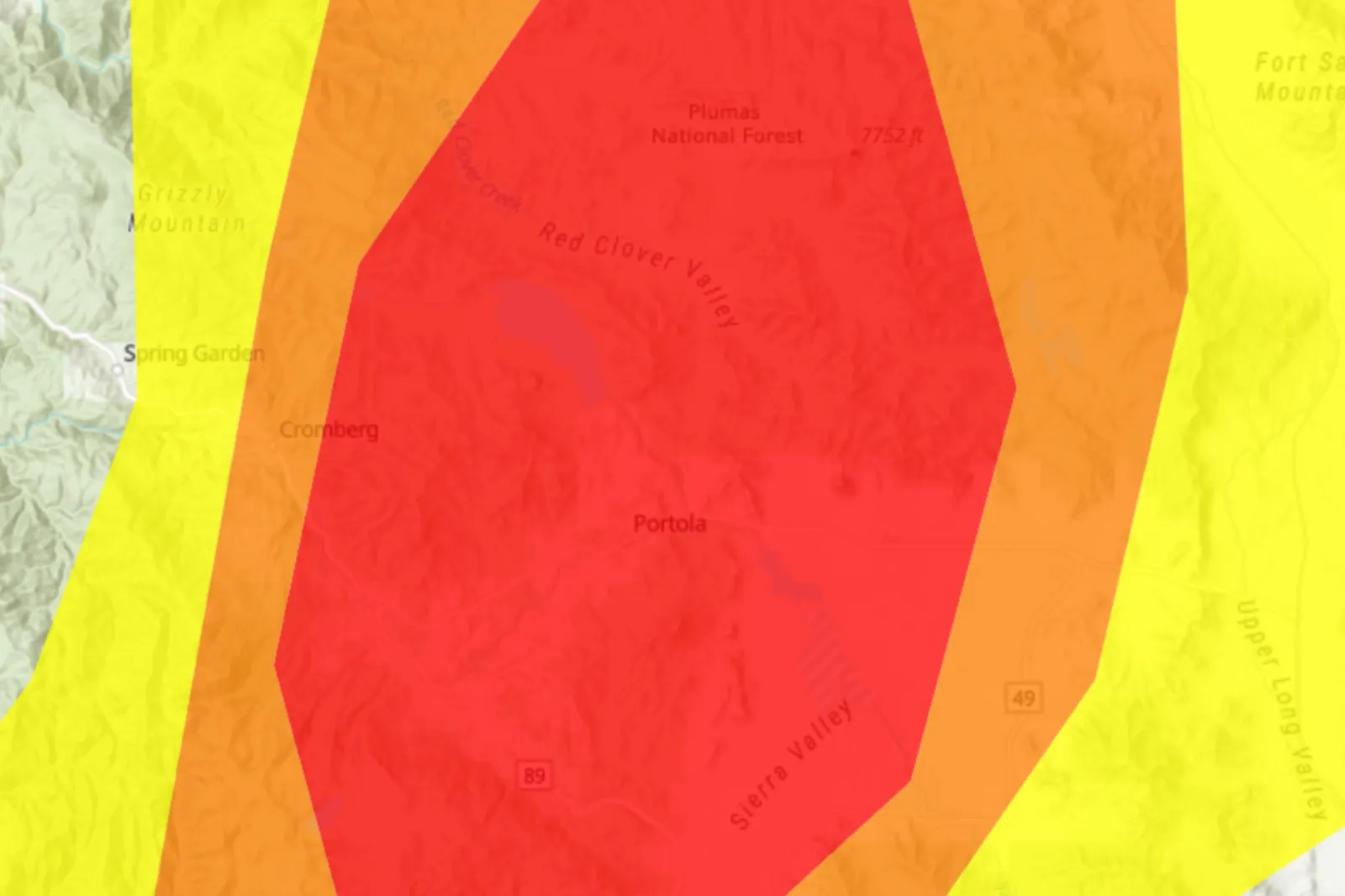
Thousands of residents across parts of California have been urged to stay inside amid concerns over high air pollution levels, according to a map from AirNow.
The map shows an areas of fine particle (PM2.5) pollution in the "unhealthy" Air Quality Index (AQI) category across parts of the Plumas National Forest and the Sierra Valley as of 2.30 a.m. ET.
What It Matters
When air quality reaches the "unhealthy" category, the Environmental Protection Agency (EPA) advises that sensitive groups—including young children, older adults, and those with certain medical conditions—avoid long or intense outdoor activities and consider rescheduling or moving activities indoors.
Read More on News
The general population is also advised to reduce long or intense activities and to take more breaks during outdoor activities.
...
The Air Quality Index Explained
The EPA uses the AQI to monitor and communicate the quality of air across America. The AQI is a standardized system that uses a scale of between 0 and 301+ to rank the quality of air across the U.S. into six categories, from "good" to "hazardous."
- 0 - 50 - Good: Air pollution poses little or no risk to the public.
- 51 - 100 - Moderate: The quality of air may be a risk for some people, especially those who are unusually sensitive to air pollution.
- 101 - 150 - Unhealthy for sensitive groups: People in sensitive groups—including young children, older adults, and those with certain medical conditions—could be affected by poor air quality.
- 151 - 200 - Unhealthy: All members of the public could be affected by the air quality, but those in sensitive groups could experience more serious health effects.
- 201 - 300: Very Unhealthy: The health risks from poor air quality are increased for everyone.
- 301+ - Hazardous: An emergency health warning is issued as everyone is more than likely to be affected by the quality of the air.
What Is PM2.5?
PM2.5 is classified as tiny particles of pollution that are 2.5 micrometers or less in size. They can be emitted from a variety of sources, including vehicles and industrial plant emissions, smoke from wildfires, or dust from unpaved roads and construction sites.
PM2.5 is one of the most dangerous types of pollution as the particles are so fine they can be unknowingly inhaled, getting deep into the lungs or even the bloodstream, triggering or worsening health conditions.
Symptoms from this pollution include coughing, eye, ear, and throat irritation, chest tightness, and shortness of breath.
The EPA warns that "even if you are healthy, you may experience temporary symptoms from exposure to elevated levels of particles."
View 0 Comments
Submit Correction
View Editorial & AI Guidelines