...

By Amanda Greenwood
Associate News Editor
0
Share
Newsweek is a Trust Project member
See more of our trusted coverage when you search.Prefer Newsweek on Googleto see more of our trusted coverage when you search.
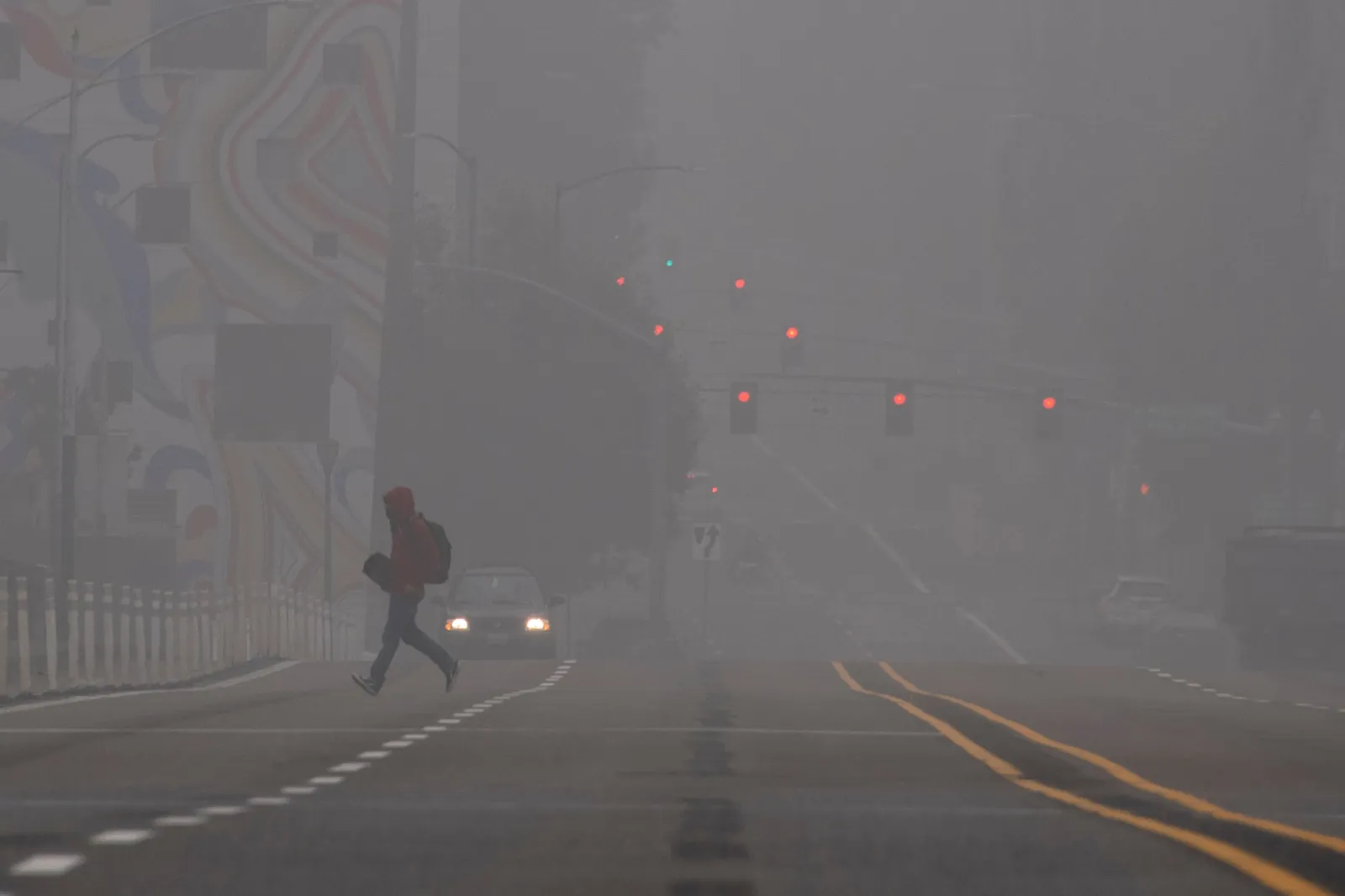
Thousands of people across parts of Oregon face unhealthy levels of air pollution on Tuesday, a live map from AirNow shows.
The map showed an area of fine particle (PM2.5) pollution in the "unhealthy" Air Quality Index (AQI) category around La Pine in Deschutes County, and John Day in Grant County as of 2.45 a.m. ET.
Why it Matters
Unhealthy levels of air pollution in the atmosphere can affect everyone, but vulnerable people, especially the elderly, children, and those with existing heart or lung conditions, can be particularly affected.
Read More on News
Exposure to poor air can lead to eye, throat, and nose irritation, coughing, chest tightness, or shortness of breath.
...
What To Know
The live map recorded an AQI level of 160 in both Deschutes and Grant counties on Tuesday morning, meaning that levels of PM2.5 had reached an "unhealthy" level.
AirNow, an official partner of the Environmental Protection Agency (EPA), monitors air quality levels across the U.S. via a standardized system called the Air Quality Index (AQI). This uses a scale of 0 to 500 to rate the level of air pollution in the atmosphere.
- 0—50 (Green): Good—air quality is satisfactory, and air pollution poses little or no risk.
- 51—100 (Yellow): Moderate—air quality is acceptable. However, there may be a risk for some people, particularly those who are unusually sensitive to air pollution.
- 101—150 (Orange): Unhealthy for sensitive groups—members of sensitive groups may experience health effects. The general public is less likely to be affected.
- 151—200 (Red): Unhealthy—some members of the general public may experience health effects; members of sensitive groups may experience more serious health effects.
- 201—300 (Purple): Very Unhealthy—health alert. The risk of health effects is increased for everyone.
- 301 and higher (Maroon): Hazardous—health warning of emergency conditions. Everyone is more likely to be affected.
PM2.5 are tiny particles of pollution that are usually 2.5 micrometers or less in size—roughly 30 times smaller than a strand of hair—that enter the atmosphere and are often unknowingly inhaled. They can come from various sources, ranging from construction sites and wildfires, to power plants and car emissions.
What People Are Saying
AirNow says on its website: "People with heart or lung disease, older adults, children, and teens – take any of these steps to reduce your exposure: avoid strenuous outdoor activities; keep outdoor activities short; consider moving physical activities indoors or rescheduling them.
"Everyone else – take any of these steps to reduce your exposure: choose less strenuous activities (like walking instead of running) so you don’t breathe as hard; shorten the amount of time you are active outdoors; be active outdoors when air quality is better."
The EPA warns on its website: "Numerous scientific studies have linked particle pollution exposure to a variety of problems, including:
- premature death in people with heart or lung disease
- nonfatal heart attacks
- irregular heartbeat
- aggravated asthma
- decreased lung function
- increased respiratory symptoms, such as irritation of the airways, coughing or difficulty breathing.
"People with heart or lung diseases, children, older adults, minority populations, and low socioeconomic status populations are the most likely to be affected by particle pollution exposure, either because they are more sensitive or may have higher exposures."
What Happens Next
At these air pollution levels, the EPA recommends that sensitive groups avoid long or intense outdoor activities and consider rescheduling or moving them indoors. The EPA also advises that the remainder of the population reduce long or intense activities and take more breaks during outdoor activities.
Residents in affected areas should continue monitoring the air quality maps and respond to the warnings. The warnings are updated throughout the day on the AirNow website.
View 0 Comments
Submit Correction
View Editorial & AI Guidelines