10
Loading video...



By Hollie Silverman, Adeola Adeosun, and Aliss Higham
0
Share
Newsweek is a Trust Project member
See more of our trusted coverage when you search.Prefer Newsweek on Googleto see more of our trusted coverage when you search.
Three people have died, and at least three others have fallen ill after a suspected hantavirus outbreak aboard a cruise ship, which is traveling across the Atlantic Ocean.
Two infections have been confirmed, and a broader investigation is underway as health authorities race to contain the cluster on the MV Hondius.
As of Monday, May 4, Oceanwide Expeditions, the Dutch company that operates the cruise, has confirmed that authorities in Cape Verde have not permitted the Dutch-flagged vessel to dock as a precautionary measure, citing the aim of protecting national public health.
Read More on News
The company said in its latest update that the ship could sail to Spain's Canary Islands, where passengers could disembark and medical screening could take place.
...
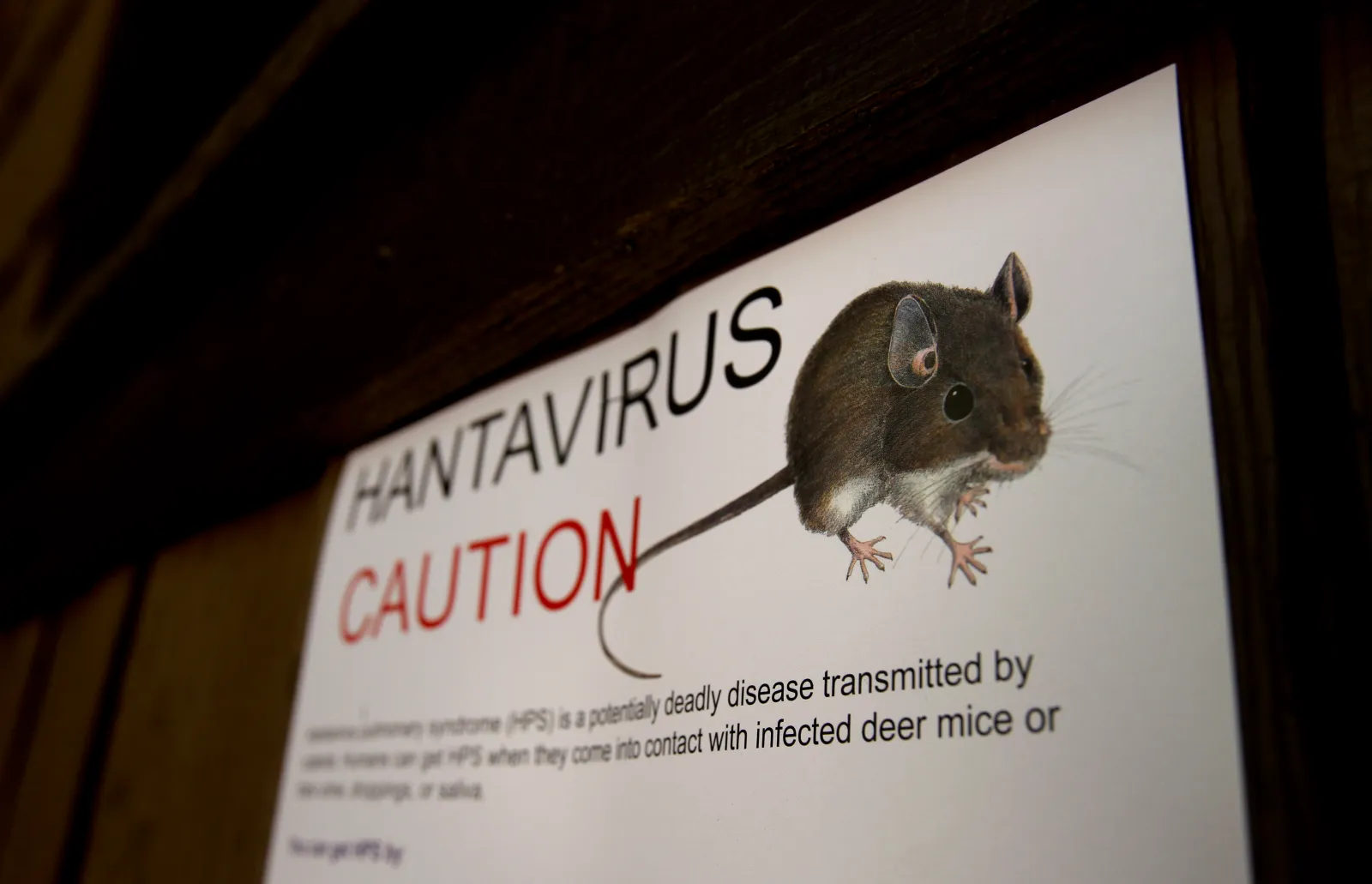
Hantavirus is typically spread through contact with the urine or feces of infected rodents—most often rats or mice—though WHO noted that limited person‑to‑person transmission has been documented in some outbreaks.
Hantavirus infections are rare but can be severe, often leading to acute respiratory distress and, in some cases, death. Outbreaks linked to cruise ships are especially concerning because of the close quarters and shared ventilation among passengers.
The suspected cluster also raises questions about rodent exposure aboard vessels and the challenges of managing infectious‑disease emergencies at sea. With global cruise travel rebounding, health officials say even isolated outbreaks can have far‑reaching implications for surveillance, evacuation protocols, and international coordination.
Newsweek reached out to Oceanwide-Expeditions via email for comment.
What To Know
There are 88 passengers and 61 crew members on board the MV Hondius. Oceanwide Expeditions has confirmed 17 passengers are U.S. nationals.
The first victim was a 70-year-old man who died on the ship and whose body was removed in the British territory of Saint Helena in the South Atlantic, the department said. The man's wife collapsed at an airport in South Africa while trying to take a flight to her home country of the Netherlands, and she died at a nearby hospital. The latter is confirmed to have had hantavirus.
Oceanwide Expeditions said the third victim's body, as of May 4, remained onboard the ship in Cape Verde, and its priority is ensuring that two ill crew members receive medical care.
A patient now in intensive care in Johannesburg is a British national, the department said, and is also confirmed to have hantavirus. That person fell ill near Ascension Island, another remote island in the Atlantic, after the ship left Saint Helena and was transferred from there to South Africa for treatment.
Two other people have fallen ill on board, though these cases are not confirmed to be hantavirus. Healthcare workers boarded the vessel on Tuesday, May 5, to perform a medical evacuation of two people.
The MV Hondius left Argentina around three weeks ago for a cruise that included stops in Antarctica, the Falkland Islands, and other destinations, the department said. The ship was due to ultimately reach the Canary Islands.
South Africa's National Institute for Communicable Diseases is conducting contact tracing in the Johannesburg region to determine whether others may have been exposed to the infected passengers while they were in South Africa.
How Do People Contract Hantavirus?
The Centers for Disease Control and Prevention (CDC) says these viruses are mainly spread by rodents, with people becoming infected through contact with their urine, droppings, or saliva, often by breathing in contaminated air.
“The usual route of infection is exposure to infected rodents, particularly inhalation of virus from contaminated rodent urine, droppings or saliva," explained Professor Roger Hewson, professor in molecular virology at the London School of Hygiene & Tropical Medicine. "This is why investigations of suspected cases often focus on whether people may have had exposure to rodent-contaminated environments, food stores, cabins, storage areas or other enclosed spaces.
Human-to-human spread of the disease is rare, according to Dr. Michael Head, a senior research fellow in global health at the University of Southampton in the United Kingdom.
He said that on the MV Hondius, "we do not yet know if there is human-to-human transmission. Knowledge of the strain is therefore important to understanding the risks to the passengers who are still on board.”
What Are Typical Symptoms of Hantavirus?
Hantavirus usually starts with sudden fever, severe fatigue, and muscle aches, often followed by headaches, nausea, or abdominal pain. As it progresses, some people develop coughing and shortness of breath as fluid builds in the lungs. Because symptoms can worsen quickly, especially the breathing problems, it’s important to seek medical care right away if someone may have been exposed.
There is no specific treatment, such as an antiviral treatment or vaccine, for hantavirus. Care is primarily supportive, with an emphasis on close clinical monitoring and the management of any respiratory, cardiac and renal complications.
"Early access to intensive care, when clinically indicated, improves outcomes," WHO reports.
Scientists stress that, despite the situation unfolding on the Hondius, the chances of it spreading from human to human are low.
"The key public health message is that hantavirus infections are uncommon and the wider public risk is generally low," Hewson said. "The priority is careful clinical management of affected individuals, laboratory confirmation, investigation of potential rodent exposure and proportionate public health follow-up of close contacts and shared environments."
How Can You Test For Hantavirus?
Hantavirus can be confirmed through a blood test, which will show if your body has produced the antibodies needed to fight off a hantavirus infection.
Which Parts Of the World Are Most Affected?
There is no country-level data detailing how many hantavirus cases there are, or have been, worldwide. But the virus is present worldwide, according to Dr. Toshana Foster, an associate professor of molecular virology at the University of Nottingham.
"These viruses are found worldwide where the rodent species that carry it live, so they are found in North and South America, to Europe, Russia and Asia," Foster said.
"The hantaviruses that are found in Europe and Asia usually are associated with haemorrhagic fever with renal syndrome , a kidney disease which has a variable case fatality rate (CFR), depending on the infecting type/strain of hantavirus."
According to Foster, case fatality rates for hantaviruses range from 0.1 to 15 percent, while hantaviruses endemic to the Americas are of greater clinical concern as they can cause hantavirus cardiopulmonary syndrome (HCPS), which has a higher case fatality rate of 30 to 40 percent.
Hantavirus drew international attention last year after Betsy Arakawa, the wife of actor Gene Hackman, died from the infection in New Mexico. Hackman died a week later.
What Happens Next
WHO said epidemiological investigations are ongoing, including efforts to determine how the virus was introduced onto the ship and whether additional passengers or crew may have been exposed.
"The risk to the wider public remains low. There is no need for panic or travel restrictions," WHO regional director for Europe, Hans Kluge, said.
Officials say more testing is expected in the coming days, and sequencing results may help determine the strain involved—a key step in understanding how the outbreak began and whether it poses a broader public‑health threat.
The ship’s future itinerary remains unclear as authorities evaluate whether it can safely continue sailing.
This article includes reporting by the Associated Press.
Do you know anyone on board? Email a.higham@newsweek.com
View 0 Comments
Submit Correction
View Editorial & AI Guidelines