10
Loading video...

By Lucy Notarantonio
Senior Reporter
0
Share
Newsweek is a Trust Project member
See more of our trusted coverage when you search.Prefer Newsweek on Googleto see more of our trusted coverage when you search.
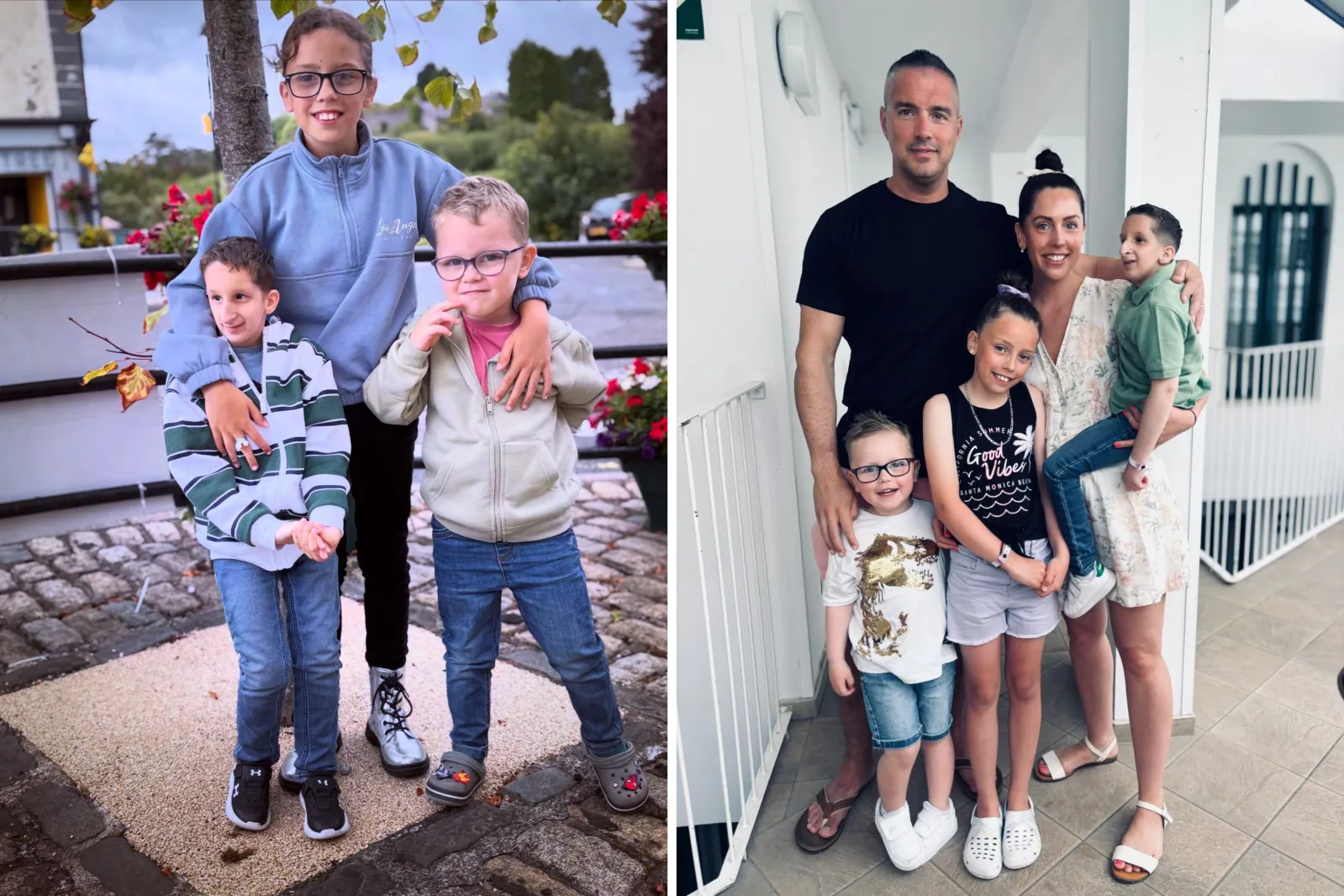
Four-year-old Aedan most likely thinks his brother Patrick Gill is a similar age—they stand at the same height. But in a few years, he will learn that Patrick is the eldest of three siblings and lives with an extremely rare condition.
Patrick has a form of dwarfism known as primordial dwarfism, which results in a smaller body size at all stages of life. His specific diagnosis known as microcephalic primordial dwarfism XRCC4, which is so rare that there are only 24 reported cases worldwide.
Patrick's mother, Kerry Gill, 39, spoke to Newsweek about her 13-year-old firstborn, who stands just 3ft 2in tall and weighs under 30lbs.
Read More on Family & Parenting
"Patrick has a learning age of 18 to 24 months; his eyesight is quite bad and he can say about ten words," she said.
...
A Strong Sibling Bond
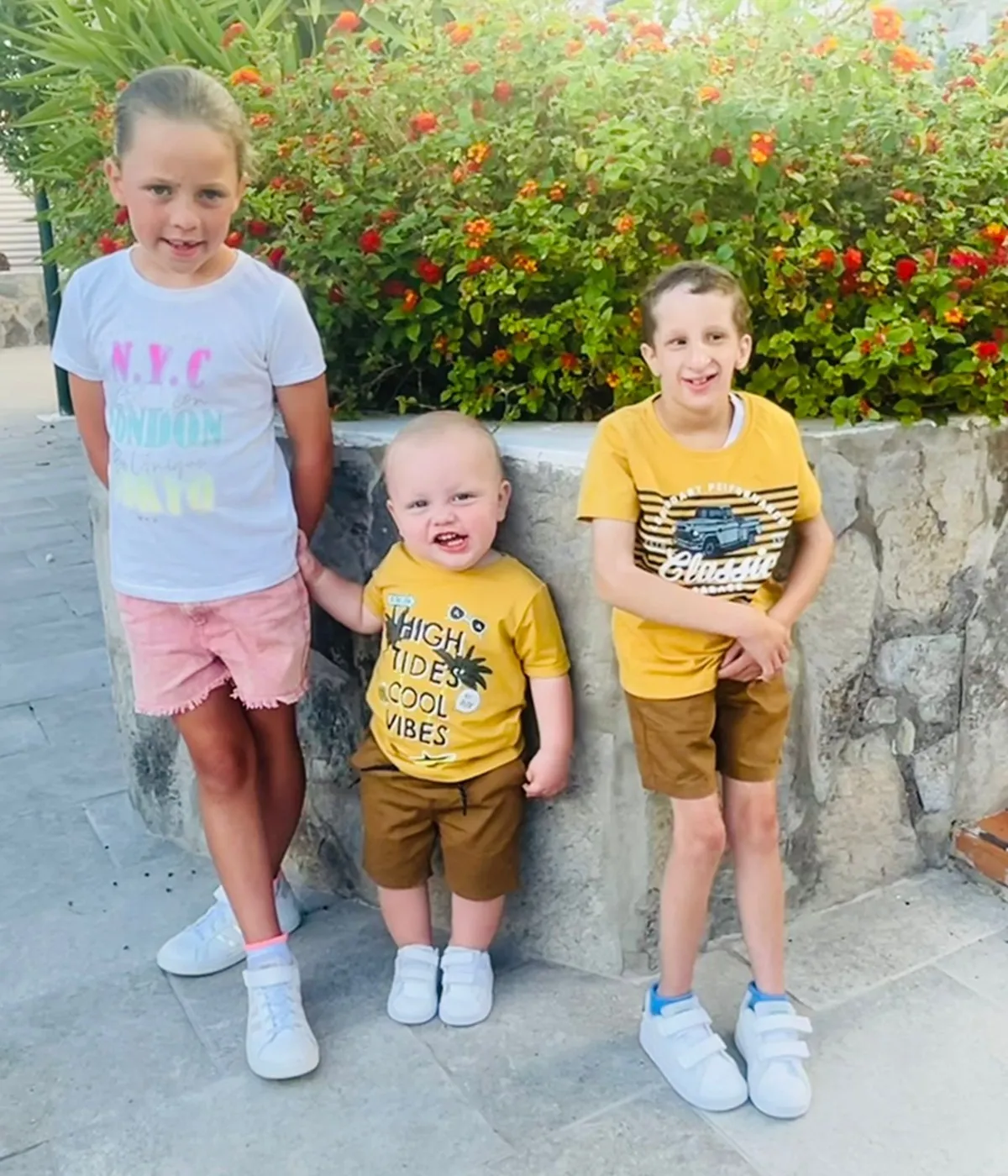
Despite his developmental challenges, Patrick shares a loving connection with Aedan, (who is three in the clip) and their nine-year-old sister, Evelyn. In a viral TikTok video with over 606,000 views (@itsverykerry) the brothers can be seen hugging frequently.
"Aeden doesn't understand yet but Evelyn is extremely protective," Gill told Newsweek. "People always stare when we go out and other kids run away. Evelyn gets upset and we get fed up, but we don't know any different.
"Patrick has an infectious personality. He knows if someone is upset and will give them a proper good hug. He is like an old soul but he can get frustrated."
A Rare Diagnosis
Patrick was diagnosed at just four months old, but doctors had expressed concern about his size as early as the 20-week scan during Gill's pregnancy.
According to medically-reviewed health information website Nemours KidsHealth, there are over 700 genetic skeletal disorders can cause short stature or dwarfism.
These mutations typically arise randomly before or at conception, or may be inherited from one or both parents—and cannot be prevented.
"We found out that mine and his dad Patrick, 43, default gene weren't compatible," told Gill. "Now, I have a one in four chance that every time I am pregnant."
Gill explained that she declined a prenatal diagnostic test called Chorionic Villus Sampling (CVS)—which can detect genetic or chromosomal conditions—when she was pregnant with Patrick.
"At 20 weeks, they couldn't measure him so suggested a CVS," she recalled. "I could feel him wiggling which gave me confidence. He was my first baby—I was naïve and positive," she said, adding that the 1 percent chance of miscarriage deterred her from the test.
She has since had the test twice when falling pregnant with Evelyn and Aedan.
...
A Traumatic Birth
When Patrick was born at 36 weeks and 6 days, Gill, who lives in Northern Ireland, looked no more than 20 weeks pregnant.
"The pregnancy was traumatic because we didn't know what was wrong with him," she told Newsweek.
"When he was born, his body was the same size as a can of coke and head like a tennis ball."
By four months old, Patrick had his diagnosis, and the family began to navigate their new reality.
Advocating for Children With Special Needs
More than a decade later, Gill uses her platform to advocate for children with special needs. Having once been advised to terminate her pregnancy, she now shares her story to show other parents that children with disabilities can lead joyful lives.
"When Patrick was a toddler, a curb was a giant step for him. We push him around in a pushchair and he runs on his tip toes," she said.
"He is still in nappies, non verbal and does a bit of Makaton sign language but we are very positive family. I am so blessed to have him.
"The hardest part has been his eczema—he has had horrendous skin since he was 4 months old. I'm not sure if it's linked—it has been a struggle because he can't understand.
"My mission on TikTok is for pregnant moms going through the same as me—it is ok to reach out."
Do you have a tip on a health story that Newsweek should be covering? Do you have a question about primordial dwarfism? Let us know via health@newsweek.com.
Reference
Cuinat, S., Chatron, N., Petit, F., Brunelle, P., Dincuff, E., Aubert Mucca, M., Bieth, E., Schmetz, A., Rieder, H., Wollnik, B., Kaulfuß, S., Yigit, G., McKeown, C., Savage, T., Mulligan, M. R., Bicknell, L. S., Corsten-Janssen, N., Edery, P., Lesca, G., ... Putoux, A. (2025). XRCC4-related microcephalic primordial dwarfism: Description of a clinical series of 7 cases, phenotype expansion and new diagnostic approaches. European Journal of Human Genetics, 33(7), 842–851. https://doi.org/10.1038/s41431-025-01821-0
Correction 09/15/25, 3:11 a.m. ET: This article was updated to amend Patrick's surname from Giles to Gill.
View 0 Comments
Submit Correction
View Editorial & AI Guidelines