...

By Lucy Notarantonio
Senior Reporter
0
Share
Newsweek is a Trust Project member
See more of our trusted coverage when you search.Prefer Newsweek on Googleto see more of our trusted coverage when you search.
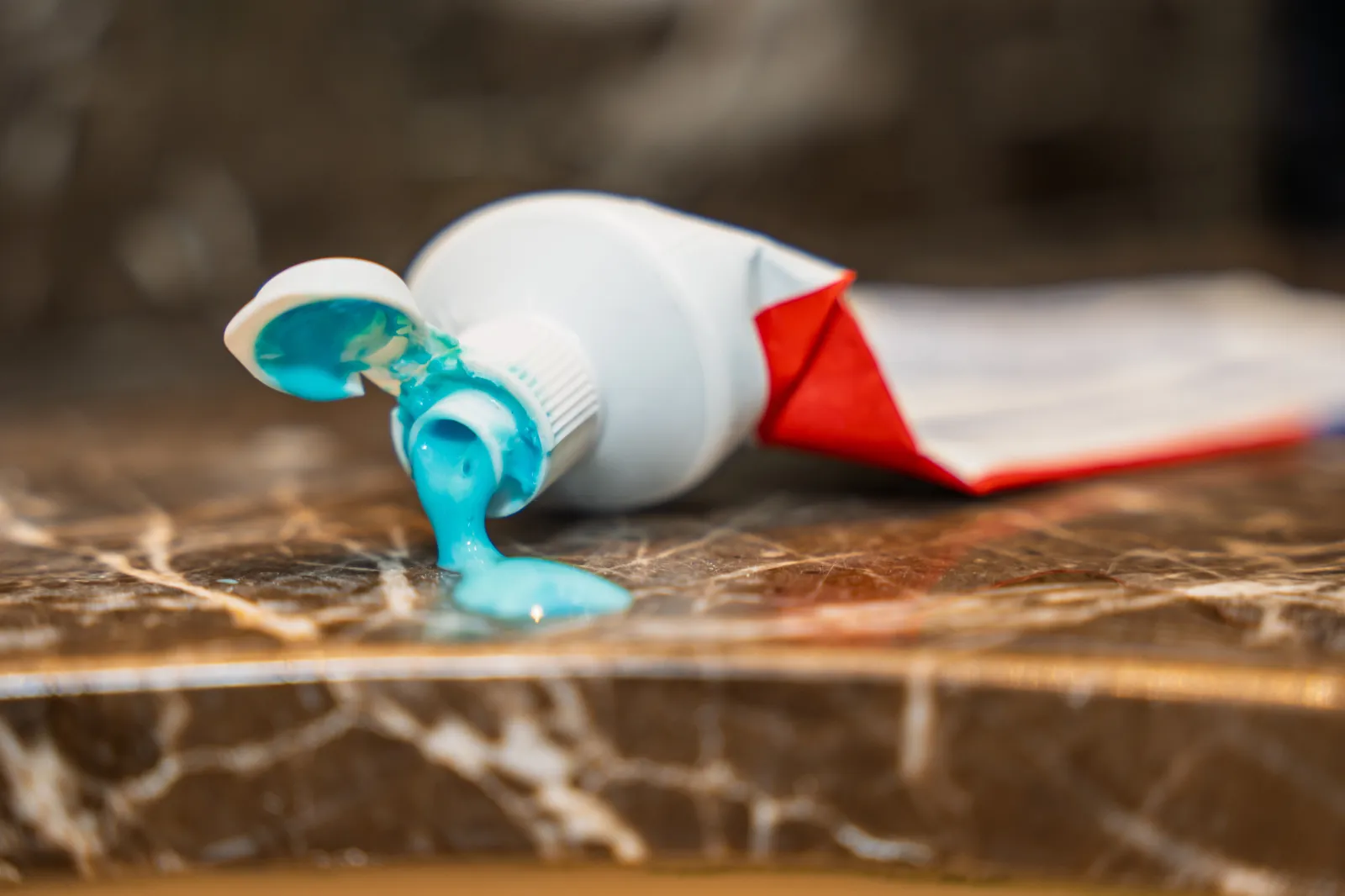
A photo of a long‑expired tube of toothpaste—dating all the way back to 1988—has gone viral on Reddit, attracting more than 50,000 upvotes.
The reason? As the caption puts it: “Mom is using toothpaste that expired January 15, 1988.”
The image was shared by user Common_Government_97, who explained in the comments that the product was likely purchased before it expired, but their mom has lived in the same property since the 1980s. That raised the big question: is it safe to use toothpaste that’s almost 40 years old?
Read More on Life
Dr. Keely Thorne, an aesthetic dentist, told Newsweek that it isn't "dangerous but it certainly isn’t effective, and it’s not something I’d ever recommend," she said.
Mom is using toothpaste that expired January 15,1988
byu/Common_Government_97 inmildlyinteresting
The January 25 post shows a tube of Crest, the American oral‑care brand owned by Procter & Gamble (P&G).
According to the company's website, P&G began researching cavity‑fighting toothpaste ingredients in the early 1940s, when Americans were developing around 700 million cavities a year. In 1950, the company partnered with Dr. Joseph Muhler at Indiana University to test a new fluoride formula. Clinical trials later showed promising results: children aged six to 16 had 49 percent fewer cavities, and adults saw similar reductions.
Following this success, Crest with Fluoristan was introduced in select markets in 1955 and expanded nationally in 1956. In 1960, the American Dental Association confirmed the formula’s effectiveness in preventing tooth decay, and by 1962, Crest became the top‑selling toothpaste in the U.S. The brand has continued to innovate since its 1955 debut, celebrating 50 years of its fluoride formula in 2005.
But a tube made in the 1980s is a different story.
“Toothpaste doesn’t suddenly become harmful once it’s past its expiry date, but over long periods of time the ingredients can break down,” Thorne said.
“Fluoride, which is added to strengthen enamel and help prevent decay, isn’t guaranteed to remain stable or active for decades. After nearly 40 years, it’s very unlikely that it’s still offering the level of protection people assume it is.”
...
Thorne, who is the principal dentist at The Dental Barns in Lichfield, England, added that formulations have evolved since the product pictured was manufactured.
“Modern toothpastes use more stable forms of fluoride, better delivery systems, and gentler abrasives that are kinder to enamel and gum,” she said. “A product made in 1988 simply doesn’t reflect current dental science or modern safety standards.”
She also highlights that while most toothpaste is spat out, a small amount is always swallowed. With an in-date product, that poses no concern. With something decades old, however, there’s no way to know how its ingredients may have changed.
Thorne notes that adults should be using a pea‑sized amount twice a day, meaning a tube should last only weeks. If someone still owns toothpaste from the 1980s, it indicates very infrequent brushing—a far more serious oral‑health issue than the expiry date itself.
Reddit Weighs In
Reddit users were quick to theorize how the 37‑year‑old product survived this long.
“They were on sale for $0.25 a tube in 1985 so she bought 50,” one user joked.
Another wrote: “This is just standard old people stuff. When I have a headache or any minor problem around my father he'll happily open his box and offer me things that expired 15 years ago.”
A third added a similar memory: “I once asked my [mother in law] if she had any sunscreen at her house as I forgot mine and we were in the backyard. She handed me a vintage orange and brown bottle of Coppertone that expired in 1987 (this was around 2005).”
Newsweek reached out to u/Common_Government_97 for comment. We could not verify the details of the case.
View 0 Comments
Submit Correction
View Editorial & AI Guidelines