...

By Aliss Higham
Reporter
0
Share
Newsweek is a Trust Project member
See more of our trusted coverage when you search.Prefer Newsweek on Googleto see more of our trusted coverage when you search.
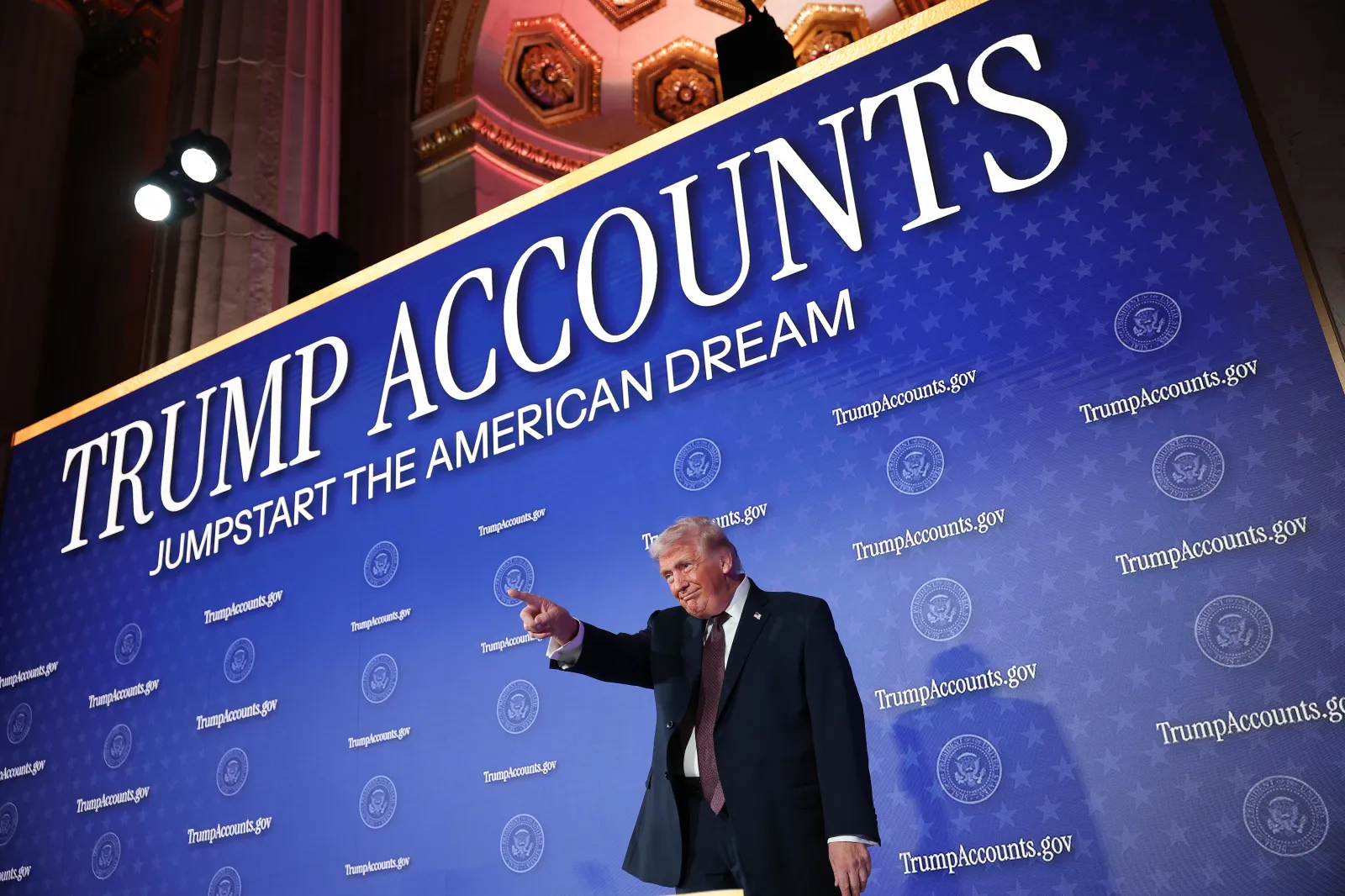
The Treasury Department has launched a new app designed to manage "Trump Accounts," a recently created investment program for children that officials say has already attracted almost 6 million sign-ups.
The app, released on Thursday in partnership with Bank of New York Mellon and Robinhood, quickly climbed the chart to become the fourth most downloaded app in the United States, trailing only ChatGPT, Claude and Google Gemini.
The accounts, created under the One Big Beautiful Bill Act signed into law on July 4, 2025, are intended to help children build long-term savings through investments that can grow over time. Eligible children born between 2025 and 2028 can also receive a $1,000 federal contribution, while all American children can have an account opened on their behalf.
Read More on News
One expert lauded the program as a meaningful step for children born into lower-income families, telling Newsweek the accounts could "help launch the next generation with opportunities they might never have had." But another warned that the country's wealth gap "could grow even wider."
What Exactly Are Trump Accounts?
Trump Accounts are a new type of individual retirement account designed specifically for youngsters. To open one, the child must be under the age of 18 at the end of the year the account is established and must have a Social Security number. Only one account is permitted per child.
The accounts are structured to encourage long-term investing from childhood. Contributions can be made by parents, relatives, employers and some charitable or government organizations.
Individuals and employers may contribute up to $5,000 annually per child. Unlike traditional retirement accounts, contributors do not need earned income to add money, and eligibility is not restricted by income level. Additional deposits made by government agencies or charities are not counted toward the annual $5,000 contribution cap.
...
Funds held in Trump Accounts can be invested only in certain approved products, primarily low-cost index mutual funds and exchange-traded funds tied to U.S.-based companies. All investment options must meet Treasury Department guidelines.
Withdrawals are largely prohibited until the child turns 18. After that, the account transitions into a structure that follows the rules governing traditional IRAs, including regulations related to contributions and distributions.
The rules also allow teenagers who earn income to contribute separately to other retirement accounts, such as Roth IRAs, without affecting the amount held in their Trump Account.
Who Is Eligible for Trump Accounts
Children who are U.S. citizens may also qualify for the government's $1,000 contribution if they were born between January 1, 2025, and December 31, 2028. Eligibility for the payment depends in part on whether the child is expected to qualify as a dependent for federal tax purposes under Form 4547 guidance.
A spokesperson for Treasury Department said in an email to Newsweek that almost 6 million children had already been enrolled in the program, and that the newly launched app would serve as the primary platform for families to manage the accounts.
Are Trump Accounts Worth It?
Joseph Camberato, the founder and CEO of National Business Capital, said the accounts could have a meaningful effect on younger Americans, particularly families without substantial wealth.
"I think this is an incredible move, especially for families who aren't already wealthy," Camberato told Newsweek. "What makes it so smart is the compounding interest. It's wild to me that more people don’t understand how powerful that is, and crazier that we don't teach it in middle or high school."
He argued that the structure of the program is key because the funds are set aside for the child rather than immediately accessible to parents.
"If this were $1,000 gift at birth given to the parents, I would not be a fan," Camberato said. "But because the newborn is given $1,000 and an untouchable account, and more importantly, placed into a low-cost index fund that can crow and compound overtime—this is a brilliant idea that will make a difference."
"And I love that family, friends, and even companies can add to it—tax-free," he continued. "That structure encourages people to contribute to a kid's future in a meaningful way. If more people use it the right way, it could really help launch the next generation with opportunities they might never have had."
Trump Accounts' Effect on Wealth Gap
The launch of the accounts has also prompted discussion of whether the program will narrow or widen wealth gaps between families.
Camberato said the accounts were "100 percent a step in the right direction," arguing that even modest contributions could become meaningful over time because of long-term investment growth.
"Even if someone can't contribute a lot over time, having something is much better than nothing—especially when that 'something' is growing and compounding from day one," he said. "Without a program like this, families with fewer resources are already behind. This gives them a little boost to start from."
Jason Pack, the chief revenue officer of Freedom Debt Relief, said that while the program could help expand access to investing, the accounts could also deepen the existing wealth gap between higher- and lower-income families.
"It could do both. It's a small step toward creating a universal foundation of wealth because every eligible child will have a stake in the market from birth, regardless of their family's financial situation," Pack told Newsweek. "But the families who can afford to contribute an extra $5,000 per year can create real division."
Pack added that families able to consistently maximize contributions could build substantially larger balances by the time a child reaches adulthood.
"A wealthier family that can max out the contribution annually could help their child build a six-figure asset by adulthood," he said. "A lower-income family that can't afford to contribute will see their child's account grow much more slowly. In some ways, the wealth gap could grow even wider."
What Happens Next
The accounts are set to launch on July 4.
View 0 Comments
Submit Correction
View Editorial & AI Guidelines