
...


By Jesus Mesa and Gabe Whisnant
0
Share
Newsweek is a Trust Project member
See more of our trusted coverage when you search.Prefer Newsweek on Googleto see more of our trusted coverage when you search.
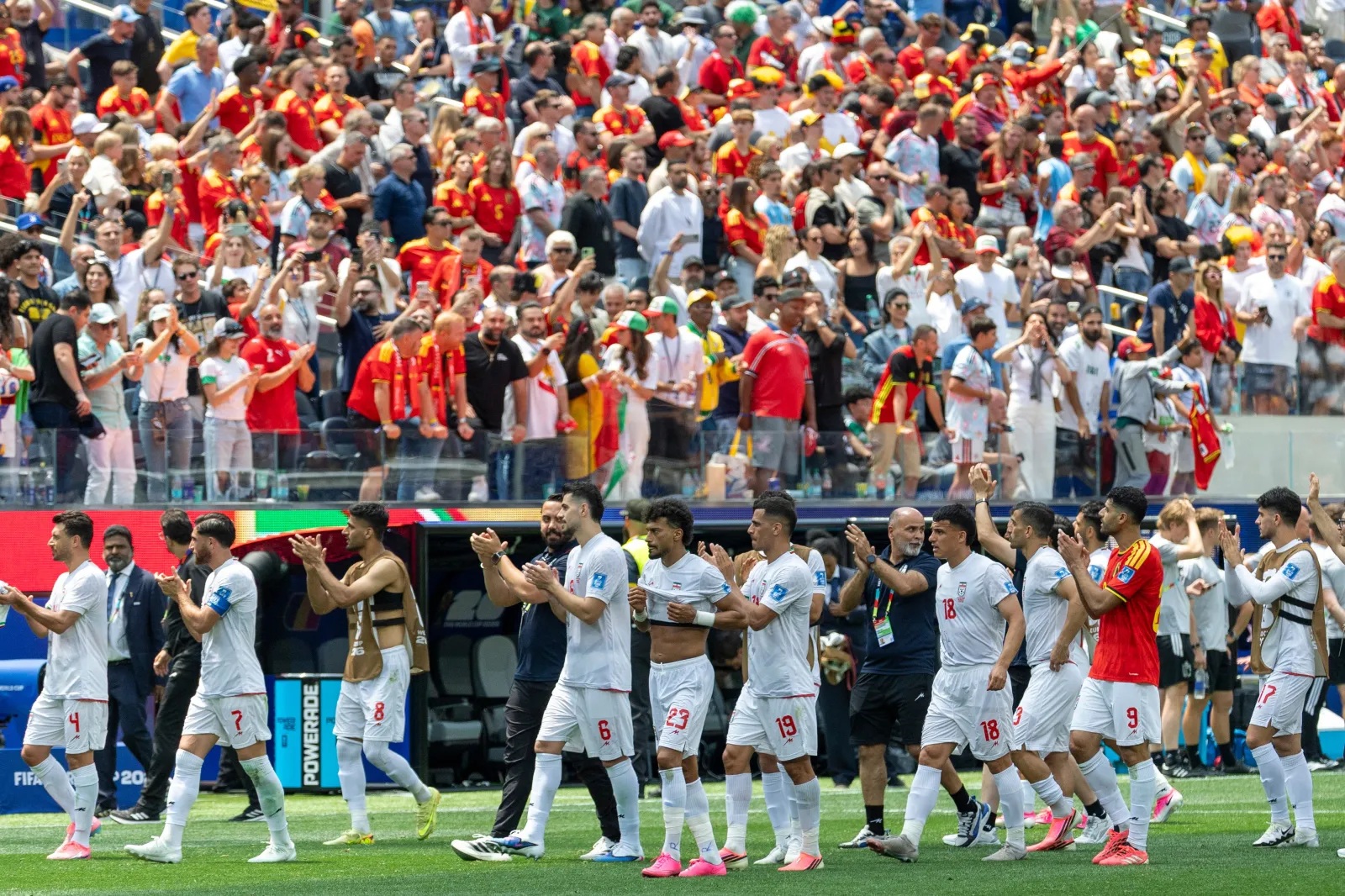
The Department of Homeland Security is easing travel rules for Iran’s national soccer team ahead of its final World Cup group-stage match against Egypt in Seattle.
Reversing stricter logistical rules, a DHS spokesperson confirmed that "Team Melli" will be allowed to cross from their Tijuana, Mexico, base camp into the U.S. two days prior to the Friday, June 26 match, granting them an extra day of preparation compared to previous games.
While the squad must still exit immediately post-match, the administration emphasized that the variance aims to focus on pitch safety amid ongoing diplomatic friction and visa denials for key team staff.
Read More on U.S.
The sudden shift introduces yet another twist to a mounting logistical headache that has already seen the Iranian squad face multiple visa denials, tight border curfews, and sudden security revisions since arriving at their Mexico training camp.
...
How the Iran-U.S. War Set the Stage
Iran's participation in the 2026 World Cup has been shadowed by conflict since February, when the United States and Israel launched joint strikes on Iran, killing Supreme Leader Ali Khamenei and triggering retaliatory missile and drone attacks across the region. A ceasefire brokered by Pakistan took effect in April, but the truce has remained fragile — and the diplomatic fallout has spilled directly onto the pitch.
The players arrived in North America wearing gold lapel pins reading "168," a tribute to the victims of a February 28 missile strike on a girls' school in Minab that Iranian officials say killed at least 168 people, most of them children. U.S. military investigators have said American forces were likely responsible due to a targeting error, though neither Washington nor Jerusalem has accepted formal responsibility.
Visa Denials Gutted Iran's Delegation
The fight over who could enter the United States began well before kickoff. Iran boycotted the World Cup draw in Washington in December after the U.S. granted only four visas to its delegation. Players eventually received their visas roughly 10 days before the tournament's opening, after applying at the U.S. Embassy in Ankara during a training camp in Turkey, but federation Secretary General Hedayat Mombeini and Vice President Mehdi Mohammad Nabi were both denied entry, among roughly 14 backroom staff and officials left without clearance.
The Iranian Embassy in Turkey accused the U.S. of the "worst possible form of politically biased interference in sport" and of "depriving Iran's national team of its right to play in the World Cup under normal conditions." Washington pushed back in blunt terms, with a Trump administration official warning it would not allow Iran to "abuse this system to sneak terrorists into the United States under false pretenses."
Tensions escalated further last Sunday, when DHS Secretary Markwayne Mullin accused the president of Iran's soccer federation of attempting to board the team's plane from Tijuana to Los Angeles despite having been denied a U.S. visa, claiming the official had "direct ties" to the Islamic Revolutionary Guard Corps.
Tijuana Base Camp and the Travel Grind
The uncertainty over visas prompted Iran to relocate its training base from Tucson, Arizona, where it had originally planned to prepare, to Tijuana, Mexico. The move has meant that for each of their first two group-stage matches in Los Angeles, the team was required to enter the United States only one day before the match and depart immediately after, with the short charter flight taking five hours in total once security and immigration checks were factored in.
For the Belgium match, the team departed Tijuana at 12:20 p.m., less than 24 hours before a noon kickoff. After the flight, immigration processing, and a stop at the team hotel, Iran's practice session did not begin until 4:30 p.m., leaving coach Amir Ghalenoei without time for a full training run. He did not hold back in his assessment. "It shows we are an oppressed country," Ghalenoei said at a press conference, calling Iran the tournament's "most oppressed" team.
Captain Mehdi Taremi echoed the frustration: "There's a lot of tension right now in this World Cup. You feel it in the atmosphere."
Iran Formally Complained to FIFA
Iran's Football Federation formally lodged a complaint with FIFA, arguing that the travel arrangements were inconsistent with the principles of equal treatment for participating nations and could negatively affect the team's technical preparation. The federation pointed to FIFA's own Article 18.3, which states that teams may travel from their base camp to match venues two days before a game in exceptional circumstances, a window Iran had been denied for its California fixtures.
The Seattle Match and What Changes
Iran will now be allowed to enter the U.S. two days before Friday's match rather than one, bringing it in line with how other teams operate, but the requirement to depart the same evening the game ends remains in place. Giuliani had hinted at the possibility of a reassessment in recent days, telling reporters that discussions were ongoing.
Iran enters the match having drawn both of its opening games and is still in contention to advance to the knockout round for the first time in the nation's seven World Cup appearances. The Seattle match carries added diplomatic weight: it falls on the city's Pride weekend, and Seattle's organizing committee has designated it a "Pride Match," a designation both Iran and Egypt formally objected to ahead of the tournament.
Seattle's organizers have said they will not change course.
Contact Newsweek editors on this story: Gabe Whisnant and Gray R. Thomas
View 0 Comments
Submit Correction
View Editorial & AI Guidelines