
...


By Marni Rose McFall and Gabe Whisnant
0
Share
Newsweek is a Trust Project member
See more of our trusted coverage when you search.Prefer Newsweek on Googleto see more of our trusted coverage when you search.
President Donald Trump’s move to reclassify marijuana has drawn criticism from Senator Tom Cotton, an Arkansas Republican, who said today’s cannabis is far more potent than it was a decade or two ago.
Cotton wrote on X, "Marijuana today is much more potent than just 10 or 20 years ago, leading to increased psychosis, anti-social behavior, and fatal car crashes. Arkansans don’t want more dangerous drugs obtained more easily. A change to marijuana’s drug classification is a step in the wrong direction."
White House Spokesman Kush Desai told Newsweek: “The Justice Department’s reclassification of cannabis in accordance with President Trump’s executive order is a welcome step to increase critical research into possible medical applications of cannabis. The Trump administration continues to implement a gold standard science-based approach to shape health policymaking and deliver for American veterans and patients.”
Read More on News
Polling Shows Declining GOP Support for Legalization
Public opinion on marijuana has generally become more favorable over time, though support is not uniform. Backing for legalization rose from 23 percent in 1985 to 64 percent last year, according to Gallup polling, though that figure is down from 70 percent just a few years earlier.
The decline has been driven largely by Republicans. Gallup found support for legalizing marijuana among Republicans fell from 55 percent in 2023 to 40 percent last year. Support dipped only slightly among Democrats, from 87 percent to 85 percent, and edged down among independents, from 69 percent to 66 percent.
Opposition within the GOP has also surfaced on Capitol Hill. More than 20 Republican U.S. senators, including several close allies of President Donald Trump, signed a letter last year urging him to keep marijuana classified as a Schedule I drug. The senators argued marijuana remains dangerous and warned that reclassifying it would undermine Trump’s “Make America Great Again” agenda.

...
What Changes Now—and What Doesn’t
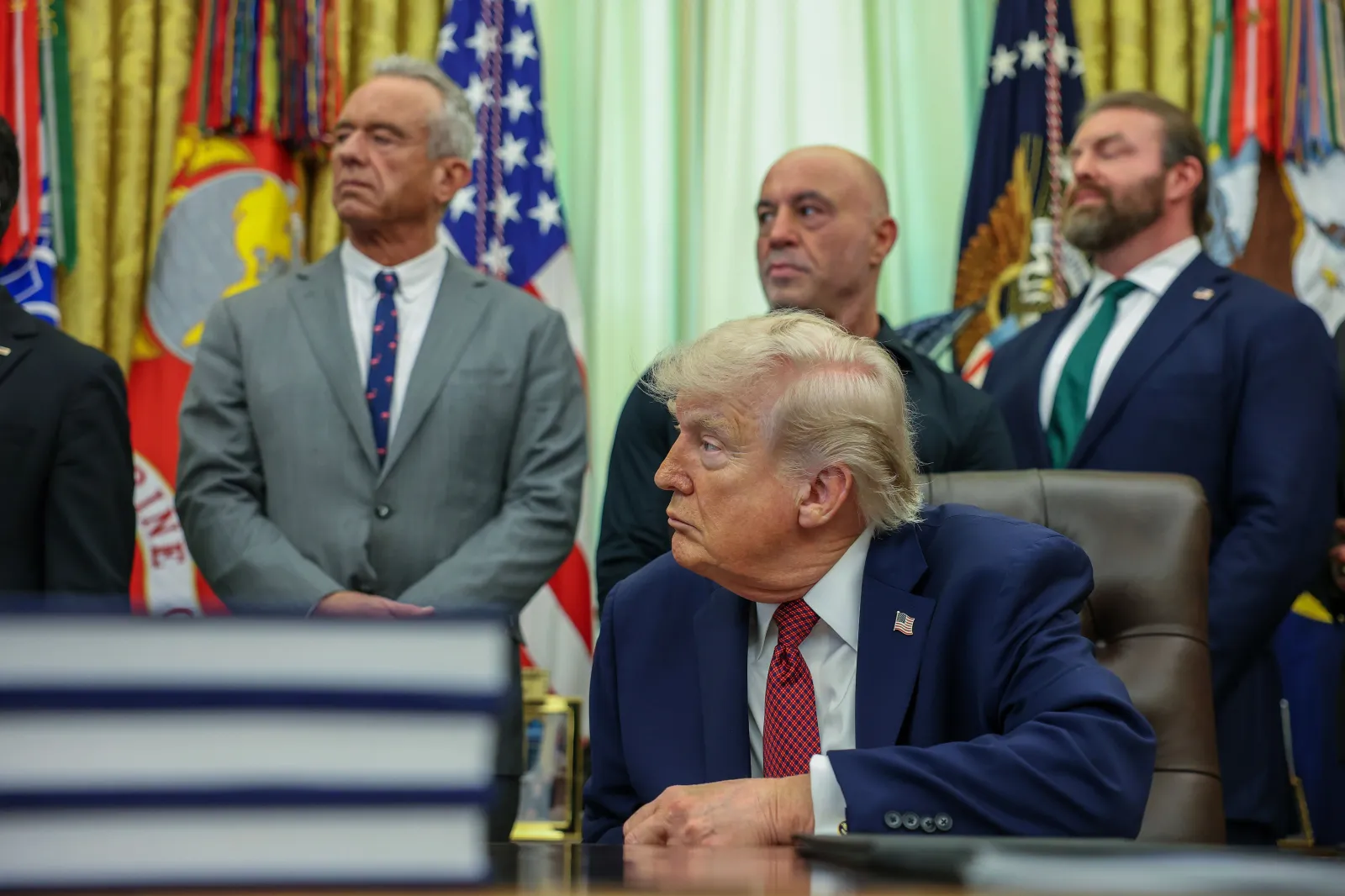
Trump’s administration reclassified state‑licensed medical marijuana as a less dangerous drug, marking the most significant federal shift in cannabis policy in decades and signaling a potential reassessment of long‑standing marijuana restrictions.
Acting Attorney General Todd Blanche signed the order Thursday, moving state‑licensed medical marijuana from Schedule I—reserved for drugs deemed to have no accepted medical use and a high risk of abuse—to Schedule III, a less restrictive category. While the change does not legalize marijuana under federal law, it significantly alters how the government regulates medical cannabis and how businesses and researchers interact with it.
The decision fulfills a promise Trump made late last year to fast‑track marijuana reclassification, even as his administration has escalated enforcement efforts against other drugs, particularly fentanyl.
...
The order delivers immediate benefits to state‑licensed medical marijuana programs operating in 40 states, largely legitimizing systems that have long existed at odds with federal law.
Under the reclassification, medical marijuana businesses registered with state programs will, for the first time, be allowed to deduct ordinary business expenses on their federal taxes—ending a long‑criticized policy that treated cannabis companies differently from other legal industries. The change also eases barriers to scientific research by allowing researchers to obtain state‑licensed marijuana without risking federal penalties.
Any marijuana‑derived medication approved by the Food and Drug Administration will likewise fall under Schedule III, aligning federal drug classifications more closely with existing medical research standards.
What the order does not do is legalize marijuana for recreational or medical use nationwide. Cannabis products distributed outside state medical programs remain classified as Schedule I, and federal criminal prohibitions remain in place.
Trump Pushes to Accelerate Long‑Stalled Policy
Trump directed his administration in December to move “as quickly as legally possible” to reclassify marijuana, expressing frustration in recent days over the pace of the review process. The order signed by Blanche bypasses a lengthy Drug Enforcement Administration review by relying on a legal provision allowing the attorney general to adjust drug classifications to comply with international treaty obligations.
In a statement, Blanche said the Justice Department was “delivering on President Trump’s promise” to expand access to medical treatment options.
“This rescheduling action allows for research on the safety and efficacy of this substance, ultimately providing patients with better care and doctors with more reliable information,” he said.
The administration also announced an expedited process for broader marijuana reclassification, with a federal hearing scheduled to begin in late June to consider additional changes.

...
A Windfall for Medical Marijuana Businesses
Industry advocates hailed the order as a breakthrough with real financial consequences.
Michael Bronstein, president of the American Trade Association for Cannabis and Hemp, called it “the most significant federal advancement in cannabis policy in over 50 years,” arguing that the shift acknowledges marijuana’s medical benefits.
The tax change alone is expected to reshape the economics of the legal medical marijuana industry, which has operated for years under rules that prevented companies from deducting payroll, rent, and other basic costs—often pushing effective tax rates far higher than those faced by other businesses.
Critics Warn of Mixed Messages
Opponents of marijuana legalization warned the decision could send confusing signals about the drug’s risks.
Kevin Sabet, CEO of Smart Approaches to Marijuana, criticized the move as a concession to the cannabis industry rather than a carefully calibrated public‑health policy.
“There are many ways to increase research without giving a tax break to Big Weed and sending a confusing message about marijuana’s harms,” Sabet said, calling the Trump administration “the most pro‑drug” in U.S. history.
Some Republicans have also resisted loosening federal marijuana restrictions.
Why This Moment Matters
Since Congress first criminalized marijuana at the federal level in 1937, national policy has remained largely unchanged, even as states moved rapidly in the opposite direction.
Two dozen states and Washington, D.C., now allow recreational marijuana use, while 40 states have medical programs. Only two states—Idaho and Kansas—ban marijuana entirely.
The reclassification comes as Trump has made a more aggressive drug‑enforcement agenda a hallmark of his second term, ordering military action against alleged drug‑trafficking routes and signing an executive order declaring fentanyl a weapon of mass destruction.
How the administration reconciles that posture with easing marijuana restrictions—and whether broader reclassification follows later this year—will be closely watched by lawmakers, industry leaders and public‑health officials alike.
Update 4/27/26 3:45 a.m. ET: This article has been updated to include comment from the White House.
View 0 Comments
Submit Correction
View Editorial & AI Guidelines