
...


By Hollie Silverman and Jesus Mesa
0
Share
Newsweek is a Trust Project member
See more of our trusted coverage when you search.Prefer Newsweek on Googleto see more of our trusted coverage when you search.
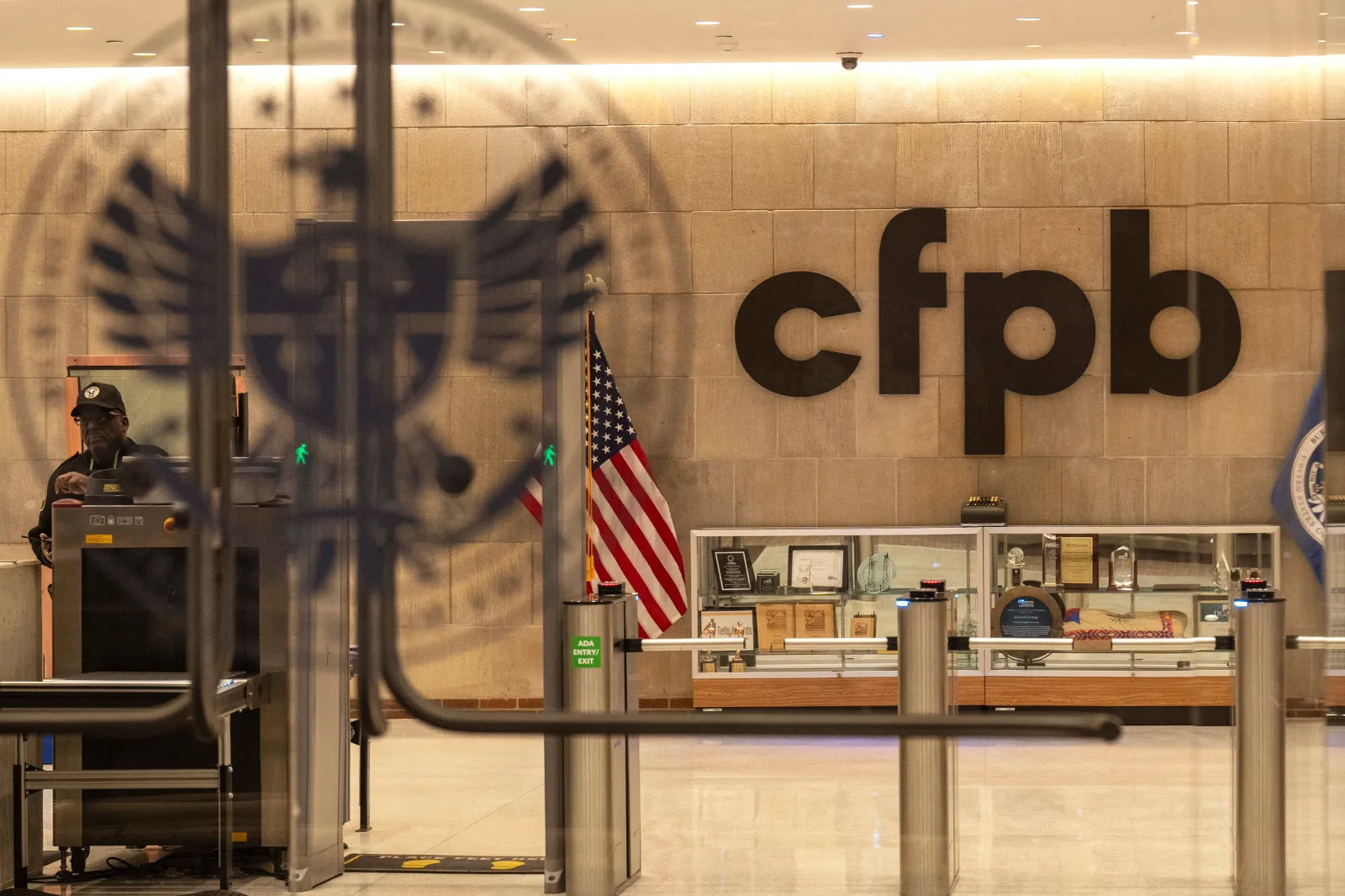
A court upheld an injunction Tuesday requiring the Trump administration to continue funding payments to the employees of the Consumer Financial Protection Bureau (CFPB).
The ruling states that the White House must continue funding the CFPB via the Federal Reserve, just days ahead of a lapse that would have left the agency with no way to pay employees.
Since President Donald Trump took office, employees at the CFPB have been told not to do any work in an effort to shut down the agency, a report from the Associated Press (AP) said.
Read More on News
Why It Matters
The CFPB, established after the 2008 financial crisis, has played a central role in safeguarding consumer financial interests since its inception.
The legal fight over its funding has drawn national attention, given the agency's unique structure, which insulates it from annual Congressional appropriations, and the Trump administration’s stated objective to shut down the CFPB.
What To Know
The decision by U.S. District Judge Amy Berman Jackson comes just days before the CFPB was expected to run out of money and potentially lay off its remaining employees. In her ruling, Berman rejected a legal argument put forward by Trump’s budget director, Russell Vought, that the Federal Reserve’s ongoing losses meant the agency had no obligation to fund the CFPB.
“It appears that defendants’ new understanding of ‘combined earnings’ is an unsupported and transparent attempt to starve the CFPB of funding and yet another effort to achieve the very outcome the Court’s injunction was meant to prevent,” Berman wrote, as reported by the Associated Press.
At issue was the Trump administration’s claim that because the Federal Reserve is operating at a paper loss, it has no combined earnings available to disburse. The administration argued that higher interest payments on bank reserves now exceed income from bonds purchased during the COVID-19 era. That position, adopted in a November memo by the Office of Legal Counsel, had not previously been tested in court.
“We’re very pleased that the court made clear what should have been obvious. Vought cannot justify abandoning the agency’s obligations or violating a court order by manufacturing a lack of funding,” said Jennifer Bennett, an attorney with Gupta Wessler LLP who represents CFPB staff.
...
The ruling highlights ongoing legal battles over the future of the CFPB, which has faced repeated attacks from conservatives since its creation. Earlier this year, the U.S. Supreme Court upheld the agency’s funding structure, rejecting a lawsuit brought by payday lenders who argued it was unconstitutional because the CFPB receives funding from the Federal Reserve rather than through annual congressional appropriations.
In that 7 to 2 decision, Justice Clarence Thomas wrote that the CFPB’s funding mechanism meets the constitutional definition of an appropriation because Congress designated both the source and purpose of the funds. “Congress specified the source, the Federal Reserve, from which the CFPB can draw its funding, and it indicated how the CFPB is supposed to use that funding,” Thomas wrote.
While the Supreme Court decision closed one legal avenue for CFPB opponents, the Trump administration’s latest move reflected a renewed effort to weaken the agency from within. Vought argued that the CFPB could not legally request funds because the Federal Reserve was not generating a profit. Judge Berman explicitly rejected that claim.
Separately, Michigan Attorney General Dana Nessel is leading a coalition of 21 states suing the Trump administration over its attempt to defund the CFPB. Nessel called the move “disastrous for the millions of working families this federal bureau defends every day.”
What People Are Saying
Michigan Attorney General Dana Nessel said in a December statement: “The Trump administration does not have the authority to illegally and unilaterally defund it by simply refusing to do its job.”
The White House said in a statement sent to reporters in November: "CFPB granted itself broad new powers in the waning hours of the lame duck Biden administration. Described as classic “government overreach,” the agency gave itself the authority to regulate Americans’ checking accounts by dictating government price controls and unilaterally buried $50 billion in medical debt".
What Happens Next
The court’s order preserves a federal agency that has obtained over $21 billion in relief for consumers. Yet, legal experts say the latest ruling shores up the CFPB’s immediate future but that the political and legal attacks on its structure are far from over.
Update 12/26/25, 1:28 p.m. ET: This article was updated with additional information.
View 0 Comments
Submit Correction
View Editorial & AI Guidelines