...

By Jesse Edwards
Director of Newsweek Voices and Radio, Host of Newsweek Radio
0
Share
Newsweek is a Trust Project member
See more of our trusted coverage when you search.Prefer Newsweek on Googleto see more of our trusted coverage when you search.
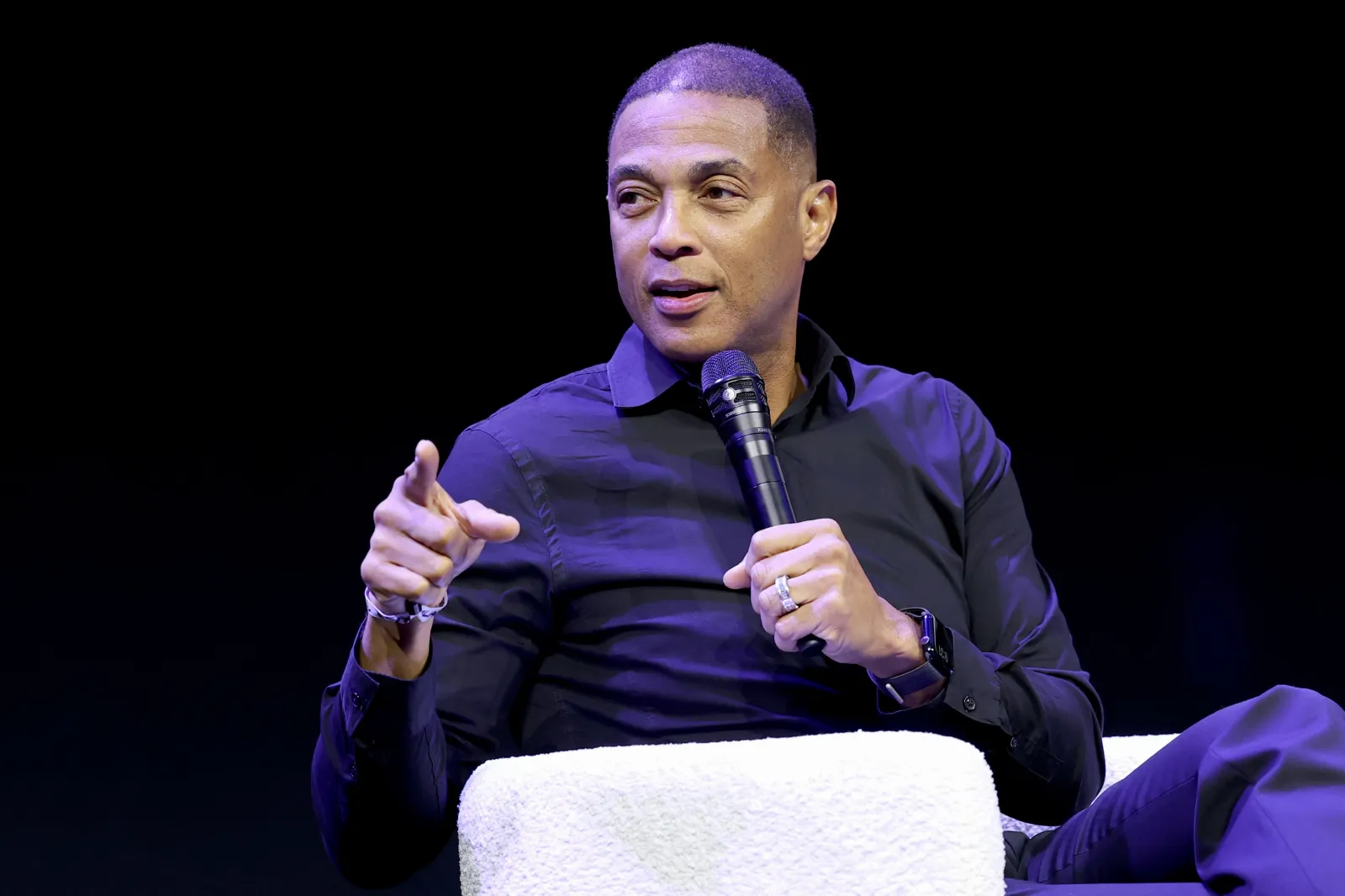
President Donald Trump’s Department of Justice arresting journalist Don Lemon in Los Angeles because he was reporting on civil unrest in Minneapolis is probably the single best thing that has ever happened, or will ever happen, to Don Lemon’s career.
Lemon can now play the unjustly incarcerated victim for the rest of his professional life, and he has every right to do so. Congratulations, Mr. Lemon. Today you truly became a journalist. You have earned all the street credit you will ever need to leave a lasting mark on American discourse, and I am guessing the book deal is already in motion.
...
Read More on Opinion
It is worth acknowledging up front that Lemon was no longer with CNN at the time of his arrest. That distinction still matters to some even though journalism does not require institutional permission and it never has. In 2026, a journalist is someone who shows up to document reality and inform the public.
After years of Donald Trump promising to hold the corrupt liberal elite accountable, after endless chants of “lock her up,” after all the tough talk about draining swamps and exposing fraud, the best his Department of Justice can manage is Don Lemon in jail.
Trump just handed Lemon a solid gold bar of credibility. Meanwhile, Trump’s most loyal supporters are celebrating like they just pulled off some grand victory, completely unable to see past their own shallow agendas.
Don Lemon has always been easy to dismiss. Another pundit. Another talking head. Another face in the studio. That all changes the moment federal agents put their hands on you for doing your job.
Earlier this month, Lemon livestreamed from a protest that interrupted a church service in St. Paul. Demonstrators accused the pastor of being an ICE agent. What the protesters did was disruptive and unacceptable. That does not make Lemon responsible for it. At worst, the protesters’ conduct amounted to disorderly conduct. Lemon’s role was documenting events as they unfolded. What that does is not justify a cross-state federal arrest of a journalist carried out with maximum spectacle.
The Department of Justice has also brought charges against activists connected to the disruption, including Nekima Levy Armstrong, a prominent civil rights advocate, and William Kelly, a former Army private who served in Iraq and later spoke to Newsweek about the protest. Those arrests alone raise serious civil liberties concerns. Pulling a journalist into that same net pushes the issue into far more dangerous territory.
It sends a message that journalism exists at the pleasure of the state. That reporting becomes criminal once authorities decide it is inconvenient. That proximity to dissent can be reclassified after the fact.
Lemon’s case does not stand alone. This week, The Associated Press reported that FBI agents searched the home of Washington Post reporter Hannah Natanson as part of a leak investigation involving a Pentagon contractor. Agents seized her phone, two laptops and even a Garmin watch. Natanson has been covering Trump’s transformation of the federal government and had built an extensive network of sources inside the federal workforce, earning a reputation among colleagues as the “federal government whisperer.”
This is becoming a pattern that should make anyone who cares about free press uneasy, regardless of political alignment.
From this point forward, Lemon no longer needs to defend his legitimacy. He does not need to argue that he is serious. He does not need to rebut claims that he was just another partisan hack. The fact that the federal government arrested him for doing what journalists are supposed to do has permanently elevated his status in American public life.
If journalists can be arrested for covering protests and have their homes searched for cultivating sources, the line separating reporting from criminality becomes subjective, and freedom of the press becomes conditional.
Trump could have ignored Lemon. Instead, his Department of Justice handed Lemon a career-defining moment, and in the process, revealed something far more troubling about where this administration believes the limits of journalism should be.
Jesse Edwards is director of Newsweek Radio & Podcasting*, and the host of* Newsweek Radio*.*
The views expressed in this article are the writer's own.
View 0 Comments
Submit Correction
View Editorial & AI Guidelines