10
Loading video...

By Chris Matthews
0
Share
Newsweek is a Trust Project member
See more of our trusted coverage when you search.Prefer Newsweek on Googleto see more of our trusted coverage when you search.
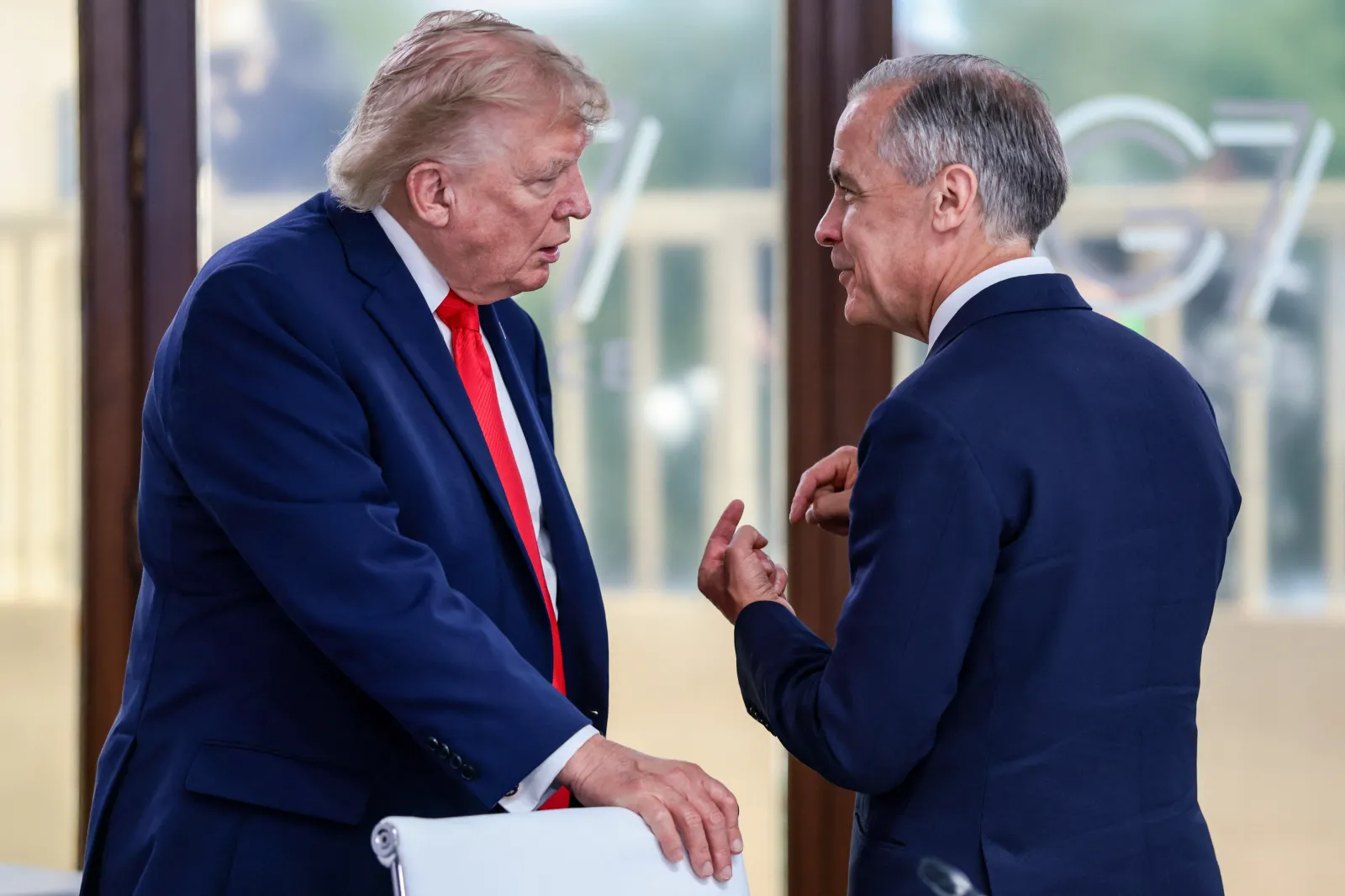
President Donald Trump appeared to adopt a more conciliatory tone toward Canada as the two countries say they will hold trade negotiations. The discussion comes as U.S. economic concerns have played a key role in the buildup to Tuesday's midterms.
Canadian Prime Minister Mark Carney said Sunday in a post on X that he had spoken with the president about ending their long-running trade dispute, with officials from both countries preparing to continue negotiations.
Trump later confirmed the conversation, suggesting an agreement could be within reach after months of tariffs and disagreements that had strained relations between the neighboring countries.
Read More on News
The potential talks come at a significant moment for the president. Americans have been heading to the polls in record numbers ahead of Election Day on November 3, and the cost of living consistently ranks among their top concerns, while Trump's handling of the economy has come under increasing scrutiny.
His tariffs on Canadian goods, which he says are intended to protect American industries and secure better trade terms, have also caused problems for U.S. businesses that depend on cross-border trade.

...
Carney said he had a productive conversation with Trump. He said the two countries had discussed an agreement that would support jobs, improve affordability and protect Canada's sovereignty.
"Our teams will now be working in the coming weeks to deliver that outcome," Carney said in the post.
Speaking to reporters in Iowa on Sunday, Trump appeared similarly optimistic.
"We have the concept of a very good deal with Canada," Trump said.
The president suggested an agreement would benefit American farmers and raised the possibility of reviving the Keystone XL oil pipeline, which former President Joe Biden blocked in 2021.
Despite the quick back-and-forth in the media, no terms of an agreement had been announced and negotiations were expected to continue beyond Tuesday's election.
The open dialogue marked a departure from the confrontation that has dominated relations between Washington and Ottawa this year.
The Trade War Hits the Campaign Trail
Canada walked away from negotiations in August after rejecting American demands, which Carney said would threaten Canadian sovereignty, French-language protections and the country's car manufacturing industry.
Trump then imposed tariffs of 50 percent on roughly $20 billion worth of Canadian goods, prompting retaliatory measures from Ottawa.
The dispute had consequences on both sides of the border.
Many American manufacturers depend on Canadian steel, aluminum and car-making components, while farmers and other exporters rely on Canadian customers.
The tariffs increased costs for businesses importing goods from Canada, while Ottawa's retaliatory duties made some American products more expensive for Canadian buyers.
The impact was particularly sensitive in battleground midterm races in states such as Michigan, where the car industry relies heavily on factories and suppliers operating across the border.
The trade war has also become an election issue in other northern states like Maine.
...
Tariffs in the Polls
For Trump, the prospect of easing tariff tensions comes at a difficult moment, politically.
A Reuters/Ipsos poll released October 26 put the president's approval rating at 32 percent, while 73 percent of respondents said the cost of living was heading in the wrong direction.
The same survey found Democrats leading Republicans by 47 percent to 36 percent among registered voters ahead of the midterms.
Official inflation figures also reveal the pressures being felt by American households.
Consumer prices rose 3.7 percent in the year to September, while gasoline prices increased 9.1 percent during the month, according to the Bureau of Labor Statistics.
Consumer confidence had also weakened. The University of Michigan's consumer sentiment index fell to 48.0 in October, compared with 53.6 at the same time last year.
Trump has repeatedly argued that tariffs will strengthen American manufacturing, protect jobs and give Washington greater leverage in negotiations.
But the measures have exposed U.S. companies to higher costs and uncertainty, particularly those whose supply chains stretched across the Canadian border.
A deal with Ottawa could have helped ease some of those pressures, although it remains unclear what concessions either side is prepared to make.
Despite the president's more positive language, Canada has increasingly been looking beyond the United States for its economic future.
Carney has pledged to double Canadian exports to countries outside the U.S. over the next decade.
Even so, Canada's economy remains deeply tied to the U.S., with roughly 70 percent of its exports going south of the border.
It remains unclear whether Trump's softer approach will lead to a deal between the North American neighbors.
Contact Newsweek editors on this story: Ben Kelly and Geoffrey Rowland.
View 0 Comments
Submit Correction
View Editorial & AI Guidelines