...


By Jesus Mesa and Amanda Castro
0
Share
Newsweek is a Trust Project member
See more of our trusted coverage when you search.Prefer Newsweek on Googleto see more of our trusted coverage when you search.
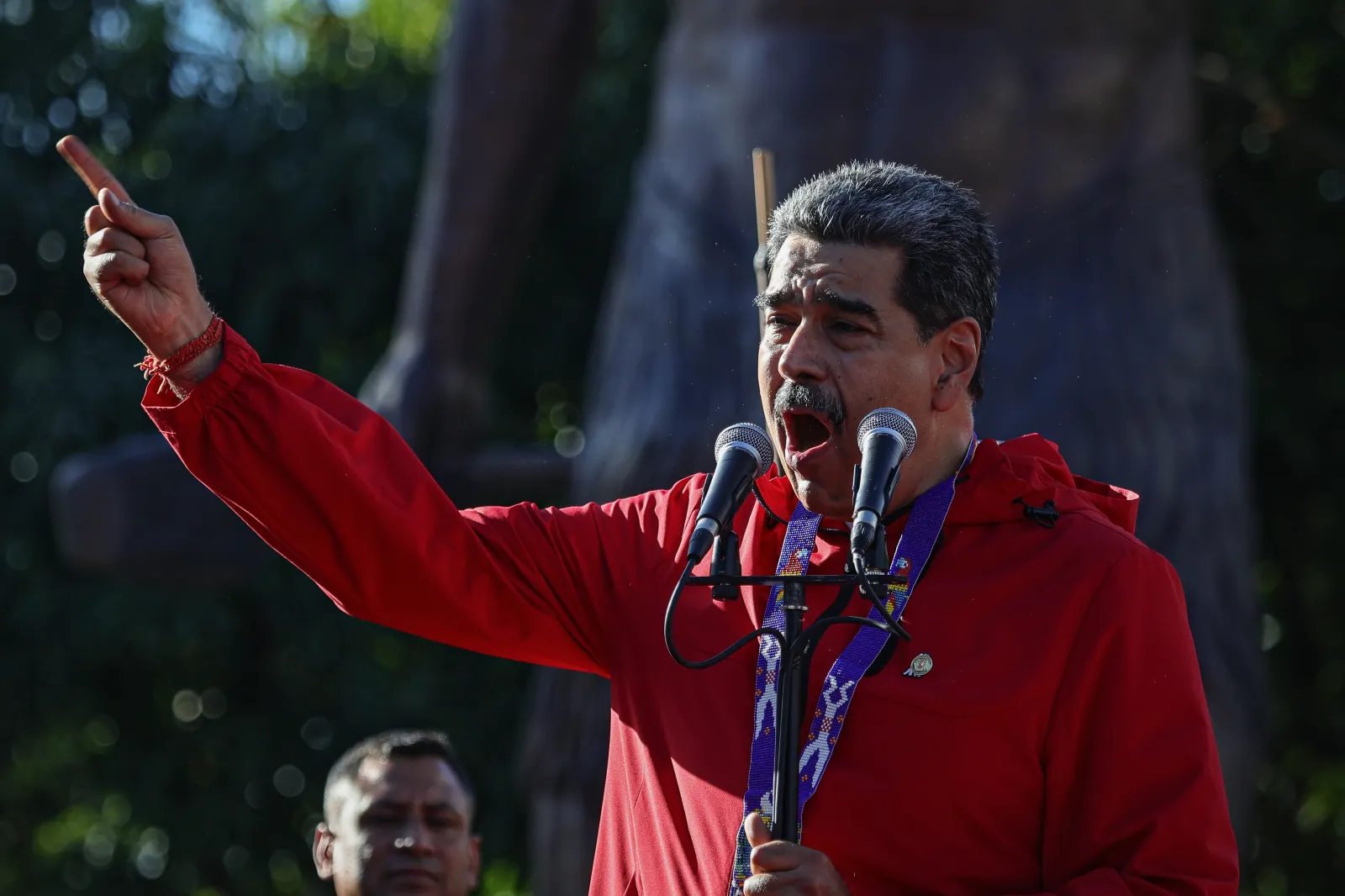
The Trump administration quietly authorized the CIA to conduct covert operations in Venezuela, granting the agency lethal authority as part of an escalating campaign to oust President Nicolás Maduro.
The move marks a sharp escalation in the administration’s campaign to oust Maduro, whom it has labeled a “narcoterrorist.” It follows weeks of U.S. military strikes on boats off Venezuela’s coast allegedly involved in drug trafficking, which have killed 27 people. Officials say the ultimate goal is regime change.
Newsweek reached out to the White House and the CIA for comment on Wednesday afternoon.
Read More on World
Why It Matters
The decision follows weeks of rising military activity in the Caribbean and a broader strategy to brand Venezuelan drug traffickers as terrorist threats to the United States.
The alleged policy is part of a wider effort led by Secretary of State Marco Rubio and CIA Director John Ratcliffe to remove Maduro from power. U.S. officials say he controls a drug trafficking network and have offered a $50 million reward for his arrest.
What To Know
The new CIA directive broadens the agency’s role beyond intelligence gathering, granting it authority to carry out lethal operations across the Caribbean. First reported by The New York Times, citing multiple U.S. officials familiar with the classified directive, the Pentagon is preparing additional options for President Donald Trump, including potential strikes inside Venezuelan territory.
Targets reportedly include individuals the administration claims are part of Venezuela’s “narcoterrorist” network.
During a press conference on Wednesday, Trump was asked about the details of the new directive and confirmed The New York Times report. “I can’t do that, but…I authorized it for two reasons, really,” Trump said, referring to the CIA’s expanded authority.
“Number one, they’ve emptied their prisons into the United States—thousands and thousands of prisoners, people from mental institutions, insane asylums, all coming through the border because of open-border policies. We’re sending them back, but Venezuela was the worst offender.”
He added that the second reason for the authorization was the surge in drug trafficking from Venezuela.
When pressed on whether the CIA had authority to target Maduro, Trump declined to give a direct answer. “I don’t want to answer a question like that,” he said. “That is a ridiculous question to be given. Not really a ridiculous question—but wouldn’t it be a ridiculous question for me to answer?”
The move comes amid a broader U.S. military buildup in the region. More than 10,000 American troops are now stationed near Venezuela, along with Navy warships and a submarine.
The directive also follows a wave of recent U.S. military strikes at sea. In the past month, the military has targeted six boats off Venezuela’s coast, killing at least 27 people. The most recent strike came just before the CIA order was issued and left six dead. The administration claims the vessels were smuggling drugs, though it has not provided lawmakers with evidence to support that claim.
Mary Ellen O’Connell, a professor at Notre Dame Law School and an expert on international law, warned that the administration’s actions appear to violate international legal norms. "Now it appears he has ordered the CIA to violate international law with covert actions in Venezuela,” O’Connell said in a statement to Newsweek.
“Lawful law enforcement or military action on the territory of a foreign sovereign state must have the consent of that state,” she added.

...
The escalation has also raised alarms in Congress. Lawmakers from both parties are demanding more transparency. Republicans want details on the legal authority for the strikes, while Democrats say the operations may violate U.S. and international law.
However, in a memo to Congress obtained by the Associated Press, the administration argued that the U.S. is engaged in a “non-international armed conflict” with drug cartels designated as terrorist groups. The memo said Trump directed the Pentagon to conduct operations against them “pursuant to the law of armed conflict.”
A $50 Million Bounty
Trump has ordered an end to diplomatic talks with Maduro and pledged to “destroy Venezuelan terrorists and trafficking networks.”
The Trump administration has offered a $50 million bounty for Maduro’s capture, describing him as the head of “El Cartel de los Soles” (Cartel of the Suns), a transnational drug organization.
As part of its narcotics crackdown, the Trump administration also designated the Tren de Aragua cartel—a group it says is linked to the Venezuelan regime—as a foreign terrorist organization.
...
Rubio, along with Ratcliffe, is leading the broader strategy to oust Maduro. They argue that Venezuela’s government functions as a criminal enterprise and that U.S. military force is justified as part of a counternarcotics campaign.
Currently, the U.S. military has built up a significant presence in the southern Caribbean, including B-52 bombers and F-35 aircraft in Puerto Rico, eight warships, and one nuclear-powered submarine. The U.S. government has not released any official statement regarding the purpose or duration of the deployment, leaving the mission’s objectives publicly unconfirmed.
What People Are Saying
President Donald Trump, Tuesday on Truth Social: "Under my Standing Authorities as Commander-in-Chief, this morning, the Secretary of War, ordered a lethal kinetic strike on a vessel affiliated with a Designated Terrorist Organization (DTO) conducting narcotrafficking in the USSOUTHCOM area of responsibility—just off the Coast of Venezuela."
Venezuelan President Nicolás Maduro, at a press conference in September: "The communications with the government of the U.S. are thrown away by them, with their threats of bombs, death, and blackmail."
Felix Cook, associate director, corporate Intelligence at global intelligence and cybersecurity consultancy S-RM: “The Trump administration’s policy toward Venezuela remains one of ‘maximum pressure’ —the logical challenge of this is that constantly ratcheting pressure eventually becomes indistinguishable from intervention.”
What Happens Next
There are currently over 10,000 U.S. troops stationed in the region and multiple Navy warships deployed near Venezuelan waters. No official response from Venezuela has been confirmed, and the duration or objectives of the U.S. deployment have not been disclosed.
Update 10/15/25, 3:50 p.m. ET: This article was updated with additional information.
Update 10/15/25, 5:07 p.m. ET: This article was updated with additional information.
View 0 Comments
Submit Correction
View Editorial & AI Guidelines