...

By Shane Croucher
Senior Editor
0
Share
Newsweek is a Trust Project member
See more of our trusted coverage when you search.Prefer Newsweek on Googleto see more of our trusted coverage when you search.
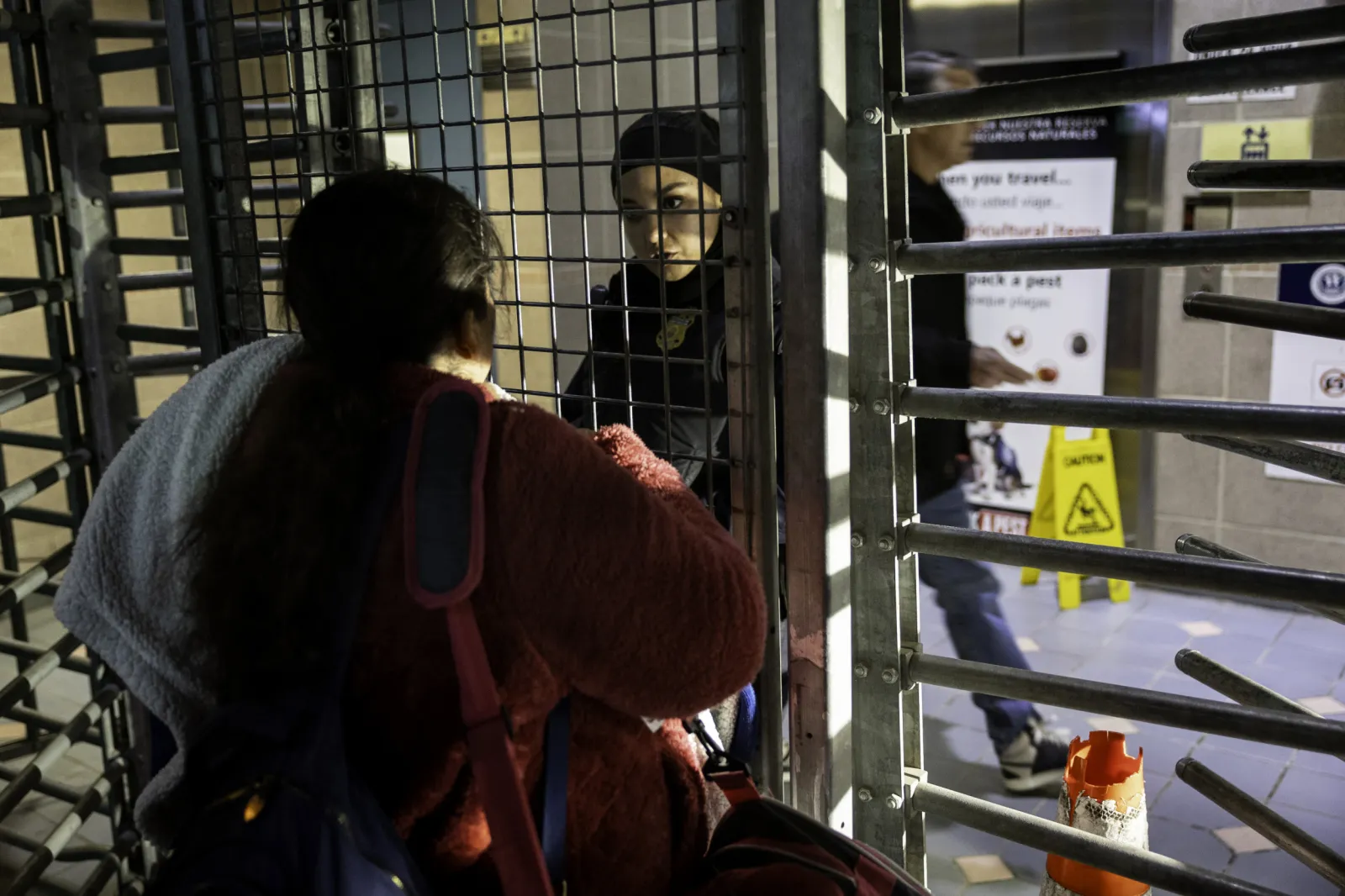
The Department of Homeland Security (DHS) has ordered migrants who entered the U.S. via the CBP One app to leave "immediately."
The Biden-era CBP One app—through which more than 900,000 people were allowed temporary entry beginning in January 2023—was used to schedule appointments at ports of entry and helped migrants live and work under parole in the U.S. for two years.
Why It Matters
The Trump administration's termination of CBP One parole reflects a significant shift in U.S. immigration policy as it reverses a central pillar of former President Joe Biden's approach to managing border migration.
Read More on Politics
By ending the use of parole to grant temporary legal status to hundreds of thousands of migrants, the DHS is following through on the president's campaign promise of mass deportations. However, such moves are expected to cause labor problems for sectors that rely on immigrant workers.
...
What To Know
Authorities have confirmed that termination notices were sent to CBP One beneficiaries but did not say how many. Migrants were urged to voluntarily self-deport using the same app they entered on, which has been renamed CBP Home.
CBP One was a cornerstone of the Biden administration's strategy to create and expand legal pathways to enter the United States in an attempt to discourage illegal border crossings.
By the end of December, 936,500 people had been allowed to enter with CBP One appointments at border crossings with Mexico.
DHS said on Monday that Biden's use of parole authority—more than any president since it was created in 1952—"further fueled the worst border crisis in U.S. history."
Trump ended CBP One for new entrants on January 20, the first day of his second term, stranding thousands in Mexico who had appointments into early February. He has also ended and revoked temporary protected status (TPS) for many who benefited under Biden's policies.
DHS said last month that it was revoking another form of parole for 532,000 people from Cuba, Haiti, Nicaragua and Venezuela, who flew to the country at their own expense with a financial sponsor. The parole programs are scheduled to end on April 24.
The Trump administration has also announced an end to TPS for 600,000 Venezuelans and about 500,000 Haitians.
A federal judge has temporarily blocked that plan, including for about 350,000 Venezuelans who were set to lose their TPS on Monday.
TPS is granted in 18-month increments to people already in the U.S. whose countries are deemed unsafe for return because of natural disaster or civil strife.
What People Are Saying
The Department of Homeland Security media affairs unit said on Monday: "Canceling these paroles is a promise kept to the American people to secure our borders and protect national security."
Heidi Altman, the vice president of policy at the National Immigration Law Center, an advocacy organization, told NBC News in March: "For many people who leave the United States, there may never be a lawful option for return to the United States, or reentry may be barred for many years. Forcing or coercing people into leaving their homes and their loved ones carries political, moral, and economic costs—the administration should be ashamed."
What Happens Next
Migrants who entered under CBP One are being urged to voluntarily leave the country using the rebranded CBP Home app. It remains unclear how many people received termination notices or how the government will respond to those who do not comply.
Legal challenges may emerge as advocacy groups weigh the implications of retroactive termination.
Meanwhile, U.S. immigration agencies are expected to ramp up enforcement and deportation efforts in line with the administration's tougher approach to border control.
This article uses reporting by the Associated Press.
View 0 Comments
Submit Correction
View Editorial & AI Guidelines