10
Loading video...

By Gabe Whisnant
News Editor
Share
Newsweek is a Trust Project member
See more of our trusted coverage when you search.Prefer Newsweek on Googleto see more of our trusted coverage when you search.
The Trump administration on Monday launched what it described as an unprecedented economic offensive against Iran, unveiling a sweeping package of sanctions, enforcement measures and diplomatic pressure aimed at cutting off the Islamic Republic's remaining financial lifelines.
Treasury officials said the initiative, dubbed "Operation Economic Outcast," would target countries, companies and individuals that continue doing business with Tehran while expanding sanctions authorities across key sectors of Iran's economy.
"Let there be no ambiguity as to the position of the United States: economic engagement of any kind with this murderous regime will expose those responsible to the full reach of American power," Treasury Secretary Scott Bessent said at Monday's news conference.
Read More on Politics
The "Economic D-Day" announcement marks a major escalation in President Donald Trump's pressure campaign against Iran and comes as the administration seeks to deepen the economic isolation of a country already grappling with inflation, a weakened currency and growing trade restrictions. Bessent said the objective is to "sever every economic lifeline" sustaining the Iranian government and the Islamic Revolutionary Guard Corps.

...
But some analysts argue the initiative represents a shift in enforcement rather than a fundamentally new sanctions regime.
"The label is new; the toolbox is not entirely new," Pierre Pahlavi, a professor at the Canadian Forces College, told Newsweek via email. "What changes here is less the existence of legal instruments than the political decision to use them more systematically, more aggressively, and more extraterritorially."
Pahlavi said the most consequential aspect of the campaign is its focus on third-country actors that help Iran move oil, conduct financial transactions and evade sanctions, potentially increasing pressure not only on Tehran but also on the international networks that have helped sustain its economy.
Related Story
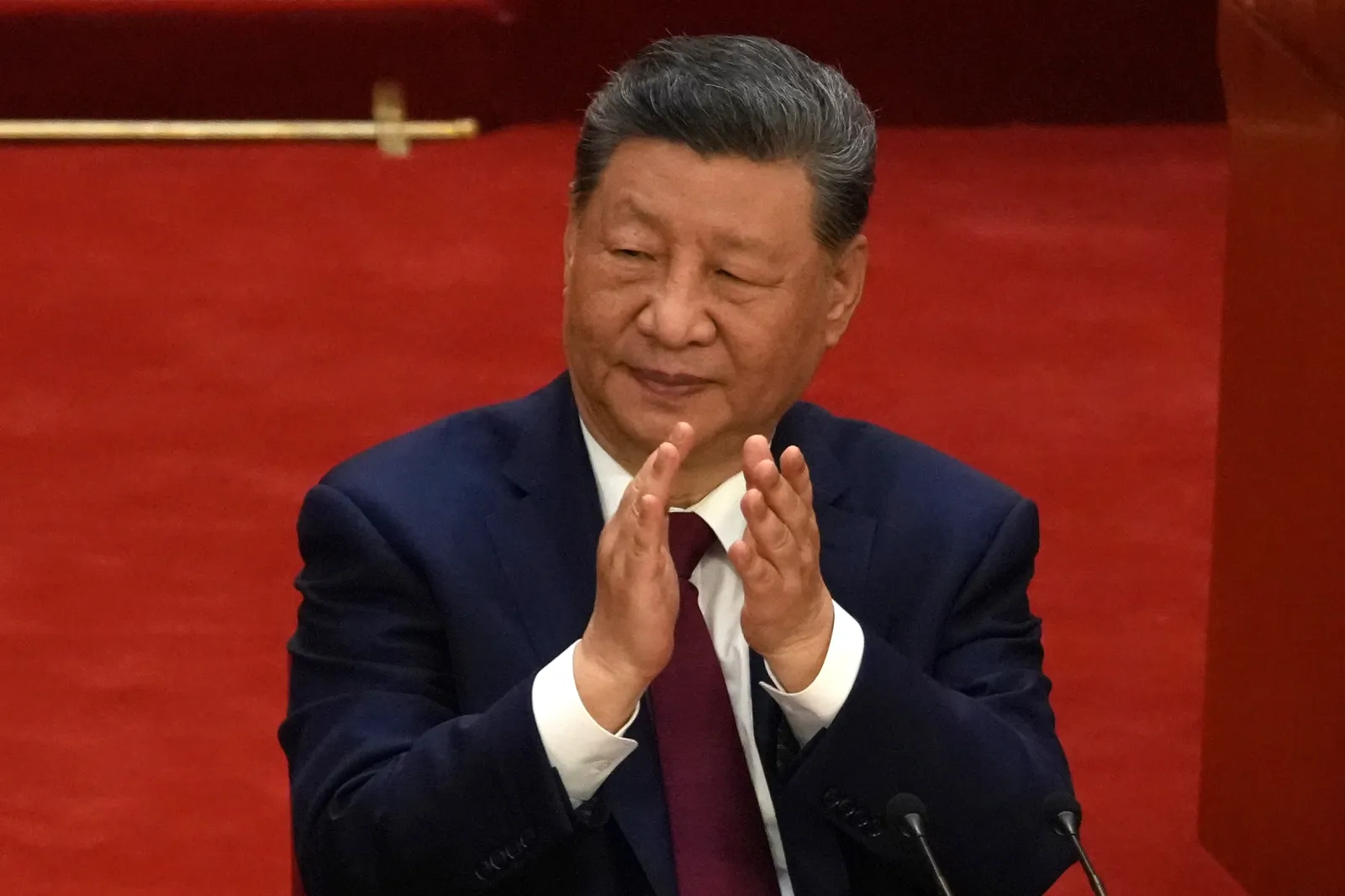
Trump’s Iran Sanctions Test Whether US or China Will Blink First
Iran swiftly condemned the move. Foreign Ministry spokesperson Esmail Baghaei warned Monday that Tehran would respond forcefully to any expansion of U.S. sanctions, while the newly appointed head of Iran's top security body said support for the new measures would be regarded as an "act of war." Finance Minister Ali Madanizadeh later Monday told state television that Tehran is “fully prepared” to confront the latest U.S. sanctions and has developed a two-year response plan.
Israeli Prime Minister Benjamin Netanyahu, meanwhile, congratulated Trump and Bessent on the latest sanctions.
“You justly exact a steep price from that cruel dictatorship and from those who assist its continued aggression,” Netanyahu wrote on X Monday.
The latest confrontation follows a series of setbacks for Tehran, including the United Arab Emirates' decision last week to suspend all trade with Iran. Yet Iran continues to maintain leverage through the Strait of Hormuz, where attacks and threats against commercial shipping have significantly disrupted one of the world's most important energy transit routes.
Iran has demanded the lifting of the U.S. naval blockade, the withdrawal of American forces from the region and war reparations as conditions for reopening the strait. Iranian officials have also explored separate discussions with Oman on managing the passage, underscoring Tehran's efforts to preserve influence over one of the world's most important energy choke points.
Expansion of Sanctions Into Five Strategic Sectors
At the center of Monday's announcement is a significant expansion of sanctions authorities covering five sectors that Treasury says have become critical to Iran's economic survival: digital assets, technology, gold, aviation and shipping. The administration said the move will make it easier to sanction foreign individuals and businesses operating in or supporting those areas of the Iranian economy.
Treasury argues that Iran has increasingly turned to cryptocurrency, gold markets and international shipping networks to evade existing restrictions while acquiring technology and supporting military activities.
Bessent's announcement came as Iran's currency sank to a fresh record low. The rial traded at roughly 2.02 million to the U.S. dollar on the open market Monday, compared with the central bank's official rate of about 1.5 million rial per dollar.
The currency had been under pressure even before U.S. and Israeli strikes on Iran on February 28, amid years of high inflation and weak economic growth. Nearly six months of conflict have deepened the crisis, with the rial repeatedly setting new lows.
The economic fallout has increasingly strained ordinary Iranians. Prices for staple goods have surged, with rice costing about 60 percent more than before the war and beef prices rising by more than 150 percent. The International Monetary Fund has projected that Iran's economy will shrink by more than 5 percent this year.
Nearly 60 Entities, Individuals and Vessels Sanctioned
The Office of Foreign Assets Control announced sanctions on nearly 60 entities, individuals and vessels connected to Iranian oil networks, cyber operations, missile-development efforts and procurement schemes. Treasury's designations include companies, vessels and individuals located in or operating through jurisdictions such as Hong Kong, the United Arab Emirates, Singapore and China, among others.
The administration said the designations are intended to disrupt the networks Iran uses to generate revenue, acquire sensitive technology and circumvent international sanctions.
Crackdown on Iran's Oil Trade and Shadow Fleet
A major portion of the package focuses on Iran's petroleum industry and maritime transport networks.
Treasury sanctioned brokers, shipping companies and vessels accused of helping move Iranian crude oil and petroleum products through so-called shadow fleet operations. Officials identified several tankers they say transported millions of barrels of Iranian oil despite existing restrictions.
The administration also issued new guidance warning businesses about sanctions risks associated with shipping activity in the Strait of Hormuz.
EMBARGOED-Economic-D-Day-release-2927.pdf.PDF
Cyber Networks and Weapons Procurement Targets
The sanctions package additionally targets Iranian cyber actors accused of compromising U.S. government agencies, critical infrastructure operators, healthcare systems, defense contractors and financial institutions. Treasury said several individuals linked to Iran's Ministry of Intelligence and Security were designated for cyber-enabled operations targeting American interests.
Separately, officials unveiled sanctions against a procurement network spanning East Asia and the Middle East that allegedly helped Iranian entities obtain equipment for missile development and nuclear research through front companies and covert financial channels.
Warning to Foreign Governments and Businesses
Perhaps the most far-reaching aspect of the initiative is its focus on third countries.
Treasury said U.S. officials from the Treasury, State and War departments will engage governments around the world and set timelines for ending identified Iran-related activities. Countries, financial institutions and businesses that fail to comply could face expanded secondary sanctions and potential exclusion from the U.S. financial system.
The measures could have particular significance for China, Iran's largest oil customer. Kpler estimates that China bought more than 80 percent of Iran's shipped oil in 2025, averaging about 1.38 million barrels per day.
China, however, has sharply reduced its purchases since the start of the U.S.-Israeli war in February. Kpler data show imports fell to roughly 785,000 barrels per day in June, their lowest level in more than three years, before rebounding modestly in July. Shipments have since dropped again to about 534,000 barrels per day in August.
Related Story

After Iran, Trump and His Republicans Face Their Own Economic D-Day
Related Story

Iran’s Rial Slump Sets Stage for Donald Trump’s Economic ‘D-Day’
Pahlavi told Newsweek that China's role could prove critical to the success of the campaign. "China is the central question, he said, adding that Washington can increase pressure through sanctions on tankers, brokers and intermediary firms. He also argued that meaningfully reducing Iran's oil revenue will ultimately depend on whether foreign companies conclude that access to the U.S. financial system is more valuable than access to discounted Iranian crude.
Not all experts were convinced the announcement represents a dramatic shift in U.S. policy. Elizabeth Shakman Hurd, a professor of political science and religious studies at Northwestern University, told Newsweek that Iran has operated under extensive U.S. sanctions for decades and questioned how much additional economic pressure Washington can realistically impose.
Hurd also said the campaign's success could hinge on foreign cooperation, particularly from China. "China buys most of Iran's oil," she said in an email response. "The U.S. cannot reduce Iran's oil revenue without help and agreement from China and/or the Europeans."
Treasury's sanctions announcement repeatedly references China-based firms and Iranian oil shipments destined for China, while Bessent indicated enforcement would not stop short of foreign actors that help sustain Tehran's economy. "No one is above the reach of U.S. sanctions," he said. "If they facilitate transactions and are part of the ecosystem that turns Iranian oil into money, into repression, they will be targeted."
The measures represent one of the Trump administration's most aggressive efforts yet to economically isolate Tehran, setting up a direct confrontation as Iranian officials warn that additional pressure will provoke a response.

...
China Pushes Back Against Sanctions Threat
China criticized Washington's threat to impose secondary sanctions on countries that continue doing business with Iran, warning that additional economic pressure risks worsening an already volatile situation.
Foreign Ministry spokesperson Lin Jian said Monday that sanctions "will not help resolve the issue" and instead "will only exacerbate tensions and escalate the situation, which is in no one's interest." He also urged all sides to avoid actions that could deepen conflicts and undermine global economic and financial stability.
Beijing's response highlights one of the central challenges facing the Trump administration's new strategy.
The Associated Press contributed to this article.
Clarification: Earlier reporting cited lower estimates for China's June imports of Iranian crude. This article has been updated with the most recent Kpler figures available, which placed imports at approximately 785,000 barrels per day.
Submit Correction
View Editorial & AI Guidelines