...

By Mandy Taheri
Reporter
0
Share
Newsweek is a Trust Project member
See more of our trusted coverage when you search.Prefer Newsweek on Googleto see more of our trusted coverage when you search.
President Donald Trump's "reciprocal" tariffs, as of a Friday night update, spares smartphones, computers, and other electronic products that had been expected to face steep duties under sweeping new levies, particularly those targeting Chinese imports.
Newsweek has reached out to the trade division of the U.S. Customs and Border (CPB) Protection via email on Saturday.
Why It Matters
Earlier this week, Trump's "reciprocal" tariffs went into effect for several hours before he paused most of them for 90 days. Notably, he did not delay any tariffs on China and has remained firm in his stance against the country.
Read More
Donald Trump’s Tariff Exemptions Raise Eyebrows—’Almost Getting Comical’5 min read

Student Loan Update: Married Borrowers’ Payments May Rise Under Trump Plan5 min read

Video of Bill Maher Revealing Details of His Dinner With Trump Goes Viral8 min read

The U.S. and China remain in a tit-for-tat tariff war, with Trump hiking the 104 percent tariffs on China to 125 percent on Wednesday after Beijing hit back at the U.S. with an 84 percent additional levy earlier in the day. Trump's total tariffs now stand at 145 percent on Chinese goods, while China has imposed a 125 percent tariff, dismissing Trump's strategy as "a joke."
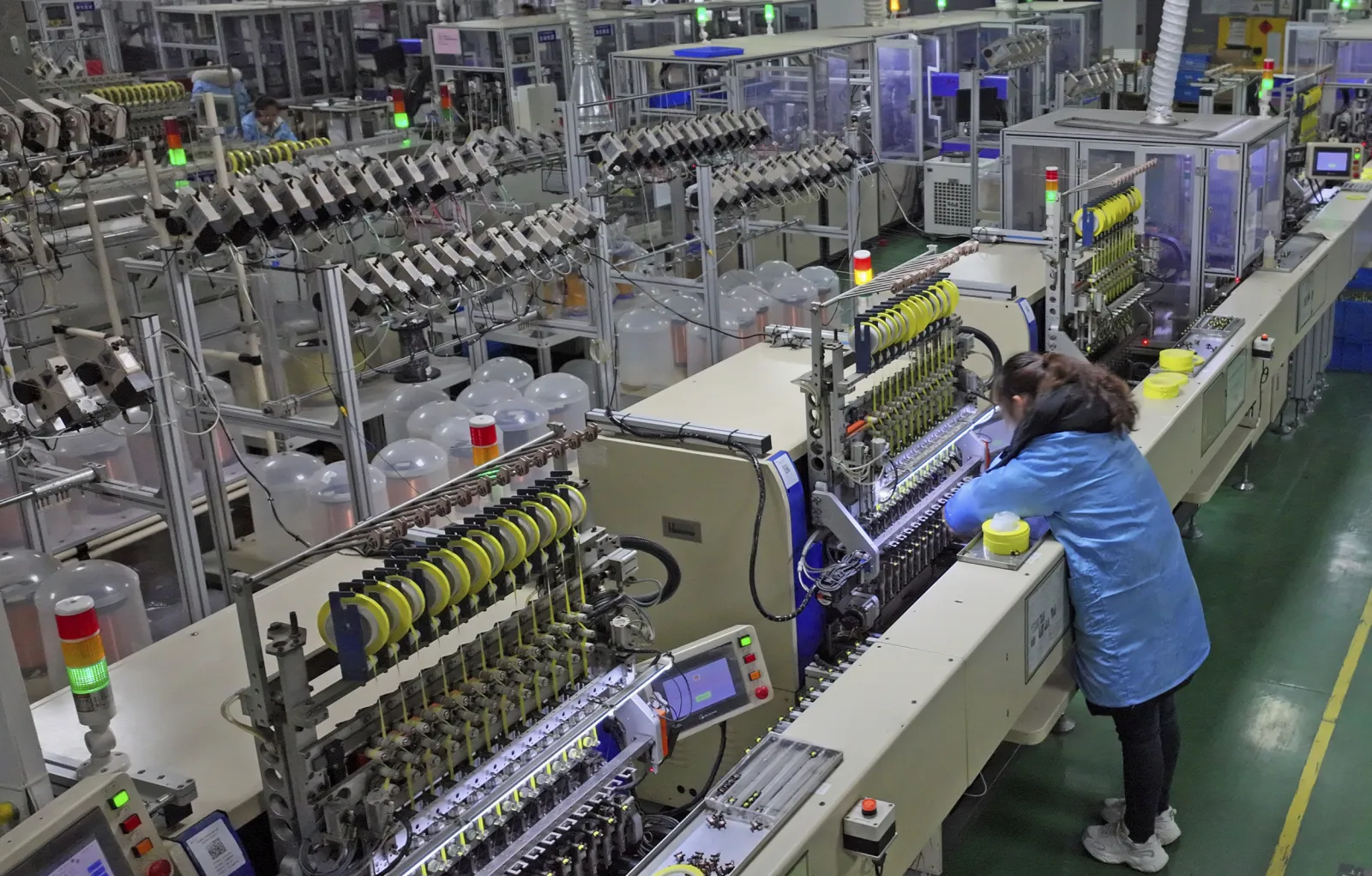
China manufactures a significant share of electronics, serving as a production hub for many of the world's—and America's—largest technology companies. Firms including Apple, which assembles most iPhones in China, rely heavily on Chinese supply chains and production. The tariffs, ahead of the new exemptions, were expected to have a substantial impact on consumers of technology products. Baseline 10 percent tariffs are still expected to hit consumers across industries.
...
What To Know
On Friday night, CBP published updated tariff guidelines that included a list of items exempt from what Trump refers to as "reciprocal" tariffs, with most of them paused for the next three months.
The list is tech-heavy, with 20 Harmonized Tariff Schedule of the United States (HTSUS) codes covering computer chips, semiconductors, laptops and their components, smartphones, and other communication electronics.
The exemption list includes products the U.S. heavily relies on for overseas production, with limited domestic manufacturing capacity and high consumer demand.
According to the updated guidance, importers should utilize a specific heading to report their products and "declare the exception from the reciprocal tariff." If importers had purchased goods that have left the overseas warehouse on or after April 5, they can file for exemption still.
China notably has control of materials critical for the U.S., both in terms of electronics and the defense industry.
Trump's various tariff announcements have sent the markets spiraling and surging. Apple notably lost over $640 billion in market value since his April announcement, CNBC reported. Various estimates of the cost of an iPhone under Trump's tariff plan ranged in the thousands, with some upwards of $2,000 and others even higher at $3,500.
What People Are Saying
Dan Ives, global head of technology research at Wedbush Securities, told CNBC on Saturday: "This is the dream scenario for tech investors. Smartphones, chips being excluded is a game changer scenario when it comes to China tariffs."
He said that tariffs have been a "black cloud over tech since the day of liberation, because no sector was going to be more hurt than big tech."
Michael McFaul, former U.S. ambassador to Russia, said in an X, formerly Twitter, post about the exemptions on Saturday: "More caving (thank goodness). What is the strategy here? President Donald Trump's administration exempted smartphones, computers and other electronics from its so-called reciprocal tariffs, potentially cushioning consumers from sticker shock."
Scott Lincicome, vice president of general economics and Cato's Herbert A. Stiefel Center for Trade Policy Studies, wrote in an X post: "Tim Apple wins again."
Vice President JD Vance said in an X post on Thursday: "There is a category of DC insider who wants to fight an actual war with China but also wants China to manufacture much of our critical supply. This is insane. President Trump wants peace, but also wants fair trade and more self-reliance for the American economy."
President Donald Trump, in a Wednesday post on Truth Social: "Based on the lack of respect that China has shown to the World's Markets, I am hereby raising the Tariff charged to China by the United States of America to 125%, effective immediately. At some point, hopefully in the near future, China will realize that the days of ripping off the U.S.A., and other Countries, is no longer sustainable or acceptable."
China's Finance Ministry, in a statement: "The U.S. escalation of tariffs on China is a mistake on top of a mistake, which seriously infringes on China's legitimate rights and interests and seriously undermines the rules-based multilateral trading system."
Lin Jian, a spokesperson for the Chinese Foreign Ministry, told reporters Thursday: "Tariff and trade wars have no winner. China does not want to fight these wars but is not scared of them.
"We will not sit idly by when the Chinese people's legitimate rights and interests are denied...If the U.S. is determined to fight a tariff and trade war, China's response will continue to the end."
What Happens Next
The exemptions are already in effect. Tensions between Washington and Beijing remain high, with no sign that tariffs will be reduced anytime soon.
Update 4/12/25, 12:17 p.m. ET: This article has been updated with additional information.
View 0 Comments
Submit Correction
View Editorial & AI Guidelines