...

By Newsweek Editors
0
Share
Newsweek is a Trust Project member
See more of our trusted coverage when you search.Prefer Newsweek on Googleto see more of our trusted coverage when you search.
When a group of House Republicans delivered a direct rebuke to President Donald Trump’s effort to end Temporary Protected Status for Haitians on Thursday, it revealed two important things about immigration.
The House voted 224-204 to extend TPS for Haitians, with 10 Republicans joining Democrats to defy Trump. Lawmakers from districts reliant on Haitian workers, including Republicans, warned about the hit to health care and elder care staffing.
First, this shows that practical concerns, not moral ones, typically win out. You can see that in broader public opinion about immigration, which is much more sensible than the overbaked discourse among politicians, blowhards, and activists.
Read More on Analysis
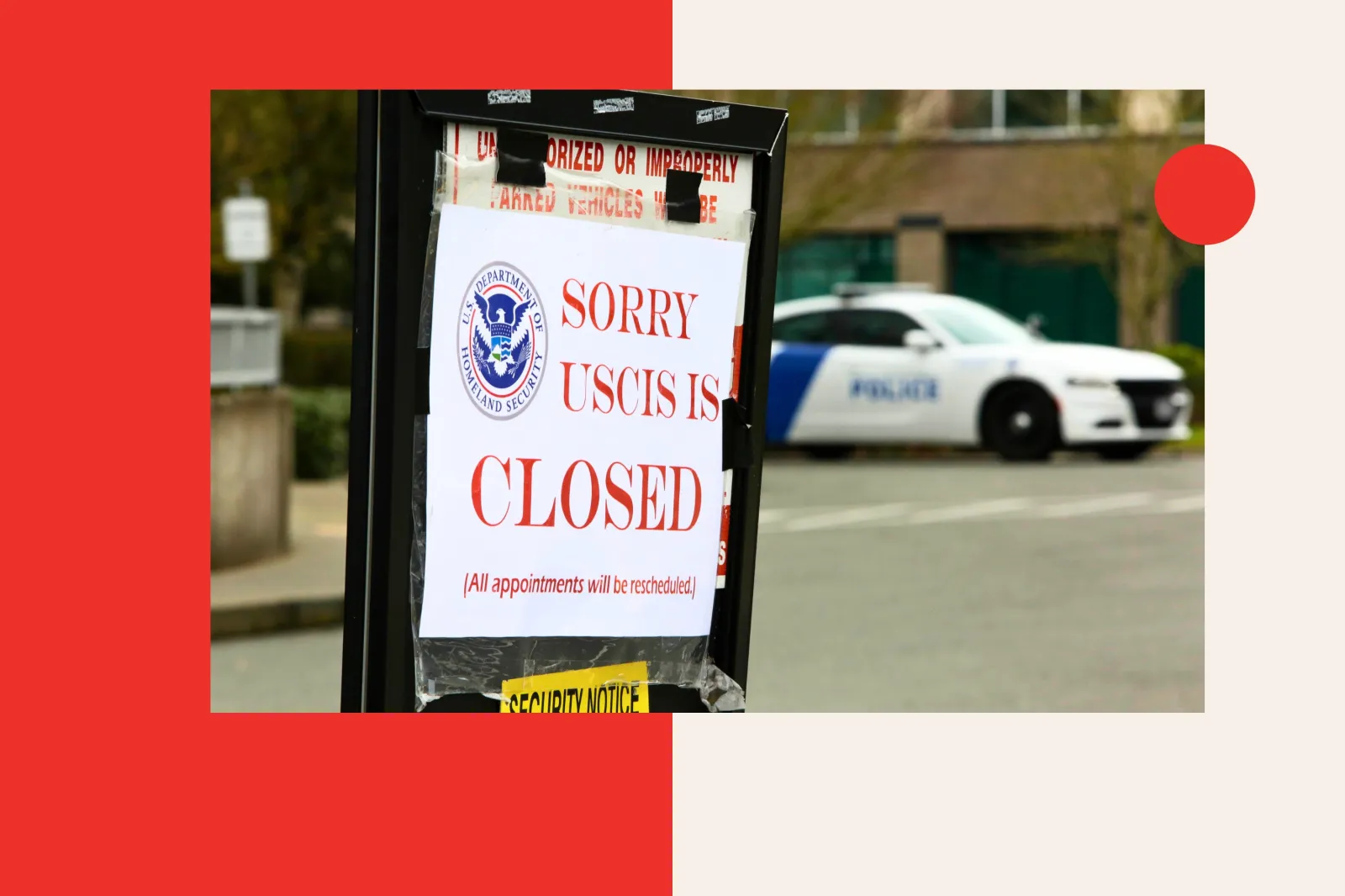
And second, it touches on a misunderstood reality: the Trump administration’s bigger crackdown on immigration is on its legal routes, despite the intense focus on rooting out border-crossing illegal migrants from American communities.
The immigration fight is much more than the border fence and the deportation flight.
In fact, the deeper and more consequential story is about legal status being narrowed, visa categories being constricted, and family and work pathways being squeezed.
The Biggest Immigration Cuts
The numbers increasingly suggest that Trump’s immigration record looks toughest where immigrants are generally doing the right thing.
The Cato Institute, a libertarian think tank, estimated this week that the administration is now stopping about 132,000 legal entries a month versus 50,000 illegal entries, meaning roughly 72 percent of the current reduction comes from legal channels.
The estimate is contestable at the margins, but the direction is unmistakable.
Asylum appointments at southwest ports collapsed after CBP ended the scheduling function in CBP One on January 20, 2025, and Cato estimates legal port-of-entry asylum arrivals fell 99.9 percent from December 2024 to February 2025.
Refugee admissions were suspended effective January 27, 2025, and Cato says refugee arrivals fell from 12,518 in December 2024 to 1,341 in March 2026.
The National Foundation for American Policy (NFAP), a nonpartisan think tank, projects the administration’s policies could reduce legal immigration by 33 percent to 50 percent over Trump’s term, with the largest hit falling on immediate relatives of U.S. citizens.
This is not a side effect of the crackdown. It is the crackdown.
Visa Abuses
The administration counters that legal pathways are not automatically clean pathways, but are ripe for abuse because of gaping loopholes, weak oversight, and politically motivated negligence by the system’s pro-migrant bureaucrats.
On H-1B visas for high-skilled talent, the White House argues the system has been "deliberately exploited to replace, rather than supplement, American workers," especially through IT outsourcing firms.
A September 2025 proclamation from the White House imposed a $100,000 payment for many new H-1B petitions involving workers abroad, explicitly to raise costs on firms it says use the program to suppress wages for Americans.
On student visas, the administration’s case is also firmer than campus culture-war theatrics.
DHS said in August 2025 that it wanted to limit the length of stay for some foreign students and other visa holders, while Trump’s Harvard proclamation in June 2025 said weak reporting on foreign students could "jeopardize the integrity" of the visa system and "compromise national security."
A serious country can acknowledge those risks, especially as it engages in a great power battle with China, which has used the U.S. visa system for espionage, particularly in the areas of science and technology.
It can even tighten rules. But it should still distinguish between targeting abuse and shrinking legal migration as a governing philosophy. The numbers suggest the latter is a greater priority: lower migration for its own sake.
Economic Costs Land Where Swing Voters Live
Legal immigration means more to the U.S. than woolly abstractions like "fairness."
It is a labor-force, family-formation, and growth issue.
The Congressional Budget Office (CBO) says net immigration accounts for all U.S. population growth once deaths exceed births in the coming decade. It has also found that higher immigration boosts revenues enough to lower federal deficits on net.
The Health Resources and Services Administration’s (HRSA) 2025 workforce report says the U.S. already faces large shortages in primary care, dental care, and mental health access, which helps explain why House Republicans broke with Trump over Haitian TPS.
Even the San Francisco Fed’s recent analysis of slower labor-force growth points to a country adjusting to a world with less worker growth, not more. This is why independents who care more about staffing, inflationary pressure, and public finances should watch the visa system at least as closely as the border wall.
The political right has spent years insisting that immigration policy must serve national interests, spanning public safety, wages, the rule of law, and more. Fair enough. Who could disagree?
But in a country with aging demographics and persistent workforce shortages, national interest is not served by pretending that a spouse visa, a refugee slot, and a specialized work permit are all just softer versions of illegal entry.
A Choice About National Capacity
The Trump administration would plainly reject that characterization.
It would say, with justification, that a sovereign government has to decide who enters, on what terms, and under what scrutiny. It’s a national security issue above all else. Citizens must be kept safe.
It would also say that protections intended only to be temporary like TPS drift into permanency, that student-visa oversight is fatally weak, and that H-1B rules are routinely gamed by employers to the detriment of American talent.
All of that can be true—there is certainly decay within the immigration system—without answering the central question.
Is the United States trying to police abuse within a legal immigration system, or make that system smaller, slower, and harder to use on purpose?
The House’s Haiti vote, NFAP’s projections, and the administration’s own proclamations all point in the same direction.
The real immigration crackdown isn’t at the riverbank or the razor wire down south. It is in the forms, the pauses, the suspensions, the backlogs, and the categories of people Washington still calls "legal" right up until the moment it decides not to let them in.
Hey gang, Carlo Versano here. I hope you enjoyed this article. As Newsweek's Director of Politics and Culture and editor of the 1600 newsletter, I'm keen to hear what you think. Now, Newsweek is offering a new service to allow you to communicate directly with me in the form of a text message chat. You can sign up and get a direct line to me, as well as the reporters who work for me. You can shape our coverage.
As a Newsweek member, we're offering this service to you for free. You can sign up below, or read more about how it works here. Let's talk!
View 0 Comments
Submit Correction
View Editorial & AI Guidelines