...

By Andrew Stanton
Reporter
0
Share
Newsweek is a Trust Project member
See more of our trusted coverage when you search.Prefer Newsweek on Googleto see more of our trusted coverage when you search.
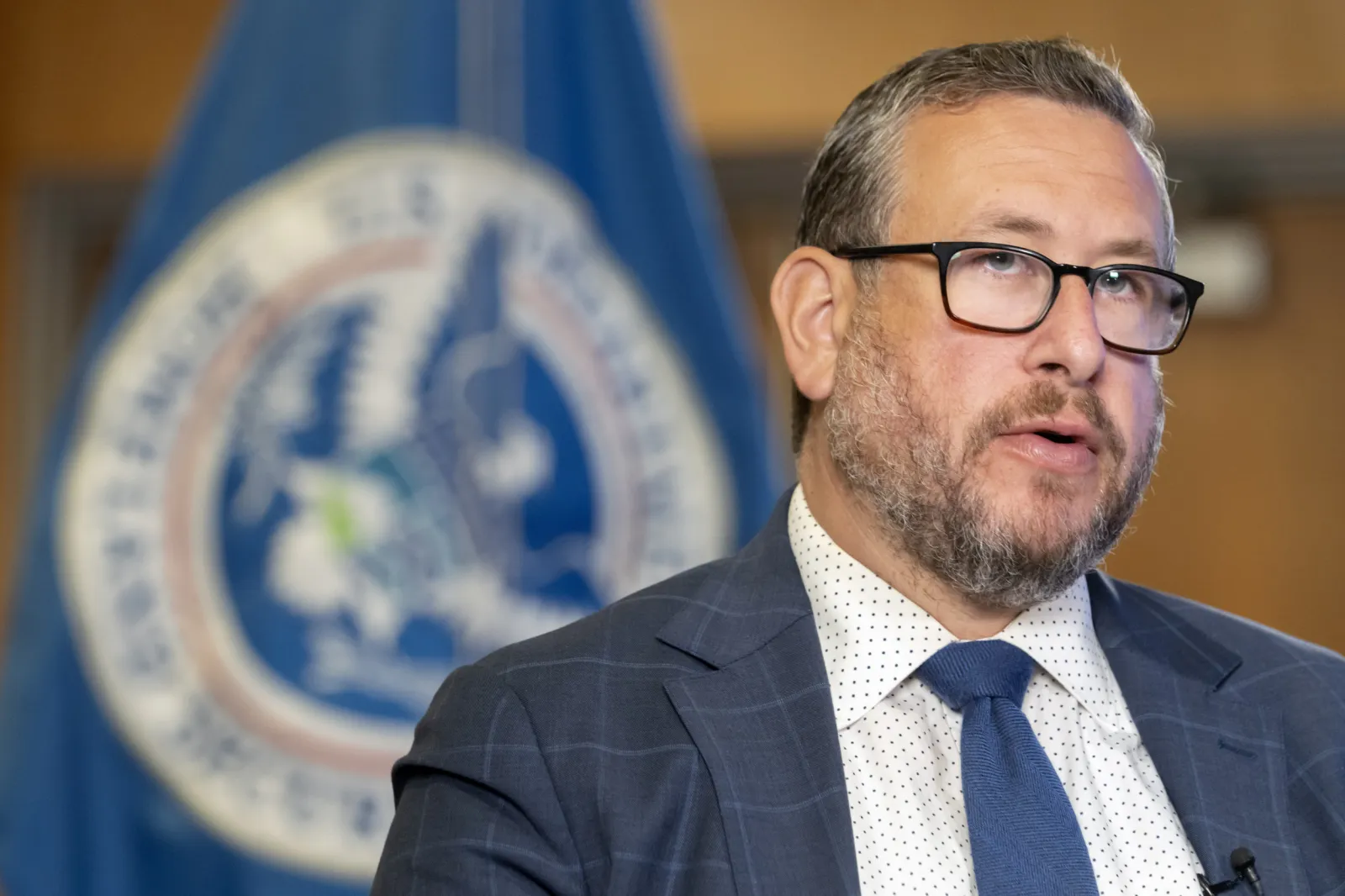
A policy shift allowing officers to consider whether green card applicants have expressed "anti-American" views when deciding on their cases has been explained by U.S. Citizenship and Immigration Services (USCIS) Director Joseph Edlow.
Edlow told The Associated Press that the guidance was intended to identify support for terrorist ideologies—not to penalize ordinary political criticism—when adjudicators evaluated applicants for green cards and other benefits.
Newsweek reached out to USCIS for further comment via email.
Read More
Mom in Green Card Process Blocked From Returning to US for Months—Lawyer4 min read

Mom of 5 Who Went Missing and Was Found Alive Goes Missing Again3 min read

Mitch McConnell Protege’s Chances of Beating MAGA Hopeful in Kentucky—Polls6 min read

Why It Matters
President Donald Trump has embraced a hard-line approach to immigration upon his return to the White House, but critics warn that some of his policy changes could impede on green card holder's rights to free speech. The policies have particularly raised concerns about whether political expression could be scrutinized when foreign nationals sought permanent residency in the United States.
Cases such as those involving Mahmoud Khalil, a green card holder who was arrested over involvement in pro-Palestinian protests at Columbia University, have underscored these concerns. These policy changes could have implications for more than 10 million green card holders living in the United States.
...
What To Know
Green card holders who have posted anti-Trump speech online will not be targeted, Edlow said, describing that sort of criticism as "one of the most American activities you can engage in."
"This goes beyond that. This is actual espousing [of] the beliefs and the ideology of terrorist, of terrorist organizations and those who wish to destroy the American way of life," he said, per the AP.
As to types of speech that might face scrutiny, he pointed to students who post pro-Hamas beliefs or who have engaged in protests on college campuses where Jewish students are blocked from entering buildings.
The Trump administration has targeted student protesters like Khalil, but critics have argued officials have conflated pro-Hamas views or antisemitism with criticism of the Israeli government and unjustly targeted green card holders. A similar case involved Rümeysa Öztürk, a Tufts University student who was arrested after she penned an opinion piece criticizing the university's approach to the ongoing conflict between Israel and Hamas.
As of April 25, data from Inside Higher Ed showed more than 1,800 international students had their visas revoked due to alleged involvement in political activism, including relating to the ongoing war in Gaza.
In addition to considering whether green card applicants have expressed "anti-American" views, the administration has also expanded the definition of the "good moral character" test, which critics have warned as vague and a threat to free speech.
Karen Pita Loor, clinical professor of law at Boston University, told Newsweek the administration "defines anti-American and support of terrorist organizations too broadly and, as a result, tramples on the expressive rights of noncitizens as well as citizens."
"This is evident from the ICE arrests of students who are legally in the country, including a legal permanent resident, who express disagreement with the war in Gaza," she said.
Immigration law in the U.S. is "replete" with this sort of screening, she said.
"Beginning with the Immigration Act of 1903 and extending through the 1950s, immigration laws at different times have made inadmissible individuals holding various ideologies including so-called anarchists, labor organizers, communists, fascists and ultimately anyone holding political beliefs the government considered 'radical," she said.
Some of this was changed in the Immigration Act of 1990, which limited deportations of noncitizens based on speech and otherwise lawful association, she said. However, this activity can still be targeted if it "compromises a compelling foreign policy interest."
What People Are Saying
Aaron Reichlin-Melnick, senior fellow at the American Immigration Council, on X: "McCarthyism returns to immigration law, as @USCIS announces that it will begin screening applicants for immigration benefits for 'Anti-America ideologies or activities.' The term has no prior precedent in immigration law and its definition is entirely up to the Trump admin."
USCIS spokesman Matthew Tragesser previously said: "America's benefits should not be given to those who despise the country and promote anti-American ideologies. U.S. Citizenship and Immigration Services is committed to implementing policies and procedures that root out anti-Americanism and supporting the enforcement of rigorous screening and vetting measures to the fullest extent possible."
What Happens Next
Large parts of Trump's immigration agenda continues to face lawsuits and make its way through the legal system.
Update 9/10/25, 5:25 p.m. ET: This article was updated with additional information.
View 0 Comments
Submit Correction
View Editorial & AI Guidelines