...

By Hollie Silverman
News Editor
0
Share
Newsweek is a Trust Project member
See more of our trusted coverage when you search.Prefer Newsweek on Googleto see more of our trusted coverage when you search.
Global fuel prices are unlikely to see immediate relief even if the United States and Iran reach a ceasefire, according to a leading energy analyst, underscoring how deeply the closure of the Strait of Hormuz has rattled oil markets.
Patrick De Haan, head of petroleum analysis at GasBuddy, said on Monday that talk of a ceasefire has created “premature expectations” of falling prices. The real driver, he said, is whether the strategic waterway—the chokepoint for roughly a fifth of the world’s oil—can safely reopen.
Why It Matters
Gas prices have surged worldwide since Iran’s closure of the Strait of Hormuz, a move that has disrupted tanker traffic and injected new volatility into global energy markets.
Read More on News
The Trump administration’s push for a ceasefire has raised hopes among consumers and businesses that fuel costs might ease but analysts warn those hopes may be misplaced, at least in the short term, because oil markets respond to physical supply flows—not diplomatic headlines.
Until tankers can move freely and insurers regain confidence, the market is likely to remain tight.
...
What To Know
Iran and the U.S. received a draft proposal late Sunday calling for a 45-day ceasefire and the reopening of the Strait of Hormuz, two Middle East officials speaking on condition of anonymity told The Associated Press.
The proposal comes from Egyptian, Pakistani and Turkish mediators, hoping the 45-day window would provide enough time for talks to reach a permanent ceasefire. Iran and the U.S. have not responded to the proposal, which was sent to Iranian Foreign Minister Abbas Araghchi and U.S. Mideast envoy Steve Witkoff, the officials said.
President Donald Trump on Sunday stepped up his threat to hit Iran's critical infrastructure hard if the country's government doesn’t reopen the strait by his Tuesday deadline.
While the Trump administration has repeatedly said higher gas prices, which have surged worldwide, are a temporary issue for Americans during the ongoing Iran war, De Haan said it won't be that simple.
"A cease-fire itself would do little or nothing to impact oil prices directly, unless it directly and clearly impacts the current de-facto shutdown status of the Strait of Hormuz," he wrote on X on Monday morning. "If and when the Strait can fully re-open, only after confidence and verification allows ships to start transiting the Strait will oil prices in time decline as confidence builds."
De Haan added that "it is quite early given no details exist for a timeline on fuel price impacts."
How the Strait of Hormuz Drives Global Fuel Prices
Roughly 20 percent of the world’s oil supply moves through the Strait of Hormuz, the narrow waterway between Iran and Oman. Any disruption—military, political, or logistical—immediately reverberates through global energy markets.
As a result of the closure due to the Iran war, insurers have raised premiums or suspended coverage entirely while shipping companies have rerouted vessels around Africa, adding weeks and significant cost.
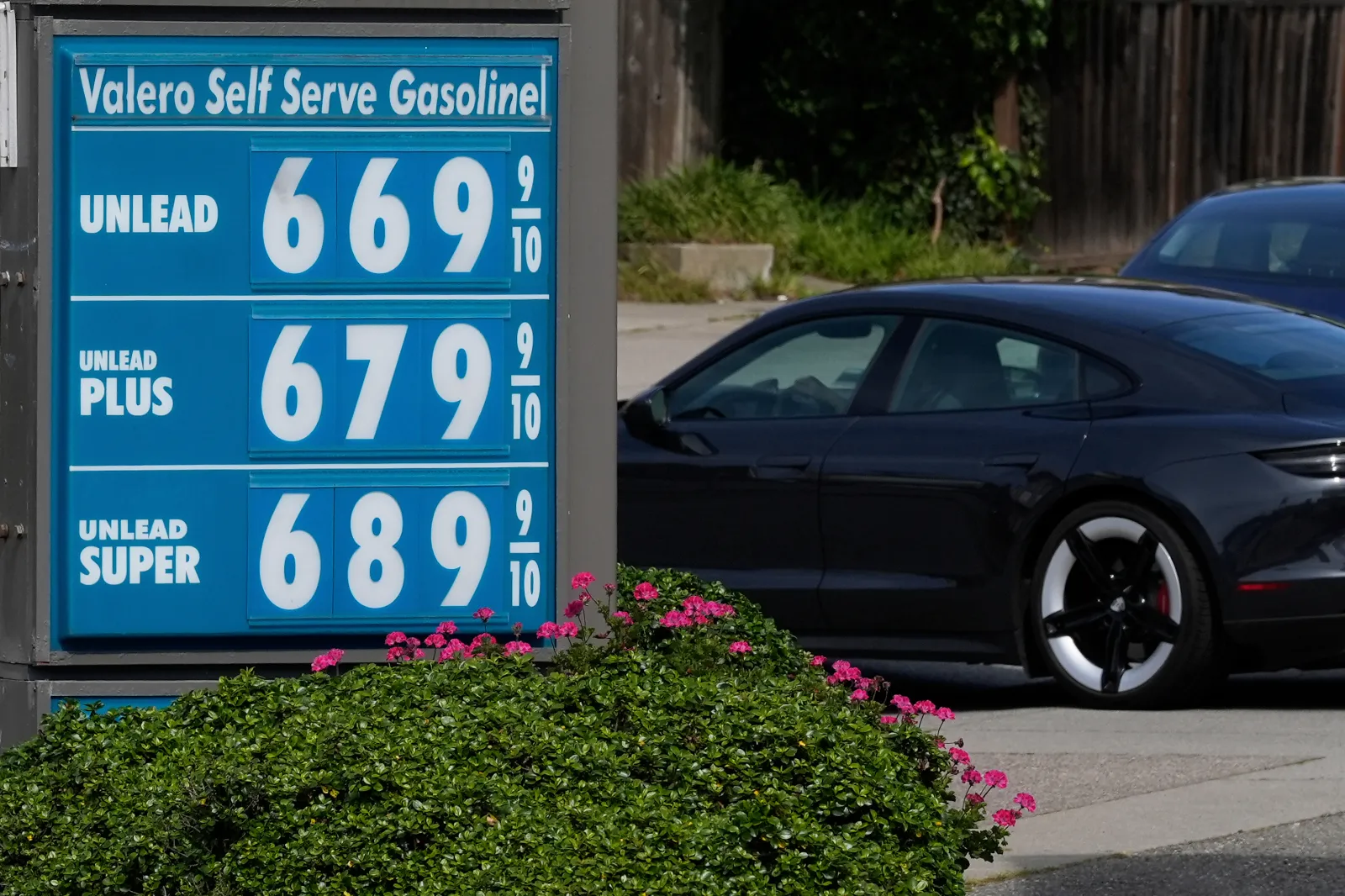
In the U.S., the average price of a gallon of regular gas has reached $4.119 as of Monday, with surging prices reaching up to $10 in some parts of California.
What People Are Saying
President Donald Trump wrote on Truth Social on Sunday: “Tuesday will be Power Plant Day, and Bridge Day, all wrapped up in one, in Iran. There will be nothing like it!!! Open the F***in’ Strait, you crazy b******s, or you’ll be living in Hell - JUST WATCH! Praise be to Allah.”
AAA said in a press release last week: "Crude oil prices have been surging, surpassing $100/barrel, as the conflict in the Middle East continues and the Strait of Hormuz remains closed. In 2022, gas prices remained elevated from March through August, peaking in June when the national average reached a record of $5/gallon for one week."
White House press secretary Karoline Leavitt said last month: “Once the national security objectives of Operation Epic Fury are fully achieved, Americans will see oil and gas prices drop rapidly, potentially even lower than they were prior to the start of the operation, and we will live in a world where Iran can no longer threaten the United States or our allies with a nuclear bomb.”
What Happens Next
Verification of safety for tankers traveling the Strait of Hormuz could take days or weeks meaning traffic would ramp up gradually and pump prices would lag behind crude price declines.
View 0 Comments
Submit Correction
View Editorial & AI Guidelines