...

By Gabe Whisnant
News Editor
0
Share
Newsweek is a Trust Project member
See more of our trusted coverage when you search.Prefer Newsweek on Googleto see more of our trusted coverage when you search.
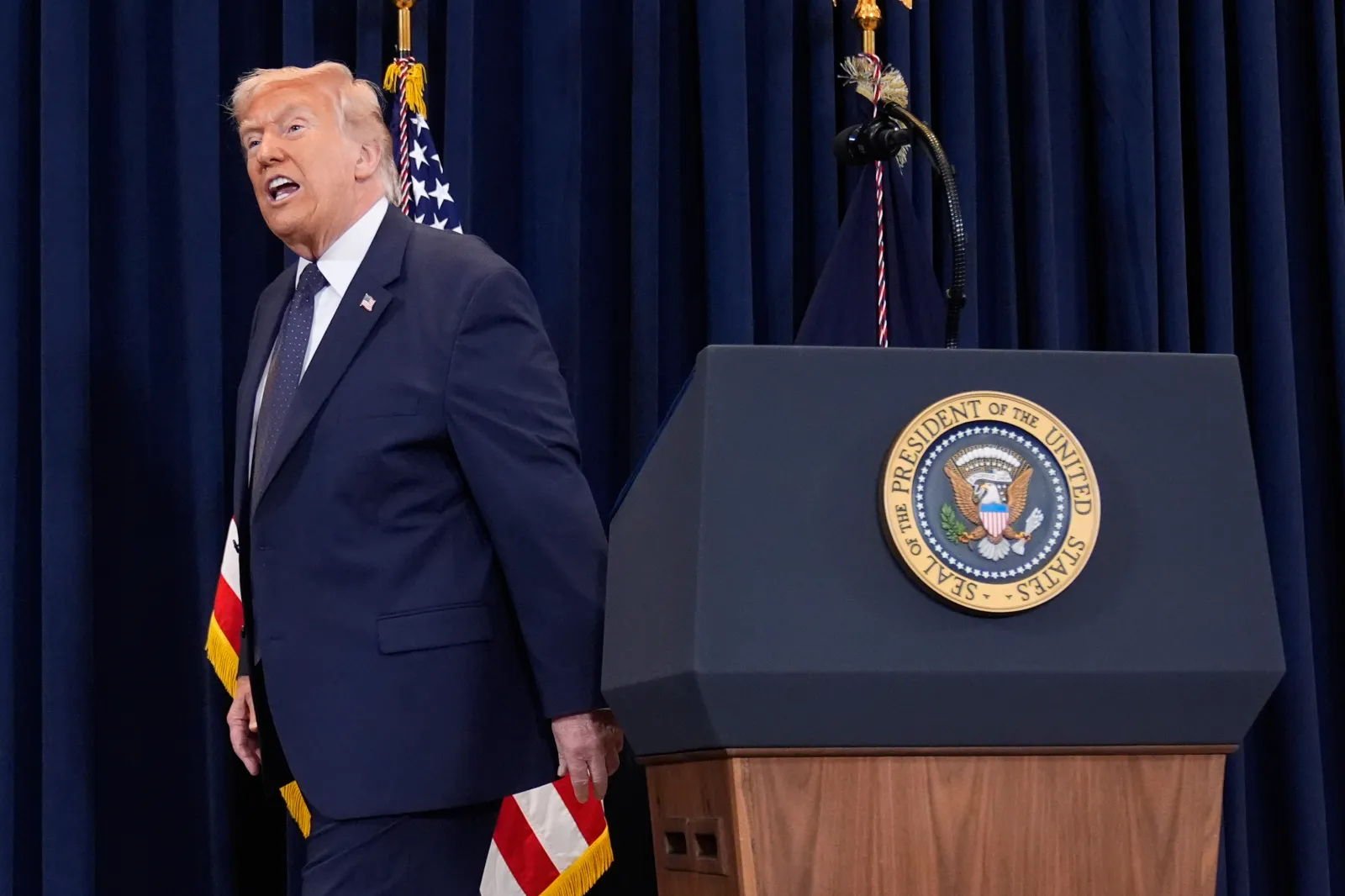
President Donald Trump said the conflict with Iran began after U.S. intelligence determined the country was starting work on a new facility to produce material for nuclear weapons, describing the site as heavily fortified and intended to replace locations previously targeted by U.S. strikes.
Speaking to reporters at a news conference, Trump said the new site was protected by granite and designed to withstand military attacks.
“They were starting work at another site, a different site, different kind of a site — and that was protected by granite,” Trump said Monday at a press conference in Doral, Florida.
Read More on U.S.
Trump said Iran was seeking to pair the facility with what he described as a rapidly expanding ballistic missile program, arguing that the combination posed a significant threat. He said Iran was trying to make it “virtually impossible to prevent them from obtaining a nuclear weapon,” adding that without U.S. intervention, the country could have dominated the Middle East.
Trump Signals Short War but Issues Stark Oil Warning
Trump later suggested the war against Iran could be brief, while warning that the United States would dramatically escalate military action if Tehran disrupts global oil supplies, particularly through the strategically vital Strait of Hormuz.
Speaking earlier to Republican lawmakers at his golf club near Miami, Trump framed the conflict as a limited military campaign. “We took a little excursion” to the Middle East “to get rid of some evil,” he said. “And I think you’ll see it’s going to be a short‑term excursion.”
Hours later, Trump adopted a far more confrontational tone on social media, warning Iran against interfering with oil shipments. “If Iran does anything that stops the flow of Oil within the Strait of Hormuz, they will be hit by the United States of America TWENTY TIMES HARDER than they have been hit thus far,” he wrote.
The mixed messaging — signaling both de‑escalation and the threat of expanded military action — underscored the uncertainty surrounding a war that has already shaken global markets and raised fears of a wider regional conflict.
Oil Markets Swing After Iran Names New Supreme Leader
Oil prices surged early Monday to their highest levels since 2022, a day after Iran selected Ayatollah Mojtaba Khamenei as its new supreme leader following the death of his father, Ayatollah Ali Khamenei, during the opening days of the war.
Investors viewed the decision as a signal that Iran was digging in roughly 10 days into a conflict launched by the United States and Israel. Oil prices briefly neared $120 per barrel before retreating later in the day, while U.S. stocks recovered from early losses on hopes the war may not last much longer.
Analysts said markets were reacting to Trump’s suggestion that the conflict could soon wind down, even as his warnings highlighted the risk of escalation tied to energy supplies.
The Strait of Hormuz, through which about one‑fifth of the world’s oil typically flows, has become a focal point of the fighting. Iranian missile and drone attacks have all but halted tanker traffic through the narrow shipping lane, sending shock waves through global energy markets.
...
Iran Says It Will Decide When War Ends
Iranian officials responded defiantly to Trump’s remarks. Ali Mohammad Naini, a spokesperson for the paramilitary Revolutionary Guard, said in comments published by Iranian state media that “Iran will determine when the war ends.”
The Revolutionary Guard has played a central role in the conflict, launching missiles and drones at Israel and Gulf Arab states. The force has close ties to the new supreme leader, who is widely viewed as more hard‑line and less inclined to compromise than his father.
The war has choked off major supplies of oil and gas to world markets, pushing fuel prices higher across the United States. The fighting has also led foreigners to flee business hubs and forced millions to seek shelter as airstrikes hit military bases, government buildings, oil and water installations, hotels and at least one school.
Airstrikes Hit Tehran, Isfahan and Southern Iran
Dozens of explosions were heard across Tehran on Monday in what appeared to be the heaviest air raid on the capital since the war began February 28. Iranian media did not immediately report casualties or damage.
Israel said it was carrying out a “wide‑scale wave of strikes” targeting Tehran, the central city of Isfahan and locations in southern Iran. The Israeli military said it struck dozens of infrastructure sites, including a Revolutionary Guard drone headquarters.
Throughout the day, Israel warned civilians of incoming missiles from Iran. From Lebanon, Iran‑backed Hezbollah also fired rockets into Israel, further widening the conflict.
Trump said the United States was nearing its goal of eliminating Iran’s ballistic missile stockpile and its ability to produce and launch new missiles, though administration officials have offered shifting rationales and timelines since the conflict began.
Putin Call and Diplomacy Efforts Continue
Trump also spoke Monday with Russian President Vladimir Putin about the war and other issues.
Putin’s foreign affairs adviser, Yuri Ushakov, said the Russian leader offered “a few ideas regarding a quick political and diplomatic settlement” following discussions with Gulf leaders and Iranian President Masoud Pezeshkian.
Iranian officials, however, have downplayed diplomatic options. Kamal Kharazi, a foreign policy adviser to the supreme leader, said Iran was prepared for a long war and saw no “room for diplomacy anymore” unless economic pressure forces other countries to intervene.
New Supreme Leader Faces Nuclear Stakes
Mojtaba Khamenei, a secretive 56‑year‑old cleric, is only the third supreme leader in the Islamic Republic’s history. Long seen as a potential successor, he has not appeared publicly since the war began.
Thousands gathered in central Tehran and other cities to pledge allegiance to the new leader, chanting slogans including “Death to America” and “Death to Israel.”
Trump said he was “disappointed” by the choice and suggested he preferred the idea of a leader emerging from a broader internal process, citing Venezuela as an example. He added that the United States was not seeking to dictate Iran’s leadership but made remarks about “building a new country” that appeared to suggest deeper ambitions.
While U.S. strikes have badly damaged Iran’s nuclear infrastructure, Tehran still possesses highly enriched uranium that is a technical step away from weapons‑grade levels, raising concerns that the new supreme leader could pursue a nuclear bomb — something his father never did.

...
Regional Attacks Spread as Casualties Rise
Iranian attacks have spread across the Middle East, drawing condemnation from regional powers. Saudi Arabia accused Iran of targeting its massive Shaybah oil field and warned Tehran would be the “biggest loser” if it continues striking Arab states.
In the United Arab Emirates, authorities said two people were wounded by shrapnel after air defenses intercepted Iranian missiles over Abu Dhabi. The Emirati Defense Ministry said 15 ballistic missiles and 18 drones were fired at the country.
Iran also struck targets in Kuwait, Qatar and Bahrain. In Bahrain, officials said one person was killed and others injured when a residential building in Manama was hit. Several U.S. diplomatic missions have ordered nonessential staff to leave.
Markets Whipsaw as War Death Toll Mounts
U.S. markets seesawed Monday as investors weighed fears of a prolonged war against hopes of a quick resolution. Oil prices swung sharply amid uncertainty over the Strait of Hormuz, where attacks on merchant vessels have killed at least seven mariners, according to international officials.
Officials say the war has killed at least 1,230 people in Iran, at least 397 in Lebanon and 11 in Israel. Seven U.S. service members have also been killed.
Trump said he met with families of the fallen troops during the transfer of their remains over the weekend in Dover, Delaware. “Make sure you win, sir,” he said they told him, as the conflict entered its second week.
Updates: 3/9/26, 10:06 p.m. ET: This article was updated with new information and remarks.
This article includes reporting by the Associated Press.
View 0 Comments
Submit Correction
View Editorial & AI Guidelines