10
Loading video...

By Nikola Kedhi
0
Share
Newsweek is a Trust Project member
See more of our trusted coverage when you search.Prefer Newsweek on Googleto see more of our trusted coverage when you search.
Albania talks like one of America's most loyal allies. It is time we started governing like one.
President Donald Trump has been blunt about what he expects from allies: spend more on defense, protect strategic infrastructure and go after the criminal networks that move drugs and launder dirty money through their countries. Those are not unreasonable asks. They are the prerequisites of being taken seriously.
This is no longer abstract. On August 27, Pentagon policy chief Elbridge Colby told the ambassadors of all 32 NATO members in Brussels that the alliance must adapt, as part of a six-month review of American forces in Europe designed to push European allies toward primary responsibility for their own conventional defense. Washington has sent allies a questionnaire asking them to show what they are actually contributing. Every member is being asked to answer for itself. Albania should ask honestly whether it can pass that test.
Read More on Opinion
Albania should be an easy case. It is a NATO member. Its people are among the most pro-American on the planet. We sit on the Adriatic, across from Italy, at the gateway to the Balkans. We should be exactly the kind of partner Washington wants.
...
But loving America and being a reliable ally to America are two different things, and right now we are failing the second test.
At NATO's summit in The Hague last year, allied leaders declared that they looked forward to meeting in Turkey in 2026, followed by a meeting in Albania. This July, in Ankara, the declaration said only that leaders look forward to their next meeting. No city named. No date set. Secretary-General Mark Rutte confirmed afterward that the next summit will be held in Albania, but there is still no date, and the reason the language disappeared is not a mystery. Reuters reported days before Ankara that resistance from the Trump administration and dissatisfaction among allies over Albania's defense spending had thrown the summit into doubt.
That is not a diplomatic embarrassment. It is a credibility problem, and it belongs to Albania's socialist government, which has spent more than a decade taking American support for granted while weakening our country from within.
The problem goes beyond defense. The State Department's 2025 International Narcotics Control Strategy Report lays it out plainly. Albanian-led criminal networks run cocaine supply chains stretching from South America into Europe and beyond, laundering the proceeds through Albania's own economy, mostly through real estate. The European Commission says Albania's state police remain vulnerable to corruption. These are not attacks from outsiders. They are findings from Washington and Brussels.
The concern has now reached Capitol Hill. On June 25, Representative Joe Wilson, a Republican and a longtime friend of Albania, filed an amendment seeking a classified report from the State Department, coordinated with the director of national intelligence, on the scale of narcotrafficking in Albania, on the role of the Albanian government in facilitating it and on political repression in the country. For one of Europe's most pro-American nations, the fact that Congress is asking that question at all should be a wake-up call.
President Trump has made clear that cartels and transnational criminal organizations are national security threats rather than law enforcement problems. Albania needs to start treating them the same way, not with more speeches about friendship but with a different way of running the country.
That means real cooperation with American law enforcement and financial authorities against money laundering and organized crime: tracing assets, exposing who actually owns what and cleaning corruption out of the police instead of protecting it. It means treating our ports, airports, telecom networks and energy grid as strategic assets that matter to NATO, not as prizes handed to whoever has the right political connections.
It also means finally building an economy that does not run on political favors. Albania has grown for years through the public sector, construction and tourism rather than production and investment that adds value. Low taxes, secure property rights, less red tape and rules that do not bend for political cronies are what would turn Albania into a serious platform for American and European businesses looking for a foothold in southeastern Europe.
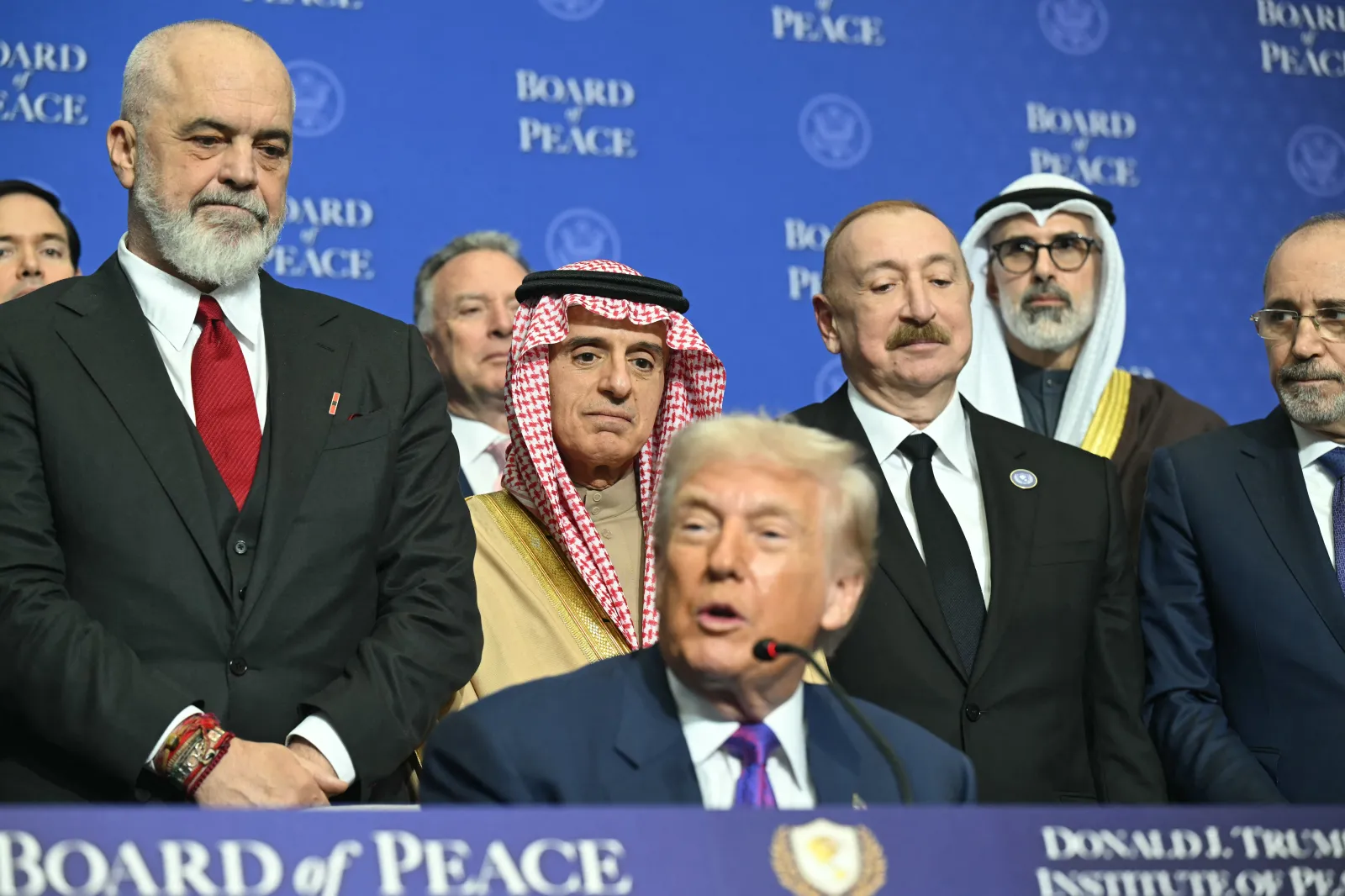
We are never going to build fighter jets. But, we can become a real defense and logistics hub on the Adriatic, the kind of ally that carries its own weight instead of showing up for photographs.
We can build an economic model that works for ordinary Albanians. One where a young couple can afford a home, where a small-business owner does not need a friend in government to get a permit, and where success depends on what you build rather than who you know. A stronger Albania, economically, militarily and technologically, will be a reliable ally.
Albania's conservative movement has always believed that being pro-American, sovereign and pro-free enterprise go together. It was a Democratic Party government under Prime Minister Sali Berisha that brought Albania into NATO in 2009. That achievement, and our record in government from 2005 to 2013, come with a responsibility to strengthen the bond between our two nations. Unlike the government in power today, we have a plan to do it, because a reliable Albania is in America's interest as much as ours.
With the right government, Albania can become a country America can trust with intelligence, with investment, with strategic infrastructure and with security. Albania has the location, the history and the people to be that kind of ally. We have to prove it now, before Washington concludes we are the weak link in the alliance.
Nikola Kedhi is deputy chairman of the Democratic Party of Albania and executive director of the Albanian Conservative Institute.
The views expressed in this article are the writer's own.
View 0 Comments
Submit Correction
View Editorial & AI Guidelines