...

By Maya Mehrara
News Reporter
0
Share
Newsweek is a Trust Project member
See more of our trusted coverage when you search.Prefer Newsweek on Googleto see more of our trusted coverage when you search.
President Donald Trump's ban suspending aid to Ukraine remains in place after Ukrainian President Volodymyr Zelensky agreed to sign the rare earths deal following their meeting last week, according to The New York Times.
Newsweek reached out to the Ministry of Foreign Affairs of Ukraine for comment via email.
...
Read More on World
Why It Matters
Without U.S. military aid, Ukraine may not be able to defend itself against Russia's attacks, and Kyiv stands to lose U.S. military intelligence which surpasses European countries.
As the U.S. has previously provided Ukraine with approximately $66.9 billion in military aid according to the Kiel Institute, Europe may not be able continue supporting Kyiv to this degree, as they have already given 62 billion euros (about $64.8 billion).
What To Know
Trump has kept his ban on the delivery of weapons or other military aid to Ukraine in place even after Zelensky backed down on signing the rare earths deal in a post on X, formerly known as Twitter, on March 4.
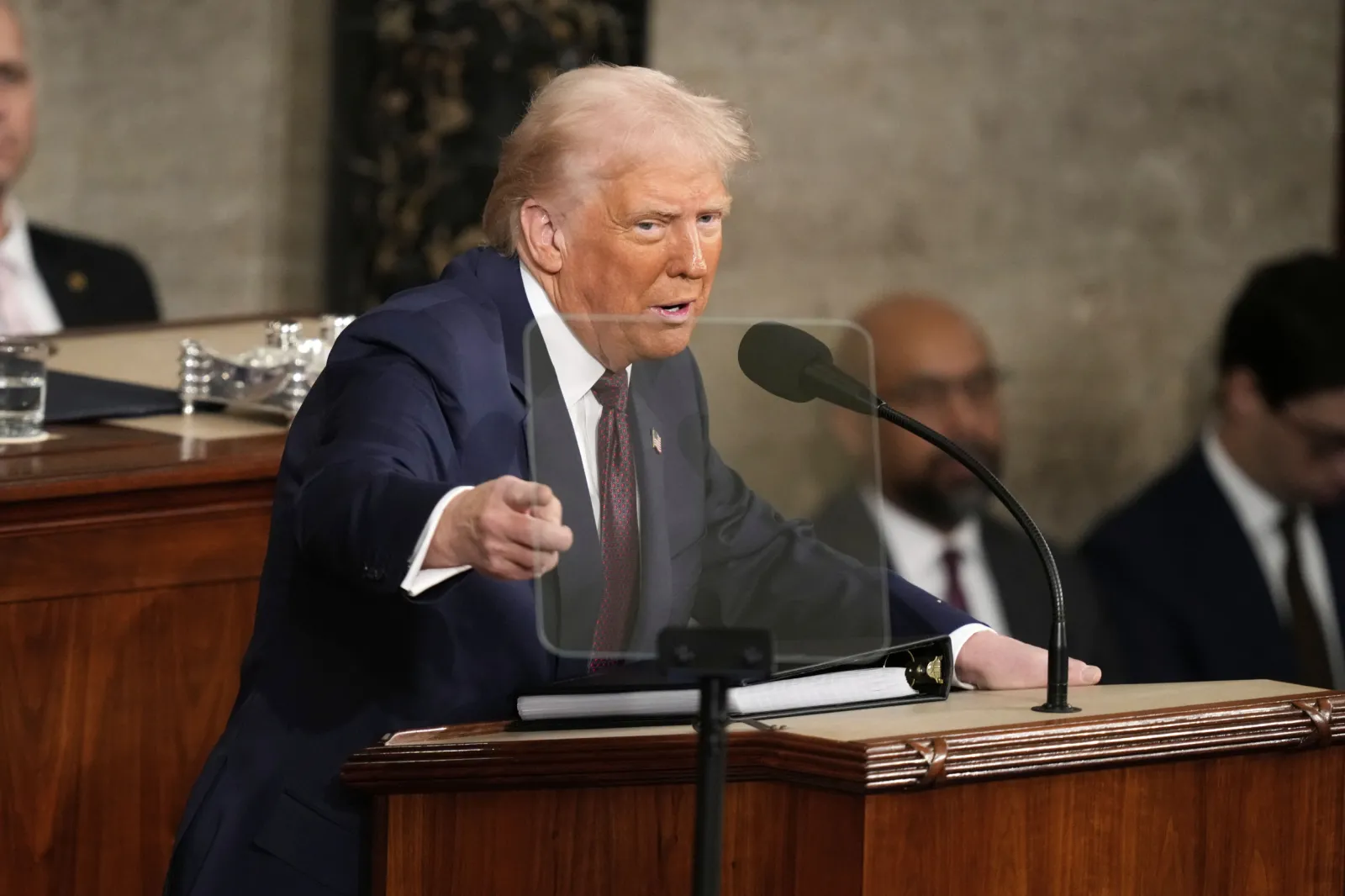
In his address to Congress on Tuesday, Trump referenced the U.S.'s previous provision of aid to Ukraine and said, "The United States has sent hundreds of billions of dollars to support Ukraine's defense, with no security, with no way. Do you want to keep it going for another five years?" according to the Associated Press.
He then quoted a letter he received from Zelensky about returning to the negotiating table, and said that he has had "serious discussion[s] with Russia" and had "received strong signals that they are ready for peace." Trump added that it is "time to stop this madness. It's time to halt the killing. It's time to end this senseless war. If you want to end wars you have to talk to both sides."
The president halted all U.S. military aid to Ukraine until he could determine that Zelensky is committed to peace on March 3, following their heated meeting in Washington.
An unidentified American official said that the supply of military equipment from the U.S., including equipment awaiting transit in Poland, would be suspended. The freeze on aid includes critical munitions, guided multiple launch rocket systems and anti-tank weapons and other capabilities.
An unknown Trump senior administration official also told The Wall Street Journal that the president will decide "what constitutes Ukraine showing that it is serious about peace talks," and that it is "unclear whether Zelensky signing a rare-minerals deal sought by the Trump administration would be enough to restart arms deliveries."
The ban followed Trump and Zelensky's meeting in the Oval Office on February 28, which devolved into a heated argument over the possibility of a ceasefire and security guarantees for Ukraine. During the confrontation, Trump accused the Ukrainian president of being "disrespectful" and said that he was "gambling with World War III." Zelensky was eventually asked to leave and only return when he is "ready for peace."
On March 4, Zelensky expressed his desire to continue working with the U.S. on achieving peace and wrote on X that "Ukraine is ready to come to the negotiating table as soon as possible to bring lasting peace closer. Nobody wants peace more than Ukrainians. My team and I stand ready to work under President Trump's strong leadership to get a peace that lasts."
Zelensky added, "Our meeting in Washington, at the White House on Friday, did not go the way it was supposed to be. It is regrettable that it happened this way. It is time to make things right. We would like future cooperation and communication to be constructive."
He then backed down on agreeing to sign the rare earths deal with Trump, which he previously refused as it did not contain security guarantees for Kyiv, and wrote, "Regarding the agreement on minerals and security, Ukraine is ready to sign it in any time and in any convenient format. We see this agreement as a step toward greater security and solid security guarantees, and I truly hope it will work effectively."
What People Are Saying
A previous statement to Newsweek about the aid ban from the White House read: "President Trump has been clear that he is focused on peace. We need our partners to be committed to that goal as well. We are pausing and reviewing our aid to ensure that it is contributing to a solution."
Anton Gerashchenko, the former deputy minister of Internal Affairs of Ukraine, wrote on X: "Our kids live their childhoods under Russian attacks in shelters**.** We weren't able to protect all of Ukraine but we had the opportunity to use Patriot air defense systems in large cities to shoot down Russian missiles. These systems literally saved countless lives of Ukrainian civilians. And we are immensely grateful for that. If we don't get missiles for Patriot systems, it will be much, much harder to protect our people, our kids. Russia doesn't stop its attacks."
Jürgen Nauditt, a pro-Ukraine user, described the circumstances surrounding Ukrainian journalist Victoria Roshchina's death and wrote on X: "This terrible fate threatens all Ukrainians in the territories occupied by Russia. Trump wants to extend this to the whole of Ukraine by stopping arms deliveries. Russians tortured a Ukrainian woman with electricity until she was exhausted—she weighed 30 kg and died."
What Happens Next
Europe appears to be attempting to supplement the U.S.'s aid to Ukraine, as the European Commission announced that it proposed to spend 150 billion euros ($157 billion) through a program that would allow EU countries to increase its military assistance for Kyiv, via loans to help produce air defense systems and weapons.
View 0 Comments
Submit Correction
View Editorial & AI Guidelines