...

By Newsweek Editors
0
Share
Newsweek is a Trust Project member
See more of our trusted coverage when you search.Prefer Newsweek on Googleto see more of our trusted coverage when you search.
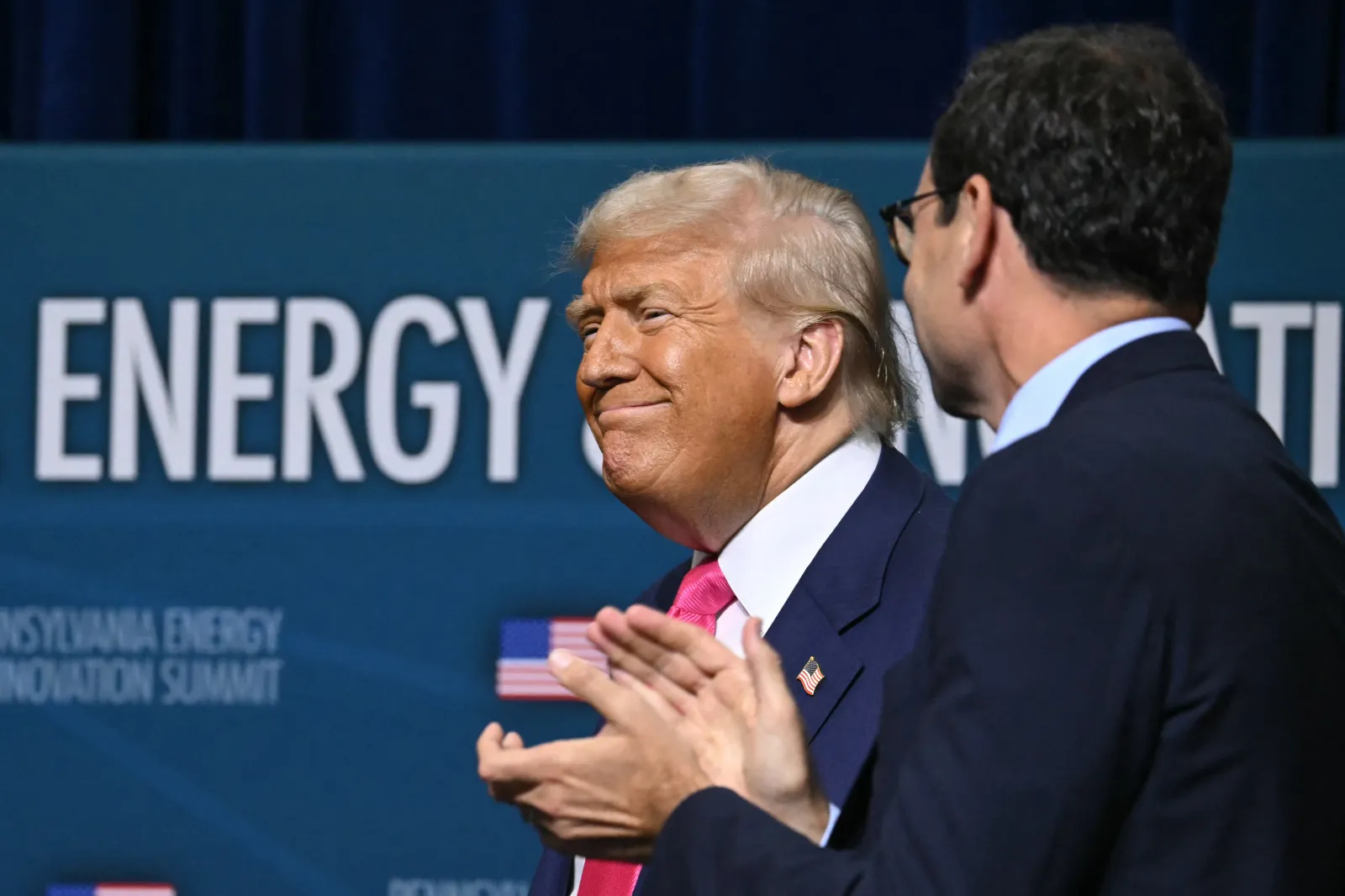
Donald Trump returned to office with a vow to refill the Strategic Petroleum Reserve (SPR) "right to the top" after his predecessor Joe Biden had overseen a historic release to mitigate the painful oil price spike after Russia's 2022 invasion of Ukraine.
But Trump's Iran war has turned that promise, so far unfulfilled, into a stress test of his leadership.
Global oil markets have fallen into crisis. Shipping through the vital Strait of Hormuz slowed to a near-standstill, pushing crude prices sharply higher and creating the prospect of an inflation surge that voters had punished the Democrats for.
Read More on Analysis
Now Trump is reaching for the same emergency lever he once used as a cudgel against Biden: Tapping the SPR to steady surging oil prices.
On March 11, Energy Secretary Chris Wright said the U.S. would release 172 million barrels as part of an International Energy Agency (IEA) move totaling 400 million barrels, described as the largest coordinated release in the agency's history.
Trump's political campaign put cheap energy and affordability at the top of its economic agenda. But his war has injected geopolitical risk directly into the oil price and Americans are paying the price at the pump.
Trump and GOP Attacked Biden's Use of SPR
The Republicans were sharp in their criticism of Biden for his release of reserves in 2022.
As gasoline prices spiked above $5 a gallon after Russia moved on Ukraine, the Biden administration leaned heavily on releases, including a historic drawdown of 180 million barrels announced in March 2022.
Republicans denounced the approach as election-year manipulation and warned it weakened U.S. energy security, language that echoed for months as the reserve fell toward multi-decade lows.
"The strategic reserves are meant for military purposes, for war, not to keep prices down for an election," Trump told a rally in Youngstown in September 2022, positioning himself as a responsible steward of the SPR who would quickly refill what Biden had "drained".
Biden Was Slow To Refill
Biden's own refill efforts were real but gradual, constrained by maintenance issues, market timing, and other mandated sales. Republicans said the administration was sluggish in replenishing what was released.
The Energy Information Administration (EIA) series for SPR stocks shows a low point around 2023 and a steady rise through 2024 and into 2025. When Biden took office in January 2021, the reserve was 638 million barrels. By the time he left, it was at 395 million.
...
Its lowest point in his term was 347 million barrels in June 2023. But in Biden’s final year, his administration had increased the SPR by 9.6 percent.
Biden's Department of Energy argued it had “secured” roughly 200 million barrels through purchases and cancellations of congressionally mandated sales, including a November 2024 announcement touting total barrels purchased or retained since 2022.
Trump Promised To Refill the SPR 'Immediately'
Trump's 2024 campaign promise was unambiguous. He said the strategic reserves should be filled "immediately”.
But the pace of growth in the SPR slowed in 2025 when compared with the previous year, marking a 4.6 percent rise to 413 million barrels in December.
Some of that is accounted for by purchases made at the tail end of the Biden administration.
There was a small acceleration in growth of the SPR in summer and fall, but that pace had eased again by the end of the year.
Iran War Has Created an Oil Market Crisis
The Iran war has created system-wide disruption to the oil market that is causing wild price swings.
There are heightened risk premiums, attacks on shipping and infrastructure, and, most importantly, sharp reductions in tanker traffic through the Strait of Hormuz, a chokepoint that normally carries about a fifth of global oil flows.
Federal forecasters digested the shock. In its March 10 Short-Term Energy Outlook release, the EIA said Brent had risen sharply following the onset of military action and warned that its price forecast was “highly dependent” on how long the conflict disrupts production and transit.
Against that backdrop, the Trump administration pivoted from early reluctance to full participation in a coordinated emergency drawdown of the SPR.
Midterms Are Looming and So Is Inflation
Energy inflation is uniquely political because it is ubiquitous and visible. Consumers watch with concern the big numbers on roadside signs. Purchases are frequent and there is an immediate household impact.
Pain in the pocket is pain at the polls. The Democratic Party, stung by high COVID-era inflation, felt that at the 2024 election.
- Donald Trump Loves Oil. His War Could Help Kill It
- 5 Tough Questions for Democrats Attacking Trump on Iran
- Pam Bondi Moving Home Marks Dark Turn for US Politics
Trump seized on the high cost of living in his campaign, promising to bring inflation right down. That pillar of Trump's political messaging, already imperilled by his import tariffs, is at risk of collapse in light of the Iran war.
Polls consistently show Americans are pessimistic about their personal finances. Now, GasBuddy data records rapid increases in the national average price of gas at the pumps.
The timing is unforgiving. With the 2026 midterms approaching, the White House is effectively trying to balance the prosecution of a war in a major oil hub while dampening down inflation.
Trump Left Facing His Own Test
Trump's predicament highlights a structural reality every president eventually meets.
U.S. policy influences oil prices at the margin, but the oil price is set globally, and geopolitical disruptions can overwhelm domestic production headlines. The SPR is designed as a bridge in exactly these moments, yet it is not a magic wand.
The war has prompted a shift in tack by the Trump administration: Release now, refill later.
Trump is left defending the tactic he once ridiculed. And he does so in the context of not delivering an immediate resupply of the SPR.
It is a political test of his own making.
Hey gang, Carlo Versano here. I hope you enjoyed this article. As Newsweek's Director of Politics and Culture and editor of the 1600 newsletter, I'm keen to hear what you think. Now, Newsweek is offering a new service to allow you to communicate directly with me in the form of a text message chat. You can sign up and get a direct line to me, as well as the reporters who work for me. You can shape our coverage.
As a Newsweek member, we're offering this service to you for free. You can sign up below, or read more about how it works here. Let's talk!
View 0 Comments
Submit Correction
View Editorial & AI Guidelines